Abstract
Drought stress is a crucial environmental factor for plant survival, and the development of drought-tolerant varieties is one of the goals of all cultivated plant researchers. In particular, the seedling stage is important for plant growth and development and is also the period most affected by drought. We investigated the initial response to drought stress in seedlings of two species of poplar (Populus alba × Populus davidiana and Populus davidiana) that phenotypically differed in drought tolerance. Comparative analysis in terms of shoot height, photosynthetic pigments, soluble sugars, antioxidants, proline, soluble protein, malondialdehyde (MDA), and hydrogen peroxide (H2O2) contents was used to measure the physiological and biochemical characteristics of drought stress, and drought-related genetic changes were also examined. Significant changes in shoot height, chlorophyll fluorescence, chlorophyll contents, MDA and H2O2 appeared more adversely in Populus alba × Populus davidiana than in Populus davidiana, whereas reductions in soluble protein, carotenoids, superoxide dismutase (SOD) and catalase (CAT), which are indicators related to drought tolerance, appeared less in Populus davidiana. The change pattern of genes related to electron transfer and H2O2 production were almost similar in the two species, and among the drought response genes, lipid transfer protein 3 (LTP3) was greatly upregulated only in Populus davidiana. In the initial response to drought stress of both poplars, Populus davidiana, which had good antioxidant maintenance, showed better drought tolerance than Populus alba × Populus davidiana, which had a faster response to osmotic balance control.
-
Key words: Biochemical response, Climate change, Drought stress, Physiological response, Poplar
INTRODUCTION
Since the industrial revolution, global population growth and deforestation have promoted climate change. Global warming caused by abnormal weather is turning living habitats into deserts (
Naumann et al. 2018). These environ-mental changes simultaneously cause abiotic stressful environments, and especially in the case of plants, they face great trials. Plants respond to physiological and genetic changes to survive abiotic stresses caused by adverse environments, such as high-intensity light, drought, heat, cold and salinity (
Bray 1997). Among them, drought is the abiotic stress factor that most affects plant life. Drought stress aggravates the symptoms of abiotic stress, such as salt and cold, or may appear simultaneously (Cruz de Carvalho 2008). Plants have different drought tolerances depending on species or varieties, but if the intensity or duration is prolonged, it induces dehydration, causing fatal damage to growth, development and reproduction (
Fang and Xiong 2015). A large number of studies have been reported on the effect of drought stress and adaptation of plants until recently. For example, there are changes in crop yield, growth, pigment synthesis, photosynthetic activity, membrane integrity, osmotic adjustment, stomatal opening, cell division and accumulation of reactive oxygen species (ROS) in plants (
Sairam and Srivastava 2001;
Shinozaki and Yamaguchi-Shinozaki 2007;
Praba et al. 2009).
Populus is ecologically and economically important because it is a rapidly growing tree and has a good biomass that plays a good role in bioenergy production and carbon sequestration (
Brunner et al. 2004).
Populus is considered a model tree for woody plants, especially in the molecular biology of trees, because it has a complete genome se-quence and is capable of genetic manipulation, rapid growth, vegetative propagation and a short rotation cycle (
Jansson and Douglas 2007). Therefore, poplar is an important material for the study of phenotype, metabolism and genetic changes caused by abiotic stresses (
Marron et al. 2002).
Populus davidiana Dode (Salicaceae) (
P. davidiana) is a native species of the Korean Peninsula and is one of the most widely distributed species in Eastern Asia and East Russia.
P. davidiana has strong tolerance to drought, cold, and barren soils and thus grows well on slopes, ridges and gullies (
Hou et al. 2018).
P. davidiana not only adapts well to the mountainous terrain of Korea but is also valuable in commercial timber production (
Latva-Karjanmaa et al. 2006). Consequently,
P. davidiana is a good parental candidate when trying new hybrid varieties with good adaptability (
Noh et al. 1989).
Populus alba L. (
P. alba) is native to Eurasia, commonly called silver poplar, and is widely distributed in floodplain forests of central Europe and central Asia (
Brundu et al. 2008).
P. alba is differenti-ated from
P. tremula in response to abiotic stresses (tole-rance of drought, wind, salinity, and high temperatures) (
Li and Kakubari 2001;
Beritognolo et al. 2007). It is not only an effective tree on windy shores due to its good root extension and good tolerance to salinity but also efficient for timber and pulp production due to its rapid growth (
Paolucci et al. 2010).
To prepare for the increase in drought caused by climate change, it is very important to accurately understand poplar seedlings’ initial response to drought stress. Therefore, ex-ploring the natural differences in poplar species that differ phenotypically in drought tolerance may be useful in explor-ing the complex mechanisms of the response to drought stress. In our preliminary experiment, we tested drought stress treatment on several species and their poplar hybrids. Among them, we selected P. davidiana, which had the best phenotypic tolerance to drought stress, and P. alba × P. davidiana, which was most affected by drought stress. In this study, we intend to report the difference in physio-logical and molecular analyses of these two species in response to drought stress.
MATERIALS AND METHODS
Growth conditions and drought treatment
Poplar (P. alba × P. davidiana and P. davidiana) seedl-ings were grown on top-soil and sand (3:1) mixture in pots containing the appropriate soil moisture in the greenhouse. The temperature of the greenhouse was maintained at 18-25℃. Three replicates were used in the experiments. For each replicate, leaves of 6 plants were pooled and used for analysis experiment. These poplar clones were used as solitary maternal plants. In May 2020, the tissues were cultured and transferred to pots six weeks later in a greenhouse. Seventeen weeks after tissue culture, healthy and uniform plantlets were randomly selected from each treatment group. Plants were watered to a soil moisture level of 45% one day before the drought treatment. The plants were then deprived of water for 6 days and observed during this time. Soil moisture was measured every other day using a moisture probe (ICT International Pty. Ltd., Armidale, NSW, Australia). The experiment was con-ducted for 18 weeks at the National Institute of Forest Science in Suwon, Korea (37°15′04″N, 136°57′59″E), under semicontrolled conditions. Poplar leaves were har-vested at the same time in the morning in September 2020. The upper and lower leaves were harvested and mixed at the same stage, and the samples used in all experiments were the same. Samples were stored at ‒80℃ in a cryotic refrigerator until the experiment.
Four-month-old poplars encountered drought treatment, in which the soil relative water content (RWC) was reduced from 45%. Control plants were kept under the same conditions, except that the soil RWC was maintained at 40%. Control and treated plants were grown in suitably sized pots, and each pot had a tray.
Measurement of chlorophyll fluorescence and content
The maximum efficiency of photosystem Ⅱ (PSⅡ) che-mistry (F
v/F
m) and the potential activity of PSⅡ were measured by the Kautsky induction method using a portable Handy Fluorcam (Photon System Instruments Ltd., Brno, Czech Republic) (
Kautsky 1931). After the start of the experiment, six plants at similar stages were measured every 2 days. To induce chlorophyll fluorescence, leaves were adapted to the dark by blocking light for 15 minutes followed by irradiation with 1,500 mmol∙m
‒2∙s
‒1 for 5 seconds. The fluorescence variables F
o, F
m, F
v/F
o, and F
v/F
m were measured and analyzed.
Photosynthetic pigments were determined according to the method of
Sibley et al. 1996. The absorbance of the supernatants was measured at 470 nm, 647 nm and 664 nm with a Biospectrometer (Eppendorf, Hamburg, Germany). The contents of photosynthetic pigments and their means were calculated as follows for each plant and treatment:
• Chlorophyll a = 12.7A664 ‒ 2.79A647.
• Chlorophyll b = 20.7A647 ‒ 4.62A664.
• Carotenoids = (1000A470 ‒ 1.82Chl a ‒ 85.02Chl b)/198.
(A, absorbance; pigment concentration in mg/g fresh weight (FW)).
Extraction and measurement of soluble sugar
Glucose, fructose, and sucrose were extracted and analyzed following the protocol of (
Lu and Sharkey 2004). The sugar concentrations were determined enzymatically using a method described by (
Stitt et al. 1989) and a Biospectrometer (Eppendorf, Hamburg, Germany). The contents of soluble sugars were expressed as mmol g
‒1 FW. To analyze starch content, the resulting sediments from aqueous ethanol extractions were rinsed with distilled H
2O and then autoclaved for 3 hours in distilled H
2O. Subse-quently, the supernatant was enzymatically digested to glucose according to the method described by (
Walters et al. 2004). The sugar concentrations were determined and expressed in the same way as above. Total soluble sugars were extracted from leaves by 80% ethanol by a modified method of (
Irigoyen et al. 1992). Total soluble sugar content was determined at 620 nm by a Biospectrometer (Eppendorf, Hamburg, Germany) using glucose as the standard. The content of total soluble sugar was expressed as mg g
‒1 FW. The detailed experimental methods used in the above experiments are described by (
Kim et al. 2021).
Malondialdehyde (MDA) content was determined accord-ing to the method of (
Heath and Packer 1968) and expressed as mmol g
‒1 FW. The absorbance of the supernatant was read at 532 nm using a Biospectrometer (Eppendorf, Hamburg, Germany). Proline was extracted from a sample of 0.5 g fresh leaves in 3% (w/v) aqueous sulfosalicylic acid and estimated using the ninhydrin reagent according to the method of (
Bates et al. 1973). The absorbance was read at a wavelength of 520 nm. The proline concentration was determined using a calibration curve and expressed as mmol g
‒1 FW. Hydrogen peroxide (H
2O
2) was measured spectrophotometrically after reaction with KI. The absorbance was measured at 390 nm. The amount of hydrogen peroxide was calculated using a standard curve prepared with known concentrations of H
2O
2 and expressed as mmol g
‒1 FW (
Alexieva et al. 2001). The detailed experimental methods used in the above experiments are described by (
Kim et al. 2021).
Leaves (0.2 g) were ground in liquid nitrogen followed by homogenization in 1.5 mL of potassium phosphate buffer (0.1 M, pH 7.5, containing 0.5 mM EDTA) in superoxide dismutase (SOD) and catalase (CAT) to prepare the extract. The homogenates were centrifuged at 4℃ for 20 minutes at 13,000 × g. The supernatant was collected and used for the assays of enzymatic activities. All steps in the preparation of the enzyme extract were carried out at 4℃. The Bradford assay method and bovine serum albumin as a standard were used to estimate the concentration of soluble proteins (
Bradford 1976). The absorbance at 595 nm was determined by a Biospectrometer (Eppendorf, Hamburg, Germany). A superoxide dismutase (SOD) assay kit (Sigma-Aldrich Crip, Mi, USA) was used to determine SOD activity in homogenized leaf samples. All procedures were performed according to the kit instructions. The optical density was measured immediately at 450 nm after preparation using an automated plate reader (SpectraMax M2, Molecular Devices, San Jose, CA, USA). An EZ-Catalase (CAT) assay kit (cat. DG-CAT400, Dogen, Seoul, Korea) was used to determine CAT activity in homogenized leaf samples. All procedures were performed according to the kit instructions. The optical density was measured immediately at 560 nm after preparation using an automated plate reader (SpectraMax M2, Molecular Devices, San Jose, CA, USA).
Leaf samples were frozen in liquid nitrogen, ground and stored at ‒80℃. RNA from three biological replicate plants for each treatment was extracted separately for cDNA synthesis. cDNAs for qRT-PCR were each synthesized from all samples. Total RNA was isolated using a Ribospin
TM Plant (Geneall, Seoul, Korea). For real-time quantitative RT-PCR (qPCR) analysis, first-strand cDNA was synthesized from 1 mg of DNase-treated total RNA using RNA to cDNA EcoDry
TM Premix (TaKaRa, Shiga, Japan). All reactions were performed using IQ
TM SYBR Green Supermix (BIO-RAD, CA, USA) and carried out in a CFX96 Touch Real-Time PCR Detection System (BIO-RAD, CA, USA) according to the manufacturers’ instructions. The gene-specific primers used for qPCR are listed in
Supplementary Table S1. The reaction cycle was 1 cycle of 95℃ for 3 minutes, followed by 40 cycles of 95℃ for 15 seconds and 58℃ for 30 seconds. Three independent biological replicates and three technical replicates for each biological replicate were run. Relative quantification was performed to calculate the expression levels of target genes in different treatments using the 2
‒ΔΔCt method (
Livak and Schmittgen 2001). The expression levels of
ACTIN and
UBQ7 were used for the normalization of qPCR results (
Pettengill et al. 2012;
Zhang et al. 2014).
Each measurement had three biological replicates. Analyses were carried out using one-way ANOVA with multiple comparisons using Tukey’s HSD. P values < 0.05 were considered significant. Values are presented as the means with SD.
RESULTS
Effect of drought stress on growth rate, leaf chlorophyll fluorescence and content, and carbohydrates
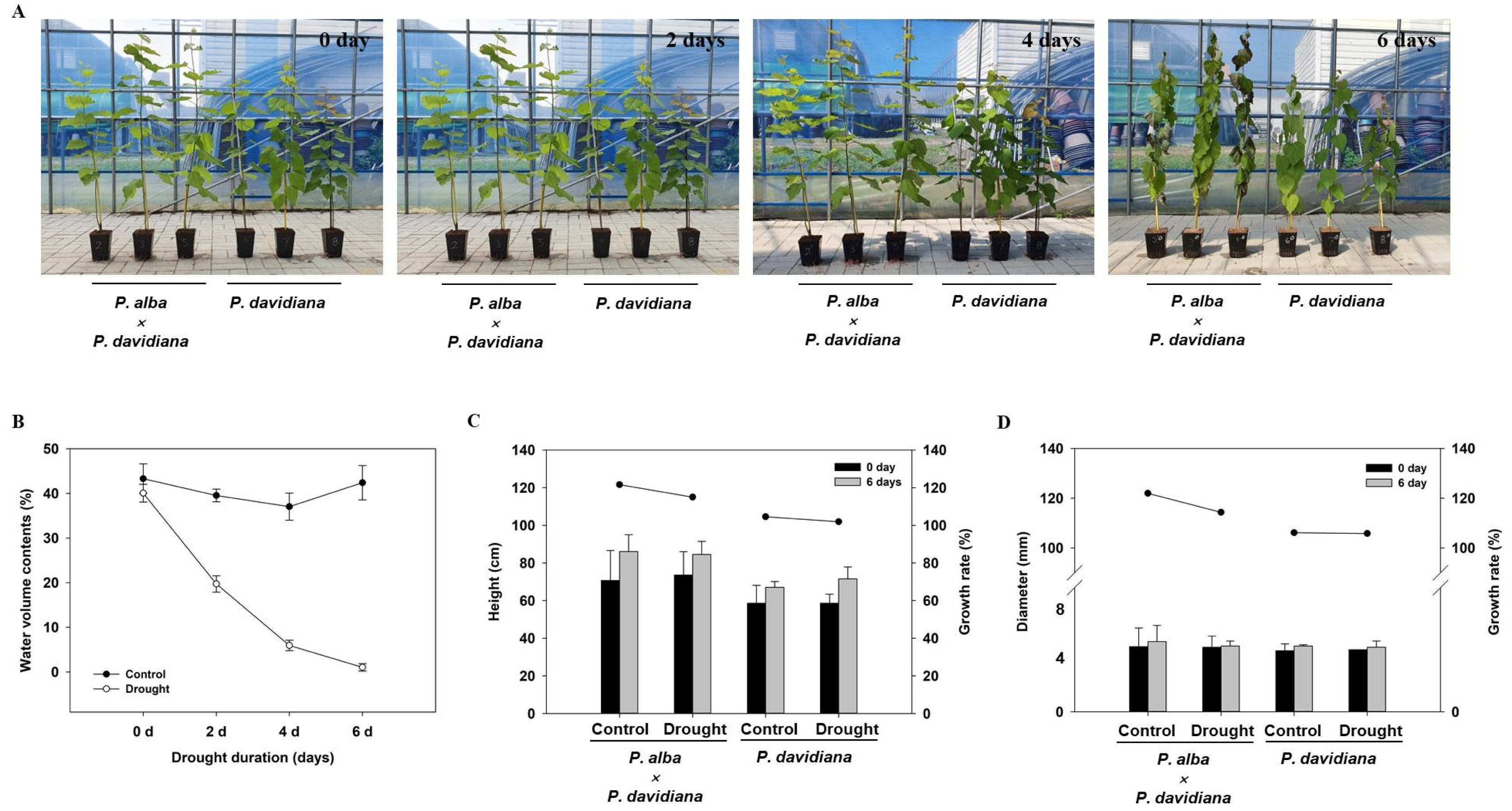
We examined changes in the growth rate, photosynthetic rate, and photosynthetic pigment content in seedlings of two species of poplar with strong or weak drought tolerance under drought stress conditions. After 4 days of drought treatment, the soil moisture content decreased to less than 10% and decreased to less than 2% after 6 days (
Fig. 1A, B). We observed the phenotypes of shoots and measured the physiological changes in poplar leaves. Although there were no statistically significant differences observed between the control and drought stress condi-tions, the height and diameter of the two poplars tended to decrease when grown under water deficit conditions (
Fig. 1C, D).
P. alba ×
P. davidiana had a more severe decrease in growth rate.
Chlorophyll fluorescence reflects damage to photo-synthetic systems or photoprotection-related effects under drought stress (
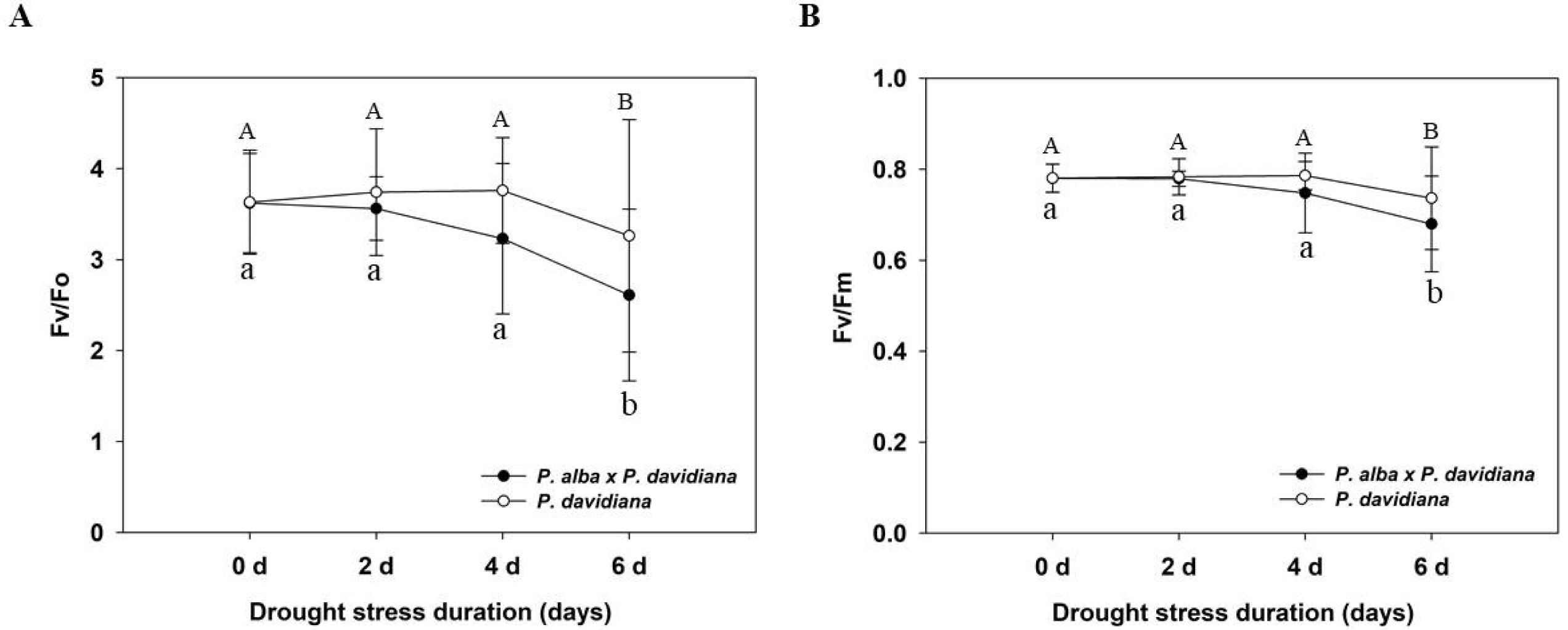
Morales et al. 2008). The maximal photochemical efficiency of photosystem II (PSII) was measured in an F
v/F
m state, and both poplars significantly decreased after 6 days of drought treatment (
Fig. 2). The F
v/F
m of
P. alba ×
P. davidiana and
P. davidiana reached the minimum value at 6 days, which was 12.9% lower than that on the first day (0 days) under drought and 5.7% lower than that at 0 days. The potential activity of PSII can be seen through the ratio of F
v/F
o, and the values of both poplars also significantly decreased after 6 days of drought treatment. The F
v/F
o of
P. alba ×
P. davidiana and
P. davidiana reached the minimum value at 6 days, which decreased by 27.9% compared with that at 0 days under drought treatment and decreased by 10.8% compared with that at 0 days. The potential activity of PSII (F
v/F
o) showed a similar pattern to that of F
v/F
m, but more dramatic changes were observed in
P. alba ×
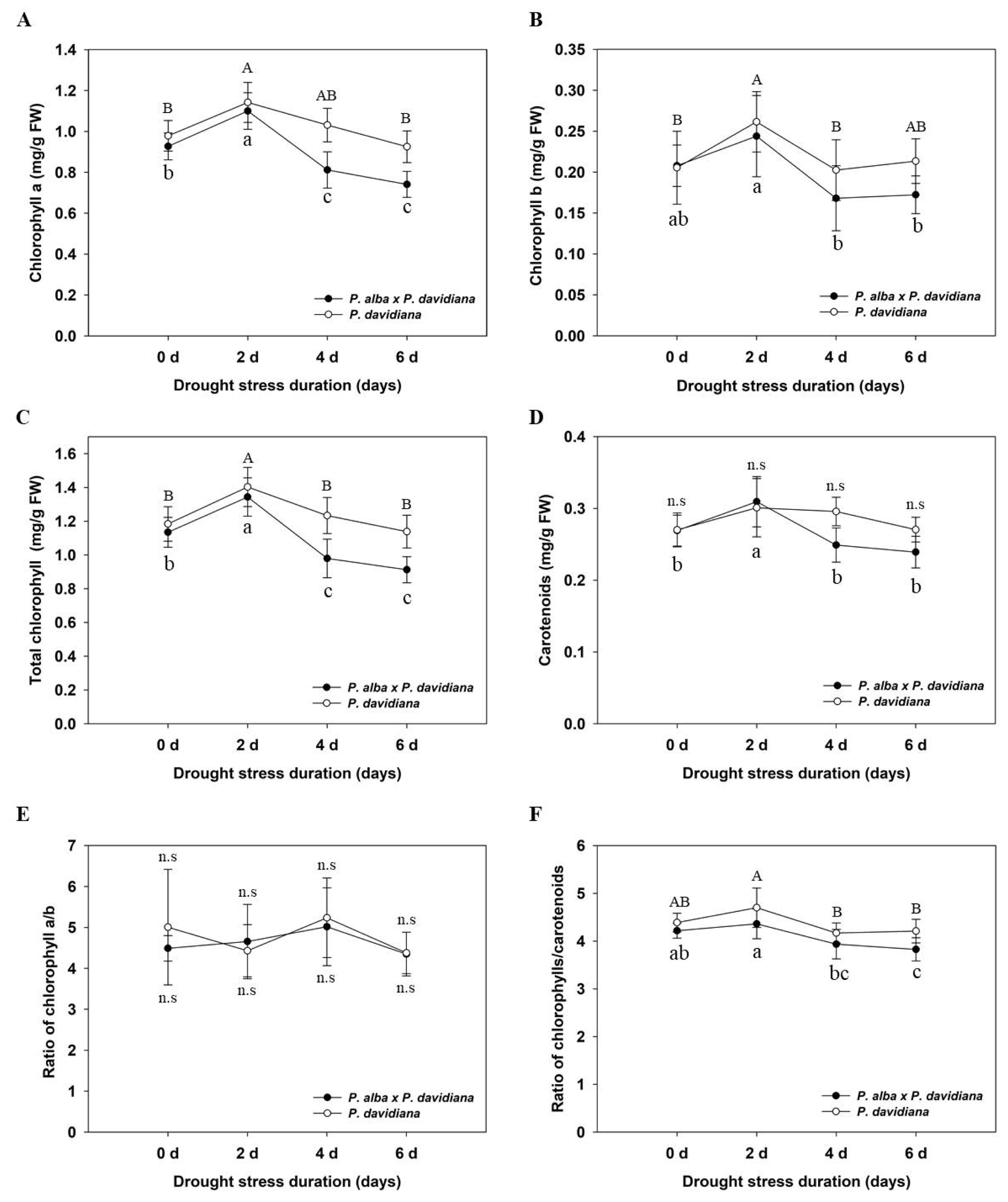
P. davidiana. There is a connection between chlorophyll content and photosynthetic activity, and chlorophyll levels are affected by water deficit conditions. The contents of chlorophyll a and chlorophyll b in both poplars significantly decreased after 4 days and 6 days compared with 0 days or 2 days (
Fig. 3). In addition, the total chlorophyll content of the two poplars was also significantly reduced at 4 days and 6 days. In the case of carotenoids, only
P. alba ×
P. davidiana showed a change compared with the 2-day treatment. In both
P. alba ×
P. davidiana and
P. davidiana, there was no significant change in the ratio of chlorophyll a/b under drought stress conditions. The levels of photosynthetic pigments were overall higher in
P. davidiana than in
P. alba ×
P. davidiana under water deficit conditions. Taken together, these changes in phenotypic and chlorophyll fluorescence and photosynthetic pigments indicated that
P. alba ×
P. davidiana was under drought stress more than
P. davidiana.
Soluble sugars play an important role in maintaining the osmotic balance of plants and act as signal regulators under drought stress (
Wahid et al. 2007;
Rosa et al. 2009;
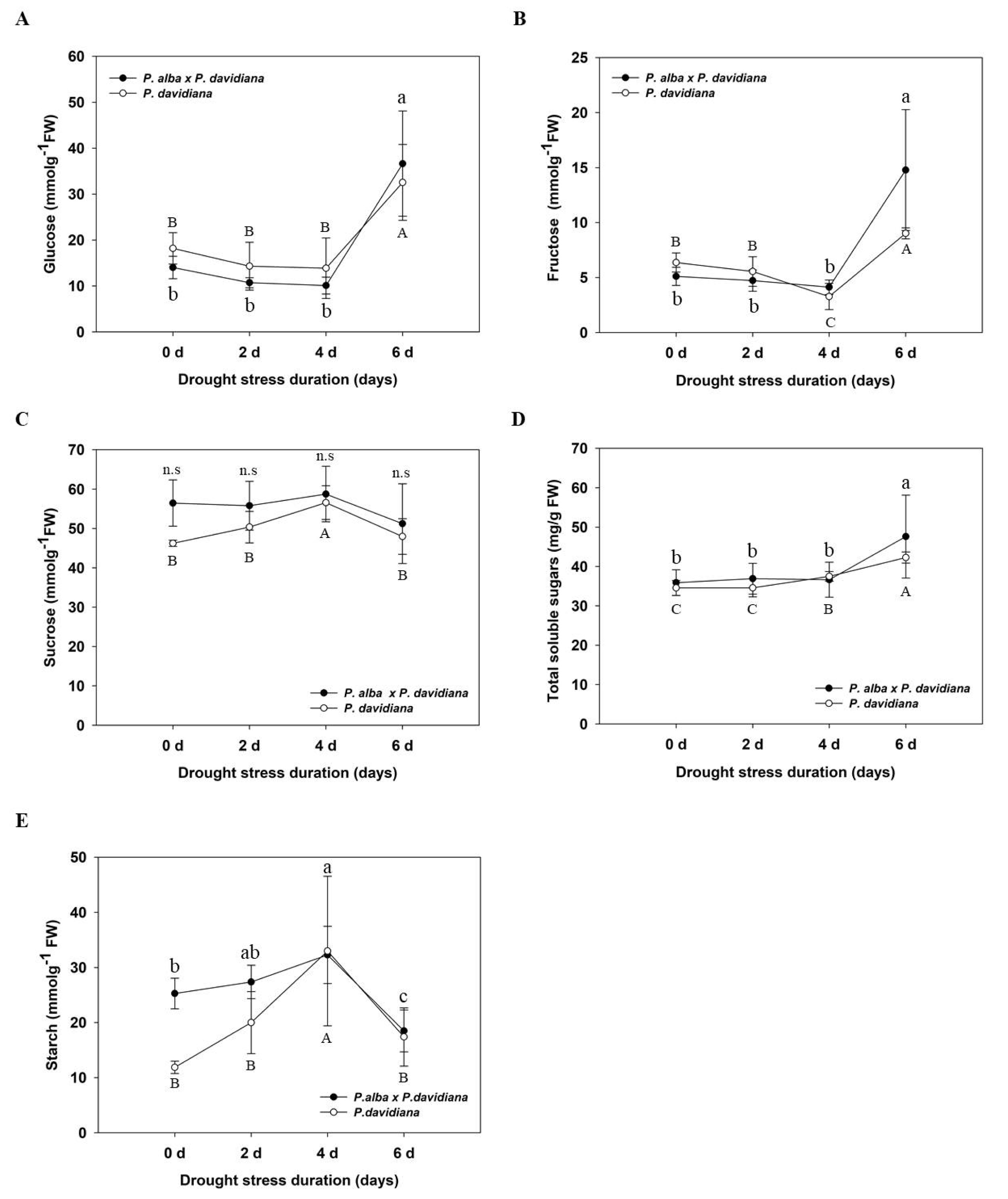
Sami et al. 2016). The major carbohydrates detected in the leaves of poplars were sucrose, fructose, and glucose. The amounts of glucose, fructose, sucrose, total soluble sugar, and starch in the poplars were measured to determine the influence on carbon partitioning under drought stress. Both poplars showed significant increases in glucose and fructose contents after 6 days of drought treatment;
P. alba ×
P. davidiana increased by approximately 3.6-fold, and
P. davidiana increased by approximately 2.6-fold (
Fig. 4). In addition, total-soluble sugars in
P. alba ×
P. davidiana exhibited a significant increase 6 days after drought treatment, while those in
P. davidiana gradually and slightly increased. The starch content of both poplars rapidly decreased on the 6-day drought treatment, and it decreased by almost half compared with the peak. However, statistically meaningful differences were not observed in the sucrose of
P. alba ×
P. davidiana. The variation pattern of glucose, fructose, sucrose, total soluble sugar, and starch along with drought stress was similar for both poplars, but the change in
P. alba ×
P. davidiana was larger.
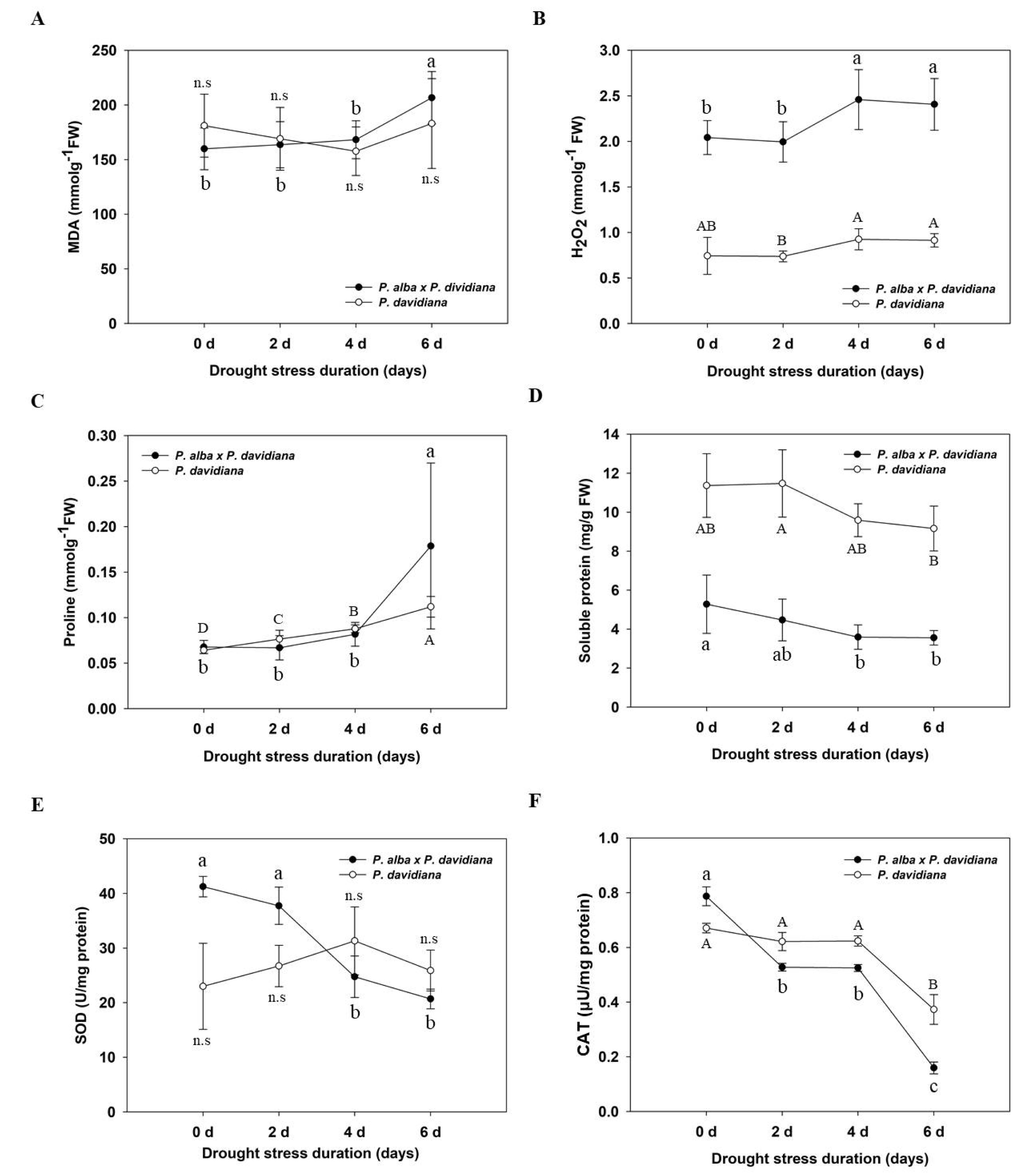
We measured MDA content, which efficiently indicates cell membrane damage caused by drought stress and is a classic marker of lipid peroxidation. As drought treatment progressed, the MDA content of
P. alba ×
P. davidiana exhibited slightly increasing trends and showed a signi-ficant increase after 6 days of treatment (
Fig. 5A). After 6 days of drought stress, the MDA content increased approximately 1.2-fold compared with the MDA content at 0 days. In contrast, the MDA content in
P. davidiana showed no statistically significant change.
Given that drought induced H
2O
2 production, experiments were carried out to examine the change in the level of H
2O
2 in leaves under drought stress (
Fig. 5B). The level of H
2O
2 in both poplars increased at 4 days and 6 days after drought treatment. Overall, it was observed that
P. alba ×
P. davidiana had approximately twice the H
2O
2 content than
P. davidiana.
Proline accumulation is a common adaptive response to drought stress in plants. The proline content in
P. alba ×
P. davidiana rapidly increased starting 6 days from the beginning of the experiment, reaching values 2.4-fold higher than those at 0 days (
Fig. 5C). The proline content in
P. davidiana gradually increased little by little.
Soluble protein plays a critical role in maintaining the osmotic balance of plants under drought stress (
Wahid et al. 2007;
Sami et al. 2016), and this can be an indicator to identify plants that lack water (
Bano et al. 2013). The concentration of soluble protein in
P. alba ×
P. davidiana and
P. davidiana decreased by approximately 33% and 20%, respectively, after 6 days of drought treatment (
Fig. 5D). The response patterns were similar, but the concent-ration of overall soluble proteins was at least twice as high in
P. davidiana than in
P. alba ×
P. davidiana.
Antioxidant enzymes alleviate oxidative stress caused by drought stress (
Sharma and Dubey 2005). Therefore, we measured the activity changes of the representative antioxidants SOD and CAT (
Fig. 5E, F). The change in SOD activity in the two poplars showed a different trend in our study. SOD activity in
P. alba ×
P. davidiana was significantly decreased after drought stress, while SOD activity in
P. davidiana showed no significant change. The CAT activity of
P. davidiana decreased sharply 6 days after drought treatment. In the case of
P. alba ×
P. davidiana, the CAT activity continued to decrease very rapidly after drought treatment. Except for proline, it was confirmed that cell damage and antioxidant-related indicators were worse in
P. alba ×
P. davidiana.
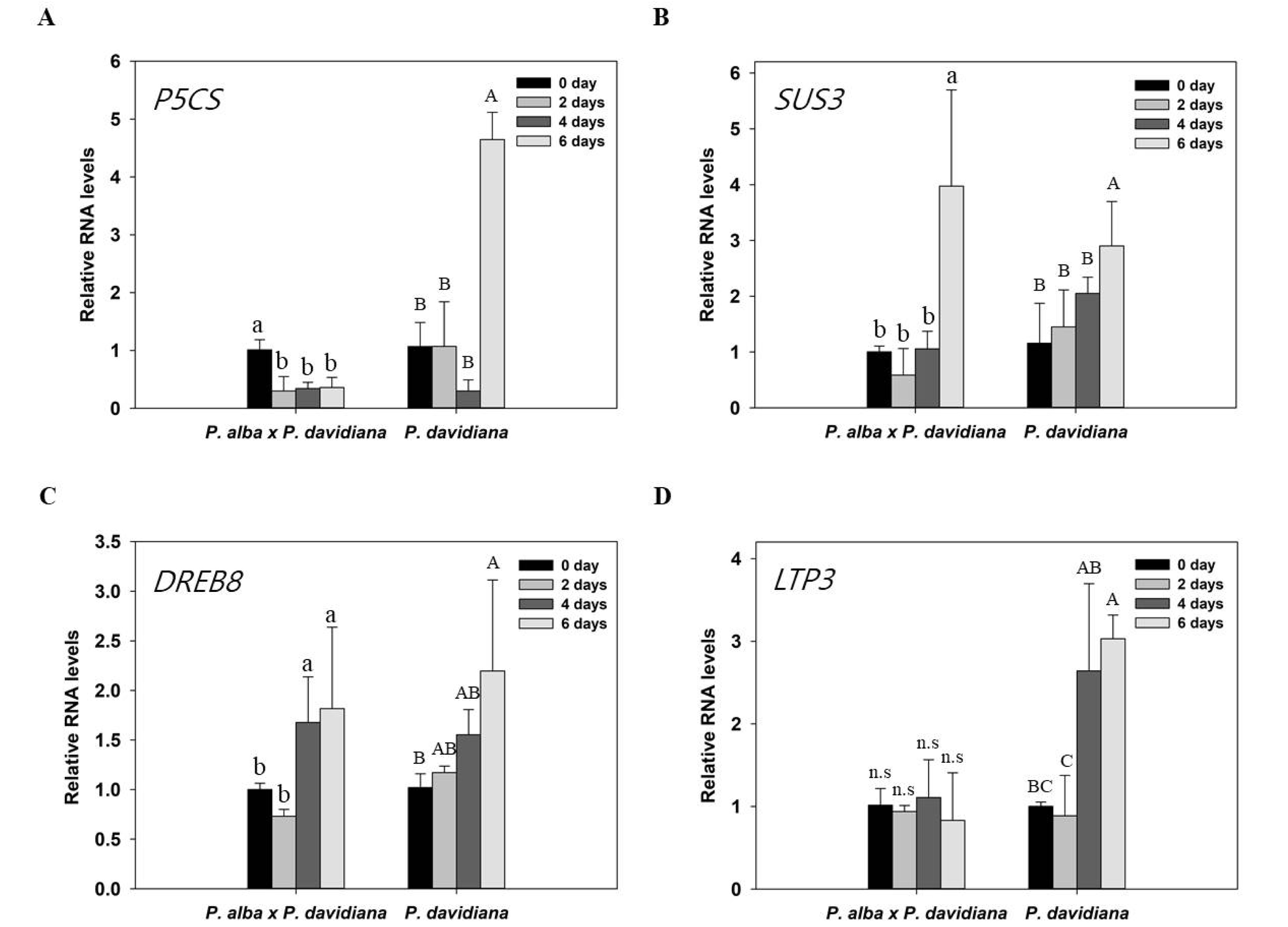
We compared the expression levels of the reported drought marker genes, including
PtP5CS,
PtSUS3,
PtLTP3 and
PtDREB8, at 6 days on both poplars with those at 0 days (
Fig. 6).
PtP5CS,
PtSUS3,
PtLTP3 and
PtDREB8 encode proteins participating in proline synthesis, sucrose synthesis, lipid transfer and dehydration-responsive element binding (DREB) transcription factors, respectively, which have been reported to be upregulated by drought stress and to play pivotal roles in the drought stress response of poplars (
Tang et al. 2013;
Wang et al. 2014). In our study, increases in
PtSUS3 and
PtDREB8 were induced by drought treatment in both poplars, whereas
PtP5CS and
PtLTP3 were increased only in
P. davidiana. These results showed that some drought stress-related genes respond more sensitively to earlier in
P. davidiana than in
P. alba ×
P. davidiana.
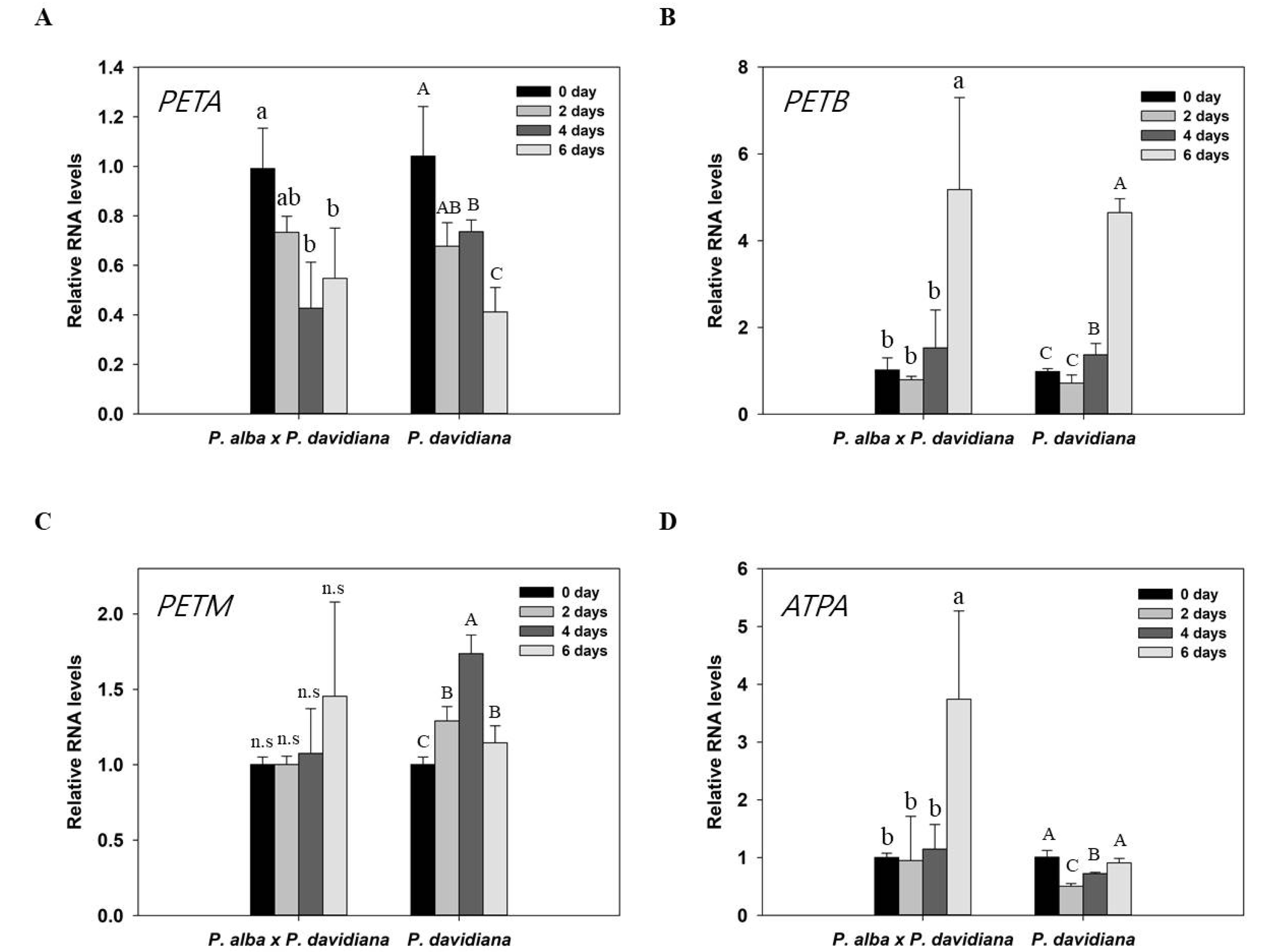
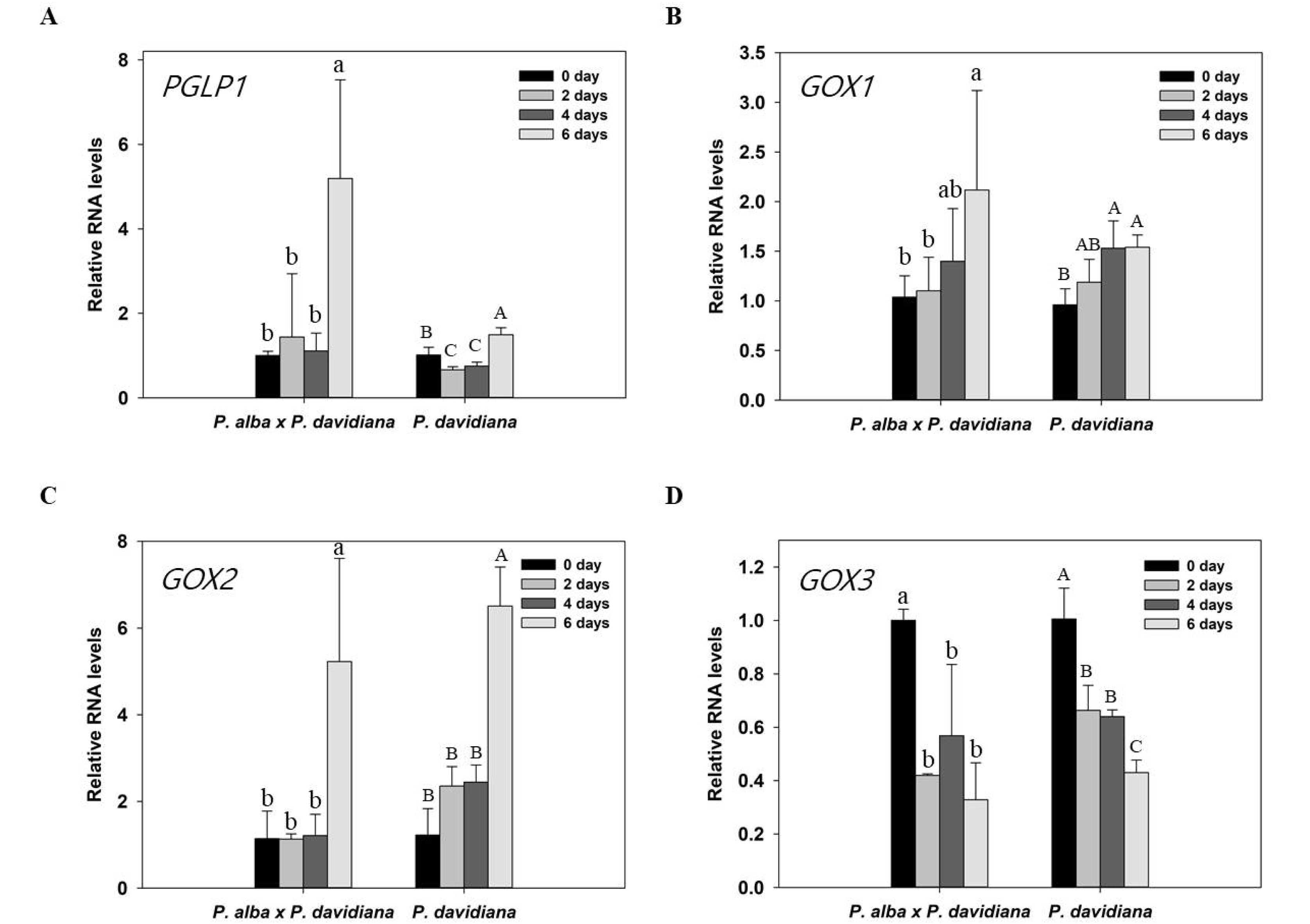
To observe drought stress-induced transcriptional chan-ges, we analyzed the relative expression of eight genes, including four genes related to the electron transfer rate (
PETA,
PETB,
PETM and
ATPA) and four genes related to H
2O
2 production (
GOX1,
GOX2,
GOX3 and
PGLP1), through qRT-PCR (
Figs. 7 and
8).
PETA,
PETB,
PETM and
ATPA encode cytochrome a, b, m and ATPase alpha subunits, respectively (
Song et al. 2014a). These genes were differentially expressed under drought stress. Although
PETA was slightly downregulated, upregulation of
PETA,
PETB,
PETM and
ATPA showed that ATP synthesis was induced. Both poplars were gradually downregulated for
PETA and were upregulated for
PETB on the 6-day drought treatment. In addition, the expression level of
PETM in
P. davidiana was upregulated, and the expression level of
ATPA in
P. alba ×
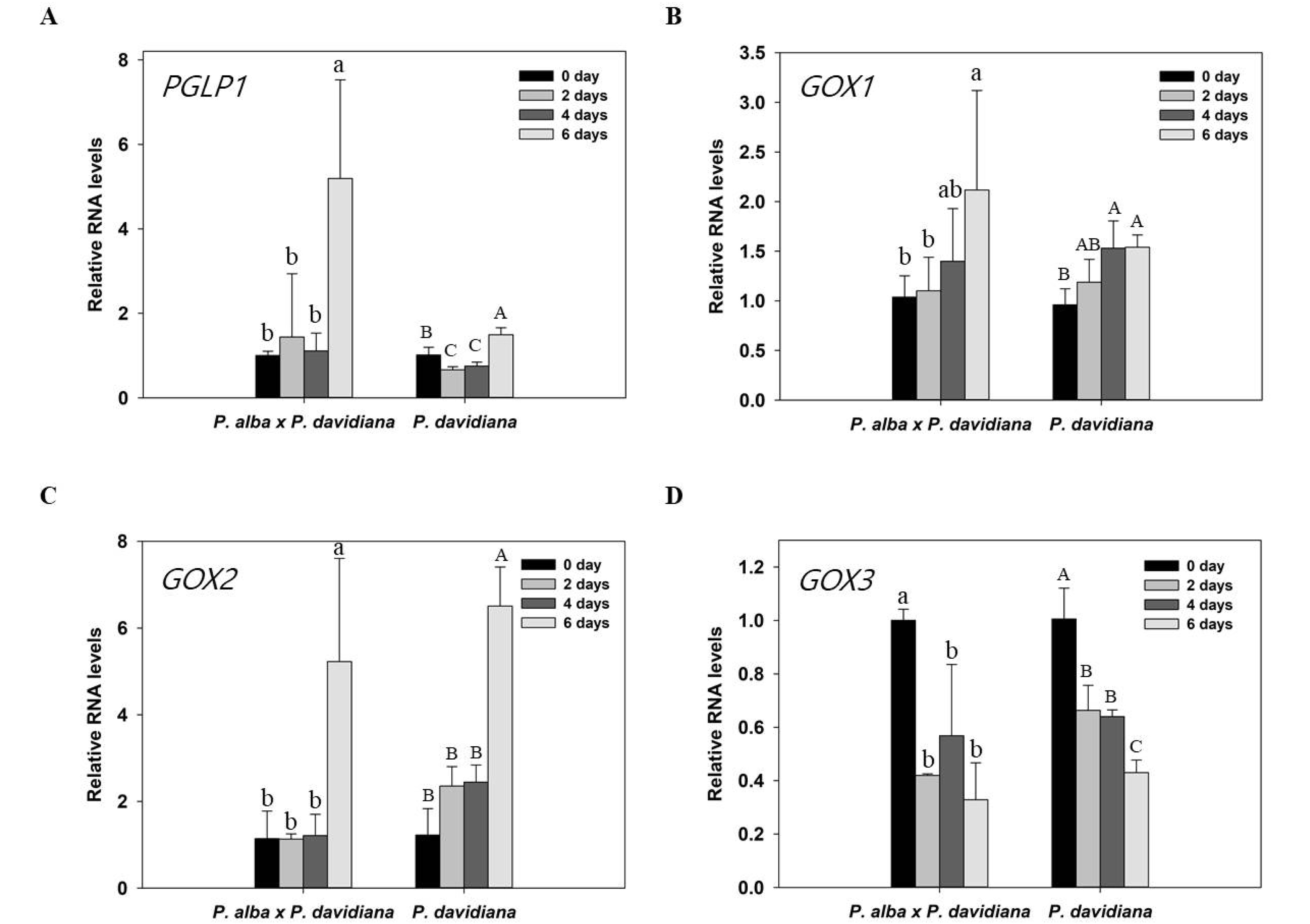
P. davidiana was upregulated at 6 days of treatment. In the case of H
2O
2 production-related genes,
GOX1,
GOX2,
GOX3 and
PGLP1 in both poplars showed a similar trend. In both poplars,
PGLP1,
GOX1 and
GOX2 were upregulated, and
GOX3 was downregulated. Notably, the increase in the expression level of
PGLP1 in
P. alba ×
P. davidiana was larger than that in
P. davidiana. Overall, the qRT-PCR results of the two poplars showed similar changes in the expression levels of genes related to the electron transfer rate and H
2O
2 production under drought treatment, but
ATPA and
PGLP1 showed larger changes in
P. alba ×
P. davidiana.
DISCUSSION
As the initial growing environmental conditions of seedlings greatly affect growth, development and survival, we conducted an early response study to physiological, biochemical and genetic changes under water deficit conditions. In general, the optimum soil moisture content for plant growth is 20-60%. In the experiment, it was measured to be less than 20% after the 2-day drought stress treatment, and it was less than 10% on the 4-day treatment, so it is thought that the seedlings were affected by the water shortage (
Fig. 1). In the preliminary experiment of several species and their hybrids, the phenotypically most stressed
P. alba ×
P. davidiana and the least stressed
P. davidiana were selected. On the 6-day drought stress treatment, the difference in wilting between the two species was clearly observed.
P. alba ×
P. davidiana has a larger stature due to the stronger
P. alba characteristics, so these differences may also have affected stress under drought conditions. Plant growth is affected by drought stress, and the response depends on the adaptation to the duration and severity of the water deficit state (
Yang and Miao 2010). In this study, we found that
P. alba ×
P. davidiana possessed a better height growth rate under good water conditions than did
P. davidiana, whereas
P. davidiana maintained a better height growth rate than did
P. alba ×
P. davidiana under drought stress (
Fig. 1). Under drought stress conditions, this decrease in growth rate should take into account the effect plant wilting to some extent. Nevertheless, this result suggests that
P. alba ×
P. davidiana was more sensitive to drought stress than
P. davidiana and that
P. davidiana had stronger drought tolerance.
We explored the photochemical efficiency of the PSII response to drought stress in two poplar leaves through photosynthesis-related spectroscopy analysis. It is well known that water shortage is one of the main causes of the decline in PSII activity (
Sagardoy et al. 2009). In F
v/F
o and F
v/F
m, the decreasing trend of both species was similar, but
P. alba ×
P. davidiana decreased more than
P. davidiana (
Fig. 2). The significant declines in F
v/F
o in
P. alba ×
P. davidiana and
P. davidiana at 6 days after drought stress treatment. The parameter F
v/F
o means the ratio of photo-chemical and nonphotochemical de-excitation fluxes of excited chlorophyll, so these results indicated a change in the rate of electron transport from PSⅡ to the primary electron acceptors with the density and size (
Lu and Zhang 2000). F
v/F
m represents the maximum yield of primary photochemistry and photosynthetic capability of the entire PSII. When the ratio of F
v/F
m is < 0.8, the PSII reaction core is inactivated or damaged. The decrease in F
v/F
m in
P. alba ×
P. davidiana and
P. davidiana reflects damage to the photosynthetic apparatus in response to drought stress.
Although it is greatly affected by the variety, duration, and stage of the plant, the analysis of the chlorophyll content of leaves is one of the most effective methods for measuring drought tolerance. In this study, there were significant decreases in chlorophyll a, chlorophyll b and total chlorophyll after drought treatment (
Fig. 3). The decline in chlorophyll content under drought stress is a common feature that has been considered a typical symptom of oxidative stress and chlorophyll destruction (
Smirnoff 1993). The chlorophyll content in leaves is affected by stress, and the chlorophyll content is correlated with photosynthetic activity (
Anjum et al. 2011). These reports are also consistent with the similar trend and degree of reduction of chlorophyll content and photochemical efficiency in both poplars in our study (
Figs. 2 and
3). Carotenoids in both poplars reduced slightly or retained their contents, although it has been reported that the capacity to scavenge singlet oxygen and lipid peroxy- radicals and to inhibit lipid peroxidation and superoxide generation under dehydrate force (
Deltoro et al. 1998). Overall, the levels of chlorophyll a, chlorophyll b, total chlorophyll and carotenoids under drought stress conditions were higher in
P. davidiana than in
P. alba ×
P. davidiana. These results suggest that
P. davidiana was less affected by drought stress than
P. alba ×
P. davidiana.
Glucose and sucrose play a role in substrate as osmolytes, and fructose is related to the synthesis of secondary metabolites (
Gupta and Kaur 2005). The levels of glucose, fructose and total soluble sugars significantly increased 6 days after drought treatment, except sucrose and starch (
Fig. 4). In general, drought induced an increase in soluble sugars, which is consistent with our results (
Rosa et al. 2009). There was a sudden drop in the level of starch in both poplars 6 days after drought treatment. Although many plants have been reported to have increased sugar contents during the degradation of starch under drought stress (
Fischer and Höll 1991), the sucrose content in both poplars remained or increased slightly in this experiment. It was confirmed that
P. alba ×
P. davidiana react more sensitively than
P. davidiana to the change in soluble sugars with respect to drought stress.
In general, a decrease in the concentration of soluble protein in plants is a representative feature under drought stress, although protein may increase rapidly in an immediate response to stress (
Fischer and Höll 1991). In this experiment, the concentrations of soluble proteins in both poplars slightly decreased (
Fig. 5). Referring to the report that lowered levels of protein are a characteristic symptom of oxidative stress (
Moran et al. 1994), it is thought that there is a correlation between the increase in H
2O
2, the decrease in SOD, and the decrease in CAT and the decrease in soluble protein in our experiment (
Fig. 5B, E, F). The concentration of soluble protein was notably different between the two species, and the concentration of soluble proteins in
P. davidiana was maintained more than as high as that in
P. alba ×
P. davidiana. In some cases, it was reported that the accumulation of soluble proteins was enhanced in plants under drought stress and conferred drought tolerance (
Chen and Plant 1999). We speculate that this intrinsic difference in the soluble protein con-centration of the two species may have affected the drought stress tolerance of the two species as an osmolyte. In addition, the decrease in soluble protein is correlated with the accumulation of free amino acids (
Iqbal et al. 2011).
The accumulation of proline content in plants under drought stress is a well-known drought tolerance response, as proline acts as an osmolyte and radical scavenger (
Yin et al. 2005). Both poplars showed a gradual increase in proline content up to the 6-day drought treatment but did not show a strong response to drought stress (
Fig. 5).
P5CS,
Δ1-pyrroline-5-carboxylate synthetase, is a gene encoding a rate-limiting enzyme for proline synthesis, which catalyzes the NADPH-dependent reduction of glutamate to g-glutamate-semialdehyde (GSA) (
Liang et al. 2013). At the RNA level, the expression level of
PtP5CS, a gene encoding the key enzyme for proline synthesis, was slightly downregulated in
P. alba ×
P. davidiana and increased approximately 4-fold in
P. davidiana at 6 days (
Fig. 6). These results show that proline production has not yet been induced explosively even though the proline content slightly increased until 6 days of drought treatment and that
P. davidiana reacts more sensitively at the RNA level.
The osmotic balance in plants is maintained via the accumulation of compatible osmoprotectants by stabilizing cellular membranes and maintaining turgor, such as soluble sugars, soluble protein, and free proline (
Moran et al. 1994;
Yang and Miao 2010;
Sami et al. 2016). In the two poplars, the amounts of soluble sugars (glucose, fructose, and total soluble sugar) and free proline started to increase at 6 days, and it was confirmed that those in
P. alba ×
P. davidiana increased relatively more than those in
P. davidiana (
Figs. 4 and
5). This result suggested that
P. alba ×
P. davidiana possessed a better osmotic adjustment, although it had lower drought tolerance than
P. davidiana. It can be inferred from the experimental results that proline and soluble sugars (glucose, fructose, sucrose and total soluble sugar) do not play a pivotal role in drought stress tolerance in
P. alba ×
P. davidiana and
P. davidiana. This is because, despite their role as functional osmolytes and antioxidants for osmotic stress and ROS detoxification responses, higher levels of accumulation were observed in drought-sensitive species.
ROS produced excessively due to stress disrupt the balance between antioxidants and ROS and cause oxidative damage to membrane lipids (
Apel and Hirt 2004). The byproduct produced at this time is MDA, which is a representative lipid peroxidation marker (
Møller et al. 2007). Although
P. alba ×
P. davidiana showed a significantly more wilted phenotype as drought treatment progressed compared to
P. davidiana, the difference in MDA level between the two species was not significant (
Figs. 1 and
5). While
P. davidiana had no statistically significant change,
P. alba ×
P. davidiana had a gradual but definite increase in MDA levels at the end. This result also suggested that
P. davidiana has better drought tolerance than
P. alba ×
P. davidiana. This response of the MDA level is considered to be correlated with the result that
P. alba ×
P. davidiana, which will be described later, main-tains a relatively high level at H
2O
2, and the antioxidants (SOD, CAT) rapidly decrease (
Fig. 6).
Plants maintain the balance of ROS and antioxidants through sophisticated and complex control under normal conditions. Overproduction of ROS, such as hydrogen peroxide (H
2O
2), superoxide (O
2⋅‒), hydroxyl radical (OH
⋅) and singlet oxygen (
1O
2⋅), is enhanced under abiotic stresses, which can cause oxidative damage to nucleic acids, proteins, lipids, and carbohydrates (
Hossain et al. 2015). Compared to other ROS, its relatively weak toxicity, long lifespan (~1 ms), and small size allow H
2O
2 to play a stress-response signaling role as a secondary messenger (Cruz de Carvalho 2008). Thus, an increase in H
2O
2 levels is also a measure of the stress the plant is under, along with MDA induced by oxidative damage. As a major scavenger of superoxide anion radicals, SOD catalyzes the dismutation of superoxide (O
2⋅‒) to molecular oxygen and hydrogen peroxide (H
2O
2) (Cruz de Carvalho 2008). Subsequently, CAT, APX and other antioxidant enzymes scavenge H
2O
2. Among them, CAT has a lower affinity for H
2O
2 than APX and is located only in the peroxisome to perform limited functions. However, CAT is suitable as an indicator of drought tolerance because it only removes the overproduced H
2O
2 due to severe drought stress. Reports on SOD and CAT activities under drought stress are heterogeneous, with different responses depending on plant species, age and tolerance as well as the duration and intensity of stress treatment. (
Türkan et al. 2005; Cruz de Carvalho 2008). In general, increased SOD activity provides oxidative stress tolerance (
Pan et al. 2006). The level of H
2O
2 was increased on day 4 in both species, and CAT activity was also decreased at the same time (
Fig. 5B, F). However, because
P. alba ×
P. davidiana had a relatively high intrinsic H
2O
2 content and the decrease in CAT activity was also more severe, it would have been subjected to more oxidative stress. In addition, in
P. alba ×
P. davidiana, the lack of superoxide treatment due to the rapid decrease in SOD activity may also have affected the oxidative stress (
Fig. 5E). Collectively, these results are consistent with the trend of change in MDA levels (
Fig. 5). We observed that
P. alba ×
P. davidiana showed a sharper decrease in the levels of antioxidant enzymes (SOD, CAT) than
P. davidiana as drought treatment progressed, although the intrinsic H
2O
2 concentration of
P. alba ×
P. davidiana continued to be high (
Fig. 5). There was a higher-level increase in lipid peroxidation (MDA) and H
2O
2 in
P. alba ×
P. davidiana than in
P. davidiana, suggesting a further decreased ability to modulate peroxide anion free radicals and H
2O
2 in
P. alba ×
P. davidiana. The ability to maintain the activity of antioxidant enzymes to reduce cell damage under drought stress may be an important characteristic of
P. davidiana. Therefore,
P. davidiana has a better antioxidant capacity to counteract drought stress.
In our study, increases in
PtSUS3 and
PtDREB8 were induced by drought treatment in both poplars, whereas
PtP5CS and
PtLTP3 were increased only in
P. davidiana (
Fig. 6). In
P. davidiana, the expression of
PtP5CS was upregulated at 6 days of drought treatment, but it seems that it has not yet been reflected in proline synthesis. In addition, the upregulation of
LPT3 at 4 days was very rapid and increased more than threefold, showing a very distinct response difference from
P. alba ×
P. davidiana.
LTP3 is directly regulated by
MYB96, and it participates in the plant’s tolerance to drought and freezing stresses (
Guo et al. 2013).
At the same time, chlorophyll fluorescence, chlorophyll content and physiological analysis indicated that the electron transfer rate significantly decreased and H
2O
2 significantly increased in the 6-day drought treatment. These results suggested that changes in electron transfer and H
2O
2 might be related to a reduction in photosynthesis under drought stress. Thus, we selected four genes (
PETA,
PETB,
PETM and
ATPA) associated with the electron transfer rate and four genes (
PGLP1,
GOX1,
GOX2 and
GOX3) associated with H
2O
2 production for gene expression analysis (
Figs. 7 and
8). Genes related to H
2O
2 production in both poplars showed similar changes. Of the two poplars, the expression of
PGLP1, especially in
P. alba ×
P. davidiana, was significantly upregulated 6 days after drought treatment. It may alleviate photosynthetic inhibition due to the scavenging of 2-PG, which is known as a potent inhibitor of enzymes in photosynthetic carbon metabolism (
Kelly et al. 1976). It is known that environ-mental stress can damage PSII (
Song et al. 2014b). In these results, the expression of
PETB was upregulated at 6 days, and PETB plays an important role in PSII repair and ATP synthesis (
Song et al. 2014a). In addition, ATPA, which plays an important role in promoting the conversion of ADP to ATP, was also upregulated at 6 days. Including the above
PGLP1 results, all showed that
P. alba ×
P. davidiana was more upregulated than
P. davidiana. It is thought that the upregulation of genes for maintaining ATP synthesis in
P. alba ×
P. davidiana when chlorophyll fluo-rescence degradation became more severe. These results confirmed that both poplars recognized the photosynthesis degradation caused by drought stress at 6 days and res-ponded at the gene level. The
GOX gene family plays an important role in converting glycolate to glyoxylate and in H
2O
2 production (
Rojas and Mysore 2012). Although
GOX3 of both poplars was slightly downregulated,
PGLP1,
GOX1 and
GOX2 were upregulated, and antioxidant CAT activity was reduced, resulting in increased H
2O
2 pro-duction.
CONCLUSION
This paper presented a study focused on measuring several physiological, biochemical and molecular analyses of two poplar species with different drought tolerances. In conclusion, our study provided an extensive analysis of the biochemical and physiological early response characteristics of two poplar seedlings to drought stress. When poplars were exposed to progressive drought, changes appeared early and severely in height growth inhibition, reduction of chlorophyll fluorescence and photosynthetic pigments, and increment of MDA and H2O2 in P. alba × P. davidiana compared to P. davidiana. In contrast, P. davidiana showed less growth inhibition and wilting, and the reduction of soluble protein and enzymatic antioxidants such as SOD and CAT was relatively slow and less affected. In addition, the concentration of soluble protein was maintained at a higher level than that of P. alba × P. davidiana. Sur-prisingly, although the changes in proline and soluble sugar contents under drought stress were higher in P. alba × P. davidiana than in P. davidiana, they did not have a significant effect on drought tolerance. In addition, the changes in the genes for electron transport and H2O2 production do not appear to be fully activated in the early stages of drought stress. In this study, the strength of P. davidiana compared to P. alba × P. davidiana is its ability to maintain enzymatic and nonenzymatic antioxidants such as SOD, CAT and carotenoids and strong expression of the LTP3 gene. Our data suggest that the lower drought tolerance of P. alba × P. davidiana might be correlated with oxidative damage by diminishing antioxidant systems. The physiology, biochemistry and gene expression analyses of this study have expanded our understanding of the early response to drought stress and provide new clues for further studies.
Supplemental Materials
ACKNOWLEDGEMENTS
This study was supported by National Institute of Forest Science, Republic of Korea (FG0402-2022-01).
Notes
-
CONFLICT OF INTEREST
The authors declare that they have no conflict of interest.
Fig. 1Representative phenotype of P. alba × P. davidiana and P. davidiana under water deficit conditions. (A) Morphological differences between P. alba × P. davidiana and P. davidiana under drought stress conditions. (B) Volumetric water content in the soil of the control- and drought-treated plant pots. The soil moisture was measured every 2 days for 6 days. The control plants were watered throughout the experiment. (C, D) The effect of drought stress treatment on the shoot growth and diameter of poplar seedlings. The values are the means ± SD (n = 6).
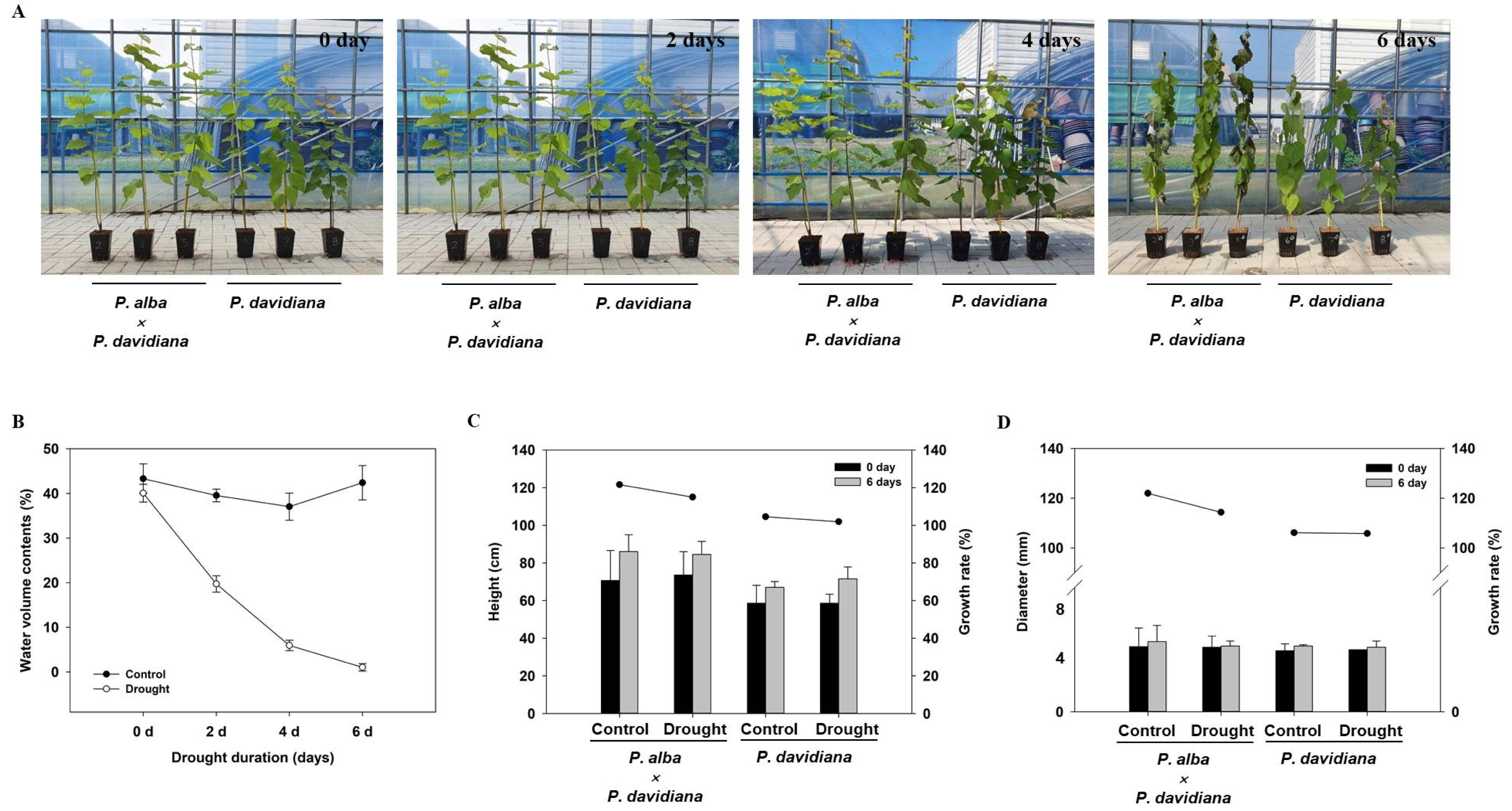
Fig. 2Changes in chlorophyll fluorescence under drought stress. (A) Fv/Fo represents the ratio of variable to potential activity of PSII (the number and size of active photosynthetic centers). (B) Fv/Fm represents the ratio of variable to maximal chlorophyll fluorescence (maximal PSⅡ photochemical efficiency). Error bars represent standard error. Different letters on lines indicate significant differences at P < 0.05 (a lower-case letter for P. alba × P. davidiana and a capital letter for P. davidiana based on ANOVA with Tukey’s HSD).
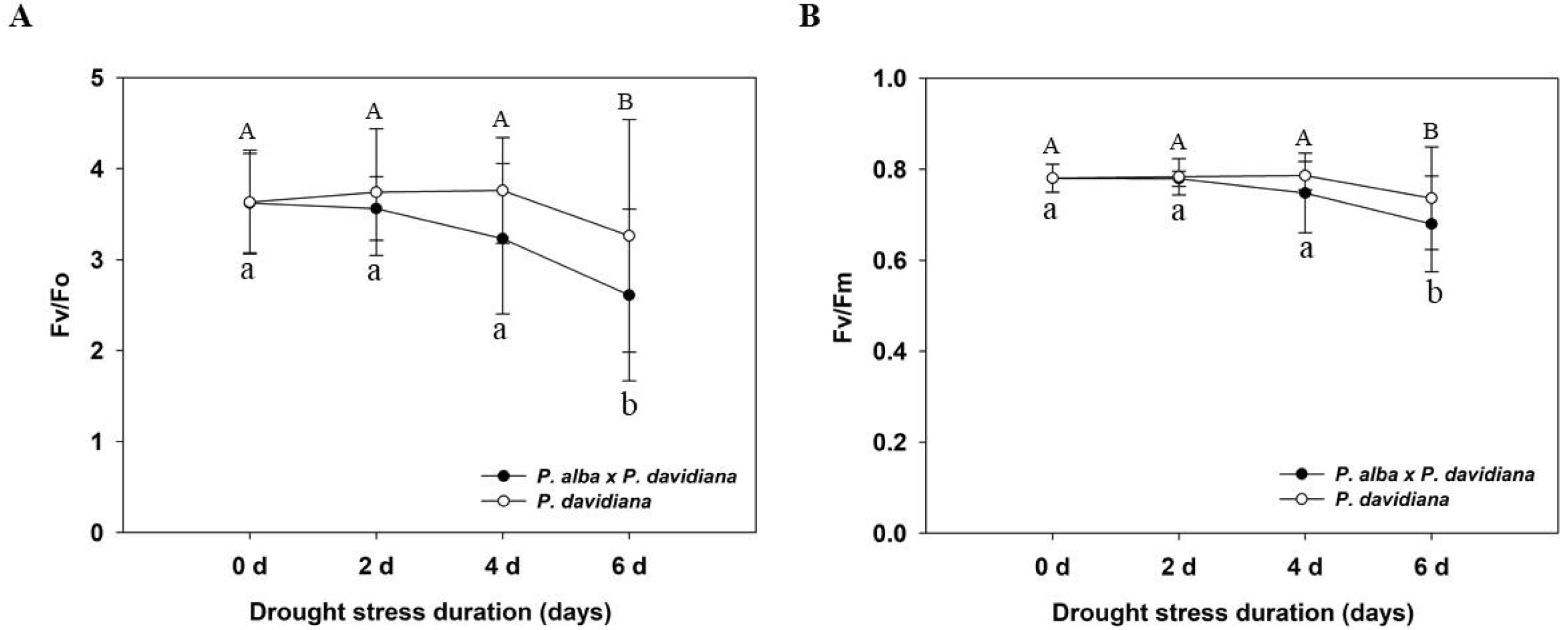
Fig. 3Effects of drought stress treatment on photosynthetic pigments in poplars. (A) Chlorophyll a. (B) Chlorophyll b. (C) Total chlorophyll. (D) Carotenoids. (E) Chlorophyll a/b. (F) Total chlorophyll/carotenoids. Values are means ± SDs of three independent measurements. Different letters indicate significant differences, and “n.s” indicates not significant (a lower-case letter for P. alba × P. davidiana and a capital letter for P. davidiana based on ANOVA with Tukey’s HSD, P < 0.05).
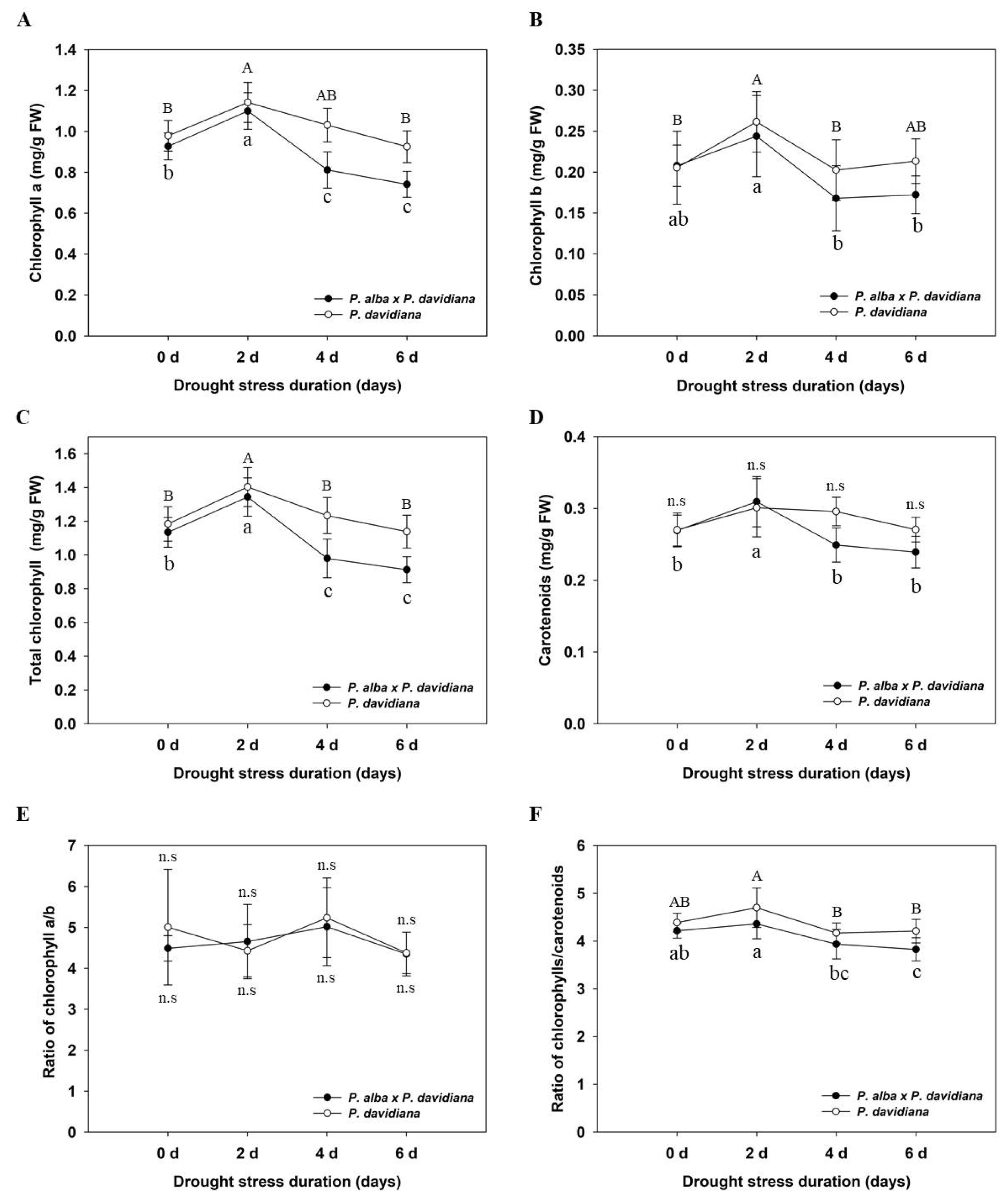
Fig. 4Effects of drought stress treatment on carbohydrate contents in poplars. (A) Glucose. (B) Fructose. (C) Sucrose. (D) Total soluble sugars. (E) Starch. Values are means ± SDs of three independent measurements. Different letters indicate significant differences, and “n.s” indicates not significant (a lower-case letter for P. alba × P. davidiana and a capital letter for P. davidiana based on ANOVA with Tukey’s HSD, P < 0.05).
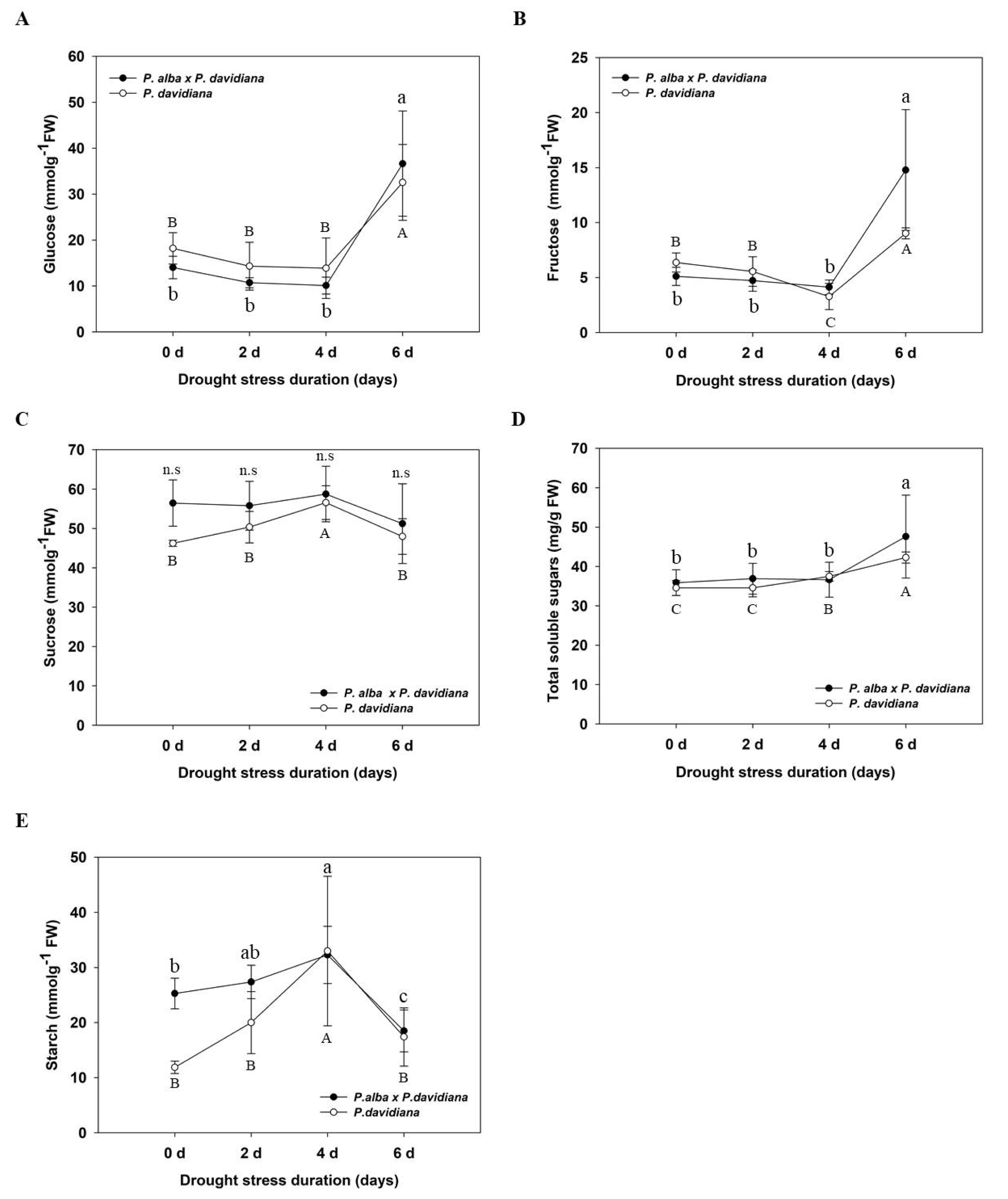
Fig. 5Changes in MDA, H2O2, proline, SOD, CAT, and soluble protein levels in response to drought stress. (A) MDA. (B) H2O2. (C) Proline. (D) Soluble protein. (E) SOD. (F) CAT. Values are means ± SDs of three independent measurements. Different letters indicate significant differences, and “n.s” indicates not significant (a lower-case letter for P. alba × P. davidiana and a capital letter for P. davidiana based on ANOVA with Tukey’s HSD, P < 0.05).
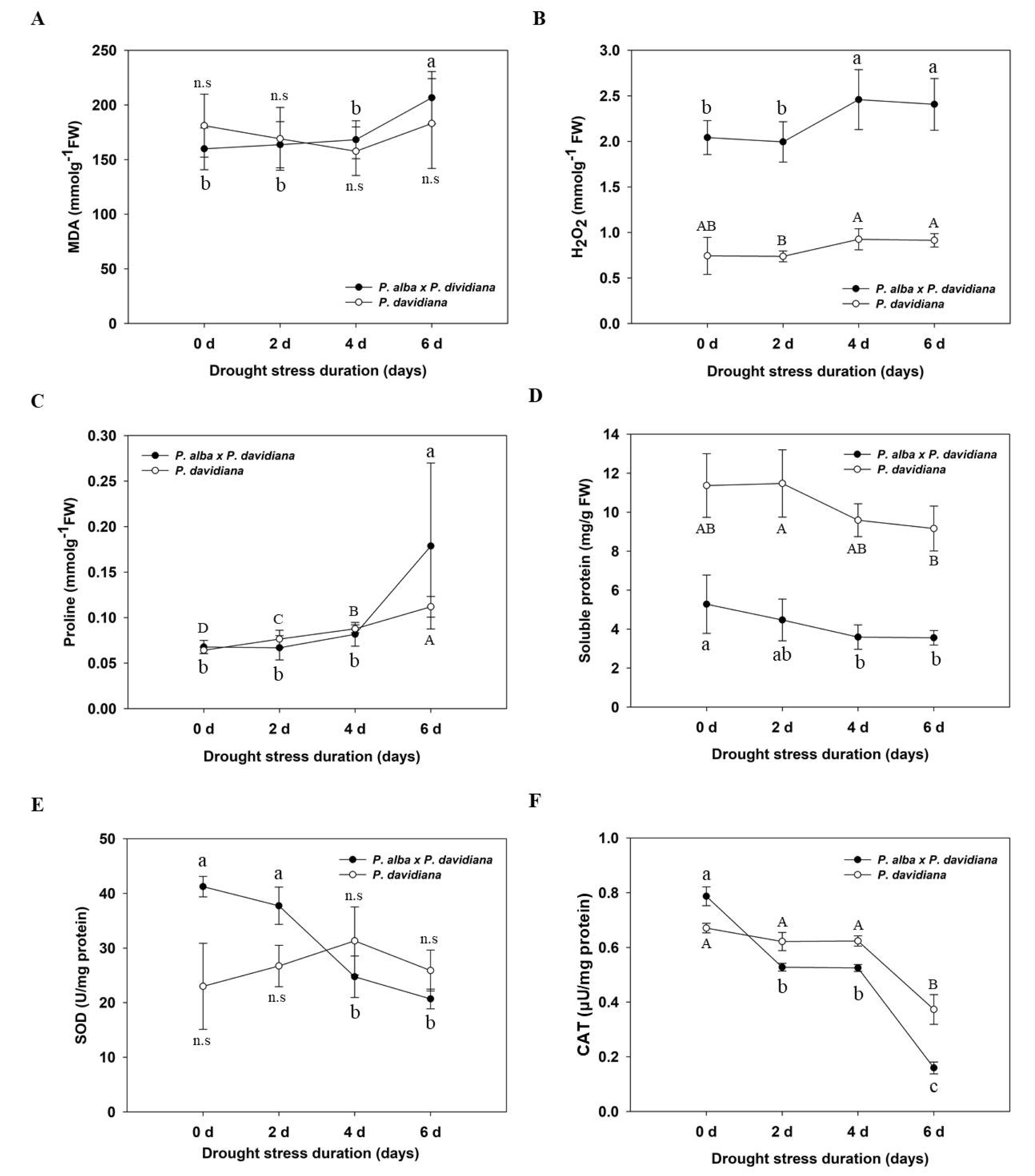
Fig. 6Quantitative RT–PCR of four drought marker genes. (A) PtP5CS. (B) PtSUS3. (C) PtDREB8. (D) PtLPT3. Transcript levels are normalized to ACTIN and UBQ7, and error bars represent standard error (n = 3). Different letters indicate significant differences, and “n.s” indicates not significant (a lower-case letter for P. alba × P. davidiana and a capital letter for P. davidiana based on ANOVA with Tukey’s HSD, P < 0.05).
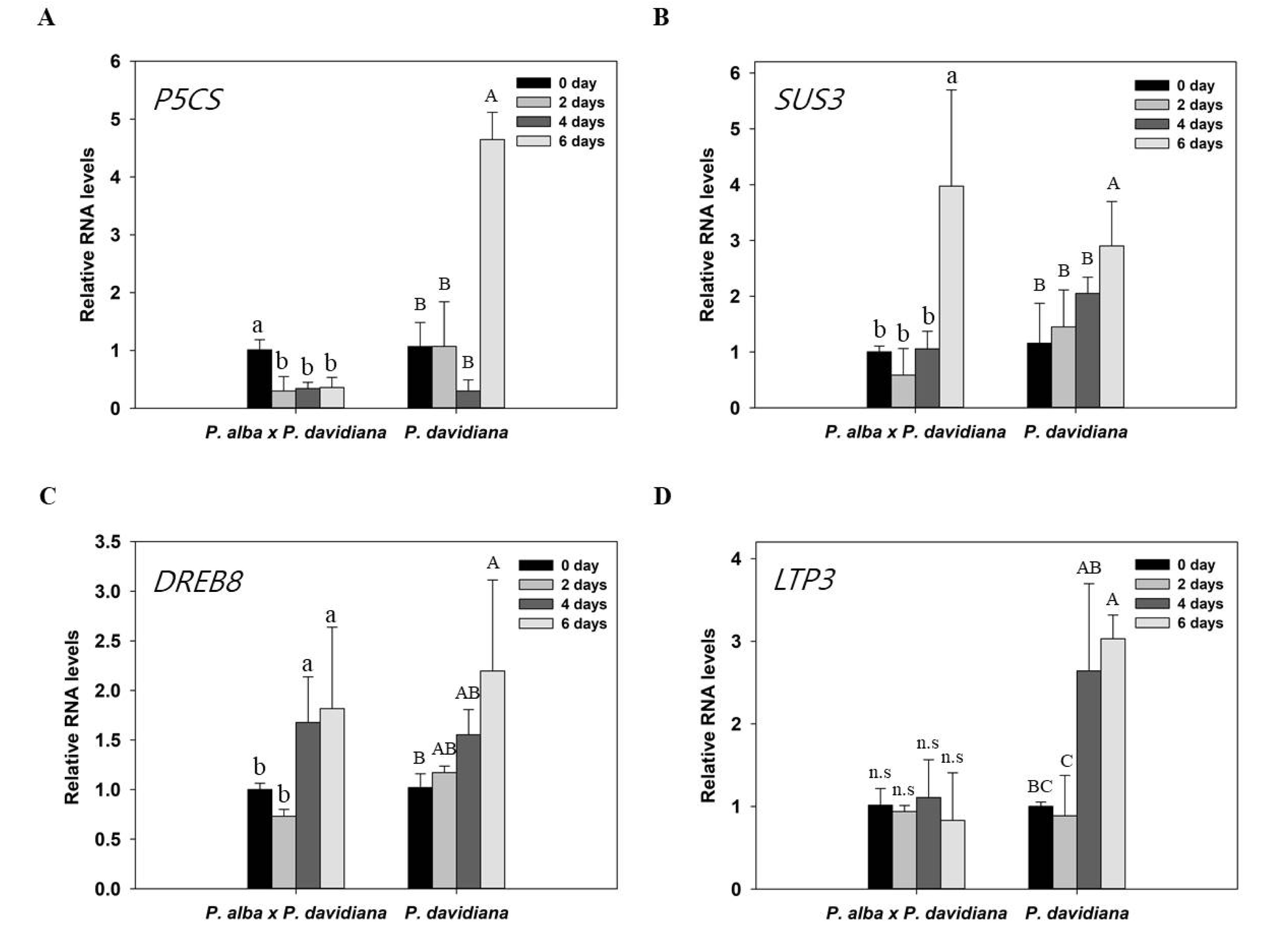
Fig. 7Quantitative RT-PCR of four candidate genes related to electron transfer. (A) PETA. (B) PETB. (C) PETM. (D) ATPA. Transcript levels are normalized to ACTIN and UBQ7, and error bars represent standard error (n = 3). Different letters indicate significant differences, and “n.s” indicates not significant (a lower-case letter for P. alba × P. davidiana and a capital letter for P. davidiana based on ANOVA with Tukey’s HSD, P < 0.05).
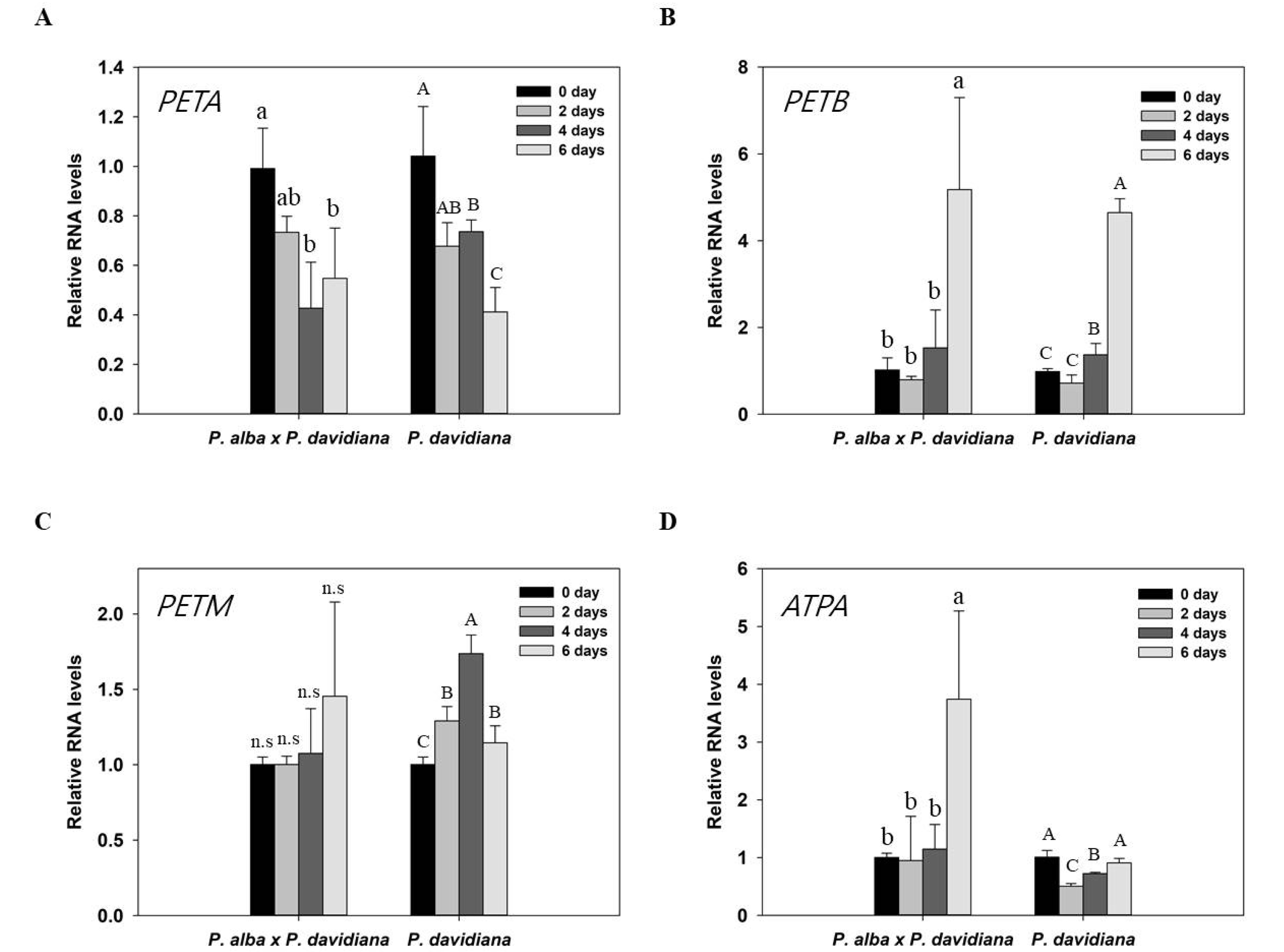
Fig. 8Quantitative RT-PCR of four candidate genes related to H2O2 production. (A) PGLP1. (B) GOX1. (C) GOX2. (D) GOX3. Transcript levels are normalized to ACTIN and UBQ7, and error bars represent standard error (n = 3). Different letters indicate significant differences (a lower-case letter for P. alba × P. davidiana and a capital letter for P. davidiana based on ANOVA with Tukey’s HSD, P < 0.05).
References
- Alexieva V, Sergiev I, Mapelli S, Karanov E. 2001. The effect of drought and ultraviolet radiation on growth and stress markers in pea and wheat. Plant. Cell. Environ.. 24: 1337-1344.
- Anjum SA, Xie X, Wang L, Saleem MF, Man C, Lei W. 2011. Morphological, physiological and biochemical responses of plants to drought stress. Afr. J. Agric. Res.. 6: 2026-2032.
- Apel K, Hirt H. 2004. Reactive oxygen species: metabolism, oxidative stress, and signal transduction. Annu. Rev. Plant. Biol.. 55: 373-399.
- Bano Q, Ilyas N, Bano A, Zafar N, Akram A, Hassan FU. 2013. Effect of Azospirillum inoculation on maize (Zea mays L.) under drought stress. Pak. J. Bot.. 45: 13-20.
- Bates LS, Waldren RP, Teare ID. 1973. Rapid determination of free proline for water-stress studies. Plant. Soil.. 39: 205-207.
- Beritognolo I, Piazzai M, Benucci S, Kuzminsky E, Sabatti M, Mugnozza GS, et al. 2007. Functional characteri-sation of three Italian Populus alba L. genotypes under salinity stress. Trees.. 21: 465-477.
- Bradford MM. 1976. A rapid and sensitive method for the quantitation of microgram quantities of protein utilizing the principle of protein-dye binding. Anal. Biochem.. 72: 248-254.
- Bray EA. 1997. Plant responses to water deficit. Trends. Plant. Sci.. 2: 48-54.
- Brundu G, Lupi R, Zapelli I, Tiziana Fossati, Giuseppe Patrignani, Ignazio Camarda, et al. 2008. The origin of clonal diversity and structure of Populus alba in Sardinia: evidence from nuclear and plastid microsatellite markers. Ann. Bot.. 102: 997-1006.
- Brunner AM, Busov VB, Strauss SH. 2004. Poplar genome sequence: functional genomics in an ecologically domi-nant plant species. Trends. Plant. Sci.. 9: 49-56.
- Chen CC, Plant AL. 1999. Salt-induced protein synthesis in tomato roots: the role of ABA. J. Exp. Bot.. 50: 677-687.
- Cruz de Carvalho MH2008. Drought stress and reactive oxygen species: production, scavenging and signaling. Plant. Signal. Behav.. 3: 156-165.
- Deltoro VI, Calatayud A, Gimeno C, Barreno E. Abadía A1998. Changes in chlorophyll a fluorescence, photosyn-thetic CO2 assimilation and xanthophyll cycle intercon-versions during dehydration in desiccation-tolerant and intolerant liverworts. Planta.. 207: 224-228.
- Fang Y, Xiong L. 2015. General mechanisms of drought response and their application in drought resistance improvement in plants. Cell. Mol. Life. Sci.. 72: 673-689.
- Fischer C. Höll W1991. Food reserves of Scots pine (Pinus sylvestris L.). Trees.. 5: 187-195.
- Guo L, Yang H, Zhang X, Yang S. 2013. Lipid transfer protein 3 as a target of MYB96 mediates freezing and drought stress in Arabidopsis. J. Exp. Bot.. 64: 1755-1767.
- Gupta AK, Kaur N. 2005. Sugar signalling and gene expression in relation to carbohydrate metabolism under abiotic stresses in plants. J. Biosci.. 30: 761-776.
- Heath RL, Packer L. 1968. Photoperoxidation in isolated chloroplasts: I. Kinetics and stoichiometry of fatty acid peroxidation. Arc. Biochem. Biophys.. 125: 189-198.
- Hossain MA, Bhattacharjee S, Armin SM, Qian P, Xin W, Li H, et al. 2015. Hydrogen peroxide priming modulates abiotic oxidative stress tolerance: insights from ROS detoxification and scavenging. Front. Plant. Sci.. 6: 420
- Hou Z, Wang Z, Ye Z, Du S, Liu S, Zhang J. 2018. Phylo-geographic analyses of a widely distributed Populus davidiana: Further evidence for the existence of glacial refugia of cool-temperate deciduous trees in northern East Asia. Eco. Evol.. 8: 13014-13026.
- Iqbal N, Ashraf Y, Ashraf M. 2011. Modulation of endo-genous levels of some key organic metabolites by exogenous application of glycine betaine in drought stressed plants of sunflower (Helianthus annuus L.). Plant. Growth. Regul.. 63: 7-12.
- Irigoyen JJ, Einerich DW. Sánchez-Díaz M1992. Water stress induced changes in concentrations of proline and total soluble sugars in nodulated alfalfa (Medicago sativd) plants. Physiol. Plant.. 84: 55-60.
- Jansson S, Douglas CJ. 2007. Populus: a model system for plant biology. Annu. Rev. Plant. Biol.. 58: 435-458.
- Kautsky H. 1931. Neue versuche zur kohlensaureassimi-lation. Naturwissenschaften.. 19: 964
- Kelly GJ, Latzko E, Gibbs M. 1976. Regulatory aspects of photosynthetic carbon metabolism. Annu. Rev. Plant. Physiol.. 27: 181-205.
- Kim TL, Lee K, Cho W, Park D, Lee IH, Lim H. 2021. Genetic diversity and physiological response to drought stress of Chamaecyparis obtusa from Six geographical locations. Plant. Breed. Biotech.. 9: 112-123.
- Latva-Karjanmaa T, Suvanto L, Leinonen K, Rita H. 2006. Sexual reproduction of European aspen (Populus tremula L.) at prescribed burned site: the effects of moisture conditions. New. For.. 31: 545-558.
- Li XM, Kakubari Y. 2001. Photosynthesis and chlorophylla fluorescence of two poplars under water stress. J. For. Res.. 6: 211-215.
- Liang X, Zhang L, Natarajan SK, Becker DF. 2013. Proline mechanisms of stress survival. Antioxid. Redox. Signal.. 19: 998-1011.
- Livak KJ, Schmittgen TD. 2001. Analysis of relative gene expression data using real-time quantitative PCR and the 2‒ΔΔCT method. Methods.. 25: 402-408.
- Lu CM, Zhang JH. 2000. Heat-induced multiple effects on PSII in wheat plants. J. Plant. Physiol.. 156: 259-265.
- Lu Y, Sharkey TD. 2004. The role of amylomaltase in maltose metabolism in the cytosol of photosynthetic cells. Planta.. 218: 466-473.
- Marron N, Delay D, Petit JM, Dreyer E, Kahlem G, Delmotte FM, et al. 2002. Physiological traits of two Populus × euramericana clones, Luisa Avanzo and Dorskamp, during a water stress and re-watering cycle. Tree. Physiol.. 22: 849-858.
- Møller IM, Jensen PE, Hansson A. 2007. Oxidative modifications to cellular components in plants. Annu. Rev. Plant. Biol.. 58: 459-481.
- Morales F, Abadía A, AbadÞa J. 2008. Photoinhibition and photoprotection under nutrient deficiencies, drought and salinity. In: Photoprotection, photoinhibition, gene regula-tion, and environment. Springer, pp. pp. 65-85.
- Moran JF, Becana M, Iturbe-Ormaetxe I, Frechilla S, Klucas RV, Aparicio-Tejo P. 1994. Drought induces oxidative stress in pea plants. Planta.. 194: 346-352.
- Naumann G, Alfieri L, Wyser K, Mentaschi L, Betts RA, Carrao H, et al. 2018. Global changes in drought conditions under different levels of warming. Geophys. Res. Lett.. 45: 3285-3296.
- Noh ER, Lee SK, Koo YB, Shim SY, Park HR. 1989. Growth patterns and variation of some economic characteristics in selected Korean aspen (Populus davidiana Dode). Forest Genetics Research Institute Research Report of the Forest Genetics Research Institute Suwon Gyonggido, Republic of Korea. pp. 11-29.
- Pan Y, Wu LJ, Yu ZL. 2006. Effect of salt and drought stress on antioxidant enzymes activities and SOD isoenzymes of liquorice (Glycyrrhiza uralensis Fisch). Plant. Growth. Regul.. 49: 157-165.
- Paolucci I, Gaudet M, Jorge V, Beritognolo I, Terzoli S, Kuzminsky E, et al. 2010. Genetic linkage maps of Populus alba L. and comparative mapping analysis of sex determination across Populus species. Tree. Genet. Genomes.. 6: 863-875.
- Pettengill EA, Parmentier-Line C, Coleman GD. 2012. Evaluation of qPCR reference genes in two genotypes of Populus for use in photoperiod and low-temperature studies. BMC. Res. Notes.. 5: 1-12.
- Praba ML, Cairns JE, Babu RC, Lafitte HR. 2009. Identification of physiological traits underlying cultivar differences in drought tolerance in rice and wheat. J. Agron. Crop. Sci.. 195: 30-46.
- Rojas CM, Mysore KS. 2012. Glycolate oxidase is an alter-native source for H2O2 production during plant defense responses and functions independently from NADPH oxidase. Plant. Signal. Behavr.. 7: 752-755.
- Rosa M, Prado C, Podazza G, Interdonato R, González JA, Hilal M, et al. 2009. Soluble sugars: Metabolism, sensing and abiotic stress: A complex network in the life of plants. Plant. Signal. Behav.. 4: 388-393.
- Sagardoy R, Morales F. López-Millán AFAbadía AAbadía J2009. Effects of zinc toxicity on sugar beet (Beta vulgaris L.) plants grown in hydroponics. Plant. Biol.. 11: 339-350.
- Sairam RK, Srivastava GC. 2001. Water stress tolerance of wheat (Triticum aestivum L.): variations in hydrogen peroxide accumulation and antioxidant activity in tolerant and susceptible genotypes. J. Agron. Crop. Sci.. 186: 63-70.
- Sami F, Yusuf M, Faizan M, Faraz A, Hayat S. 2016. Role of sugars under abiotic stress. Plant. Physiol. Biochem.. 109: 54-61.
- Sharma P, Dubey RS. 2005. Drought induces oxidative stress and enhances the activities of antioxidant enzymes in growing rice seedlings. Plant. Growth. Regul.. 46: 209-221.
- Shinozaki K, Yamaguchi-Shinozaki K. 2007. Gene networks involved in drought stress response and tolerance. J. Exp. Bot.. 58: 221-227.
- Sibley JL, Eakes DJ, Gilliam CH, Keever GJ, Dozier WA, Himelrick DG. 1996. Foliar SPAD-502 meter values, nitrogen levels, and extractable chlorophyll for red maple selections. HortScience.. 31: 468-470.
- Smirnoff N. 1993. Tansley Review No. 52. The role of active oxygen in the response of plants to water deficit and desiccation. New. Phytol. 27-58..
- Song Y, Chen Q, Ci D, Shao X, Zhang D. 2014a. Effects of high temperature on photosynthesis and related gene expression in poplar. BMC. Plant. Biol.. 14: 1-20.
- Song Y, Ci D, Tian M, Zhang D. 2014b. Comparison of the physiological effects and transcriptome responses of Populus simonii under different abiotic stresses. Plant. Mol. Biol.. 86: 139-156.
- Stitt M, Lilley RM, Gerhardt R, Heldt HW. 1989. Elsevier. Metabolite levels in specific cells and subcellular compartments of plant leaves. In: Methods in enzymology. Elsevier. pp. 518-552.
- Tang S, Liang H, Yan D, Zhao Y, Han X, Carlson JE, et al. 2013. Populus euphratica: the transcriptomic response to drought stress. Plant. Mol. Biol.. 83: 539-557.
- Türkan I, Bor M, Özdemir F, Koca H. 2005. Differential responses of lipid peroxidation and antioxidants in the leaves of drought-tolerant P. acutifolius Gray and drought- sensitive P. vulgaris L. subjected to polyethylene glycol mediated water stress. Plant. Sci.. 168: 223-231.
- Wahid A, Gelani S, Ashraf M, Foolad MR. 2007. Heat tole-rance in plants: an overview. Environ. Exp. Bot.. 61: 199-223.
- Walters RG, Ibrahim DG, Horton P, Kruger NJ. 2004. A mutant of Arabidopsis lacking the triose-phosphate/phosphate translocator reveals metabolic regulation of starch breakdown in the light. Plant. Physiol.. 135: 891-906.
- Wang L, Su H, Han L, Wang C, Sun Y, Liu F. 2014. Differential expression profiles of poplar MAP kinase kinases in response to abiotic stresses and plant hor-mones, and overexpression of PtMKK4 improves the drought tolerance of poplar. Gene.. 545: 141-148.
- Yang F, Miao LF. 2010. Adaptive responses to progressive drought stress in two poplar species originating from different altitudes. Silva. Fenn.. 44: 23-37.
- Yin C, Peng Y, Zang R, Zhu Y, Li C. 2005. Adaptive responses of Populus kangdingensis to drought stress. Physiol. Plant.. 123: 445-451.
- Zhang W, Chu Y, Ding C, Zhang B, Huang Q, Hu Z, et al. 2014. Transcriptome sequencing of transgenic poplar (Populus×euramericana'Guariento') expressing multiple resistance genes. In: BMC genetics. BioMed Central. pp 1-17: