Abstract
Rice is one of the most important sources of energy for Iranians. Currently, approximately four million tons of paddy are produced annually in 19 provinces of the country. More than 50 new rice cultivars have been introduced in Iran over the last 60 years. The average yield of rice in these years has increased from 2 t ha‒1 to nearly 5 t ha‒1 in farmers’ paddies, although some improved cultivars can produce up to 9 t ha‒1. The main strategy of rice breeding in Iran during the first 40 years was purifying local populations, introducing foreign lines, and producing high-yielding cultivars by cross-breeding and mutagenesis. Meanwhile, the production of high-quality cultivars from crosses between local varieties and high-yielding cultivars has been more emphasized recently. In this review, along with introducing improved varieties of Iranian rice and their characteristics, different improvement methods for creating these varieties are mentioned. Along with traditional breeding methods, it seems that Marker-assisted breeding and breeding by rational design can play important roles in the future of rice breeding in Iran.
-
Key words: Breeding in Iran, Cross-breeding, Rice breeding
INTRODUCTION
Rice is one of the most important crops in the world and plays a vital role in feeding and providing energy for the Iranian people (
Modarresi 2022). Currently, more than four million tons of paddy are produced annually in 19 pro-vinces of Iran (
Ahmadi et al. 2019), which shows the high importance of rice cultivation in the food, financial, and job security of Iranian people and farmers.
The history of rice cultivation in Iran, especially on the Caspian Sea coast, is very long. In the history and the description of the events of the year 932 AD in the Guilan region and mentioning the name of “Voshmgir”, the crown prince of the Ziyarid dynasty, it is stated that “he was engaged in rice cultivation with a group of farmers” (al- Athir 1231). Iranian local rice varieties usually have good flavor and taste, wide adaptation to various environmental conditions, good cooking quality, good marketability, sen-sitivity to blast disease, tall plant height (mostly more than 130 cm high), sensitivity to lodging, and low yield. Contrary to the common belief about the indica type of Iranian cultivars (
Pazuki and Sohani 2013;
Sabouri et al. 2010), there are some reports about the separate type of local Iranian populations and the closeness of these cultivars to the Japonica sub-group. For example, in the study of gene-tic diversity of 100 genotypes of Iranian and foreign lines by 91 SSR markers, Iranian local rice populations showed closer proximity to Japonica genotypes, while indica cul-tivars were grouped in a completely separate group (
Jahani 2013). In addition, The 3,000 RGP (2014),
Gupta et al. (2021) reported that phylogenetic analyses based on SNP data indicated that Iranian Sadri rice and Indian Basmati rice are in the same group. This group is located near the Japonica cultivars and far from the group of Indica cultivars. The author’s experience also shows that local Iranian rice cultivars in crossing with indica cultivars show high heterosis, which is not seen in crossing with japonica cultivars (unpublished), which is probably due to the grea-ter genetic distance with indica cultivars.
Rice breeding research in Iran back to the 1950s, when research stations were established in the north of Iran (Guilan and Mazandaran provinces). At first, the Gilpordesar (Rasht, Guilan) and Firoozkandeh (Sari, Mazandaran) rice research stations focused their main activities on collecting local rice populations, importing foreign germplasm, and considering the compatibility of foreign cultivars with the climatic conditions of northern Iran. Over time and with the increasing importance of research related to rice, new centers were established for research on this plant. In the 1990s, the Rice Research Institute of Iran in Rasht and the Amol branch were founded (
Alinia et al. 2015).
Over the past 60 years, rice breeding in Iran has followed several different paths (and sometimes simultaneously) to introduce new plant varieties. For example, selecting plants with the best yields from varieties and lines (traditional breeding), using molecular markers and mutation breeding (
RRIRAN 2019).
RICE BREEDING STRATEGIES IN IRAN
Breeding based on pure line selection
Pure line selection is one of the primary methods of rice breeding, which is usually based on the selection of a desirable single plant from the population of local geno-types. The use of this method in different countries has led to the introduction of many cultivars, for example, 445 varieties of rice have been introduced in India using this method (
Patra et al. 2020). In Iran, the collection of local lines started in 1960, and until 1976, 500 pure lines were collected (
Mohammad Salehi 1987). In the first years of rice breeding studies in Iran, new cultivars were introduced through pure line selection. Mehr and Firouz varieties (
Supplementary Table 1) are the results of this period.
The pure line selection method is also done by interested farmers. Usually, the experience, intelligence, and ingenuity of the farmers are effective in choosing the best plants, so that even from improved cultivars, they develop diverse lines. For example, in Iran, after the introduction of the Fajr variety (2010), farmers developed at least two different populations of it by selecting a single plant, and today common Fajr, Fajr Suzani and Haj-Heydari are cultivated by farmers and sold in the markets.
Breeding based on introduction
The introduction of imported cultivars started in the 1960s and has continued until today. Mesbah (origin from the USA), Taichung 65 (origin from China), and Fujiminori (origin from Japan) were introduced in the 1960s to Gohar (origin from India) and Rash (origin from the Philippines) in the 2010s. Although these varieties had more yield compared with the local Iranian cultivars, they had lower cooking quality and low marketability (
Modarresi et al. 2020). So far, 24 cultivars out of a total of 58 improved rice varieties in Iran (about 41%) have been introduced by this method, but most of them quickly removed from cultiva-tion. However, among them, there are successful examples that were welcomed by farmers. For example, Amol 3 variety (originating from Sona rice, India) was one of the most successful rice varieties in the 1980s.
Due to the need to combine the desirable qualitative characteristics of local varieties and the ability to produce a quantitative product of imported cultivars, artificial cros-sing projects were started in the 1960s. Artificial hybri-dization can help to increase diversity and the possibility of choosing the desired plant. Hybridization and pedigree selection are the most common breeding methods in rice plants research (
Collard et al. 2017). In addition, other breeding methods of self-pollinated plants based on cros-sing (such as bulk selection, single seed descent, etc.) have also been used abundantly to improve new rice varieties (
Collard and Ismail 2013). This program includes the crossing of Iranian local cultivars with each other and the crossing of local cultivars with imported lines from other countries. The crossing of Iranian cultivars has not been successful so far and no cultivar has been produced in this way. The crossing of Iranian and foreign cultivars started with the hybridization of imported cultivars (Mesbah and Taichung) with the local cultivars (Dom-sefid, Tarom- mahalli, and Musa-tarom (
Nematzadeh et al. 2000) and continues until now. The main focus of the selection of crossbred offspring in the early decades was on high performance per hectare and in the last decade was the quality of these lines (
Alinia et al. 2015). Varieties such as Sepidroud, Neda, and Nemat from the first category and Shiroudi, Anam, and Toloe varieties from the second cate-gory have been introduced. In addition to the mentioned traits, features such as early maturity, semi-dwarfism, re-sistance to pests and diseases, resistance to lodging, and the appearance of white rice similar to local cultivars have been considered in the selection of lines.
The quality of white rice grains is one of the most important factors affecting the acceptance of new cultivars in Iran. For example, the aroma is one of the most important factors determining the quality of rice, its marketability, and its selling price in Iran. Almost all local cultivars cultivated in Iran have good aroma and taste (such as Hashemi, Deylamani, Ali-Kazemi, and Dom-Siah in the north of Iran, Anbarboo in Khuzestan, Kamfirouzi in Fars, and Lenjan in Isfahan). But, a significant number of im-proved rice cultivars (such as Keshvari and Kadus), despite their high yield, long grain, and suitable amylose content, are unscented and therefore not marketable (
Supplementary Table 1).
Spontaneous mutations occur with considerable fre-quency in nature. It is estimated that 20 million mutations occur per hectare annually (
Ahmar et al. 2020). In 1956, Chinese researchers reported the semi-dwarfing gene (
sd-1) resulting from a natural mutation in the variety Dee-geo-woo-gen. This genotype was crossed with the tall and high-yielding variety Peta (from Indonesia) and the IR8 variety was produced. The variety IR8 played an essential role in the green revolution and increased the average yield of rice in South Asia from 1-2 tons per hectare to 4-5 tons per hectare (
Qian et al. 2016;
Spielmeyer et al. 2002). Despite this, spontaneous point mutations are dominant and do not cause much variation in the plant phenotype. Mutation-based breeding refers to exposing the genetic material to chemical or physical mutagenic agents, in the hope that desirable traits will be observed in the mutated plants. In the world, so far, more than 3275 mutant samples of 225 plant species have been released, of which about 47% are cereals and 25% are rice lines and varieties (
Viana et al. 2019). Also, so far, more than 237 new varieties of rice have been produced with the mutation breeding method by improving the quality characteristics of the grain. Some qualitative traits improved by using mutagenesis including, increasing or decreasing the amy-lose content, improving the content of elements such as iron and zinc, increasing the content of lysine in seeds, reducing toxic elements such as arsenic and cadmium, and reducing anti-nutritional compounds such as phytic Acids (
Luz et al. 2020). In Iran, the induced mutation has been used to improve traits such as yield (such as Tabesh and Pouya cultivars), increasing tolerance to adverse environ-mental factors such as drought (Kian cultivar) or early maturity (Roshan cultivar). However, until now, the culti-vars produced through mutation have not occupied a large area under cultivation. Because, for example, the Tabesh variety (mutated) has a lower cooking quality and non- uniformity of the plants compared to the local variety Tarom (parent).
In rice breeding, anther, ovary, microspore and pollen grain culture technology has been widely used to produce haploid and doubled haploid plants. With the help of these techniques, the time and cost of producing homozygous plants are greatly reduced. Most of the double haploid lines in rice plants have been produced using the anther culture method developed by
Niizeki and Oono (1968).
Two subspecies of the rice plant, indica, and japonica, show different responses to androgenesis and have dif-ferent ratios of callus induction and regeneration, albinism rate, and chromosome doubling efficiency (d’Hooghvorst
et al. 2021). The production rate of green double-haploid plants of indica cultivars is very low and up to 20 times lower than japonica cultivars (
Tripathy 2021). Andro-genesis efficiency depends on factors such as the age of the parent plant and the stage of microspore development (
Afza et al. 2000), panicle pretreatment, its type and time (
Trejo-Tapia et al. 2002), medium culture (
Asaduzzaman et al. 2003), plant growth conditions (
Raina and Irfan 1998) and its genotype (
He et al. 2006;
Tripathy 2018). As examples of the successful application of this method in rice breeding, the Ábel variety was produced with desirable traits such as early maturity, tolerance to cold at the beginning of the season, and good performance in aerobic cultivation conditions (
Mishra and Rao 2016). In Iran, efforts have been made to produce double-haploid plants (
Ebadi et al. 2012), but so far it has not led to the introduction of the variety.
Heterosis or hybrid vigor refers to the phenomenon that plants of the first generation (F1) have a performance beyond the parents. This increase can occur in various fields, such as increasing yield and biomass, improving quality, higher adaptability, more early maturity, increas-ing resistance to pests and diseases, or increasing growth speed. After the discovery of the sterility phenomenon in the Dong-Ting-Zao-Xian variety, extensive research was started to produce hybrid rice in countries like China. It is estimated that the use of hybrid rice technology increases the yield by 20-30% on average compared to conventional cultivars (
Bai et al. 2018) and in countries such as China, it is the heart of rice breeding research (
Qian et al. 2016).
Iran’s first hybrid rice variety named Deylam was introduced in 2007. This cultivar was obtained by the three-line system, which is the result of crossing the sterile line IR58025 A with the restorer line IR42686. Lines A, B, and R of this hybrid were imported from the International Rice Research Institute (IRRI) and it was selected as the most compatible hybrid variety with Iran’s climatic con-ditions. But the use of hybrid cultivars in Iran did not welcome by farmers. The long growth period (140 days) and marketing problems prevented the cultivation of hybrid cultivars. Likewise, despite many efforts, the trans-fer of complete sterilization to native Iranian lines was not successful.
Rice breeding using molecular markers
It is very challenging to create new rice lines that have desirable quality characteristics and high yield at the same time through classical breeding methods. The emergence of molecular marker technology has caused a fundamental change in research related to seed quality and improved the efficiency of traditional breeding methods. In recent years, different generations of molecular markers (for example, Restriction Fragment Length Polymorphism (RFLP), Random Amplified Polymorphic DNA (RAPD), Ampli-fied Fragment Length Polymorphism (AFLP), and Simple- sequence repeats (SSRs) have been used (
Kage et al. 2016).
Among all crops, rice has made the most advances in applied genomics during recent decades. This plant is diploid and has a small genome compared to other crops. Also, the existence of very wide genetic resources of the rice and close species, availability of the crossbreeding with other species, and the extensive use of genetic en-gineering technology have made this plant desirable in genetic studies (
Moin et al. 2017). Currently, selection with the aim of molecular markers and the use of functional markers are expanding day by day (
Li et al. 2020).
At present, initial activities for using functional molecular markers and breeding by rational design of rice plants have been started in Iran (unpublished) and it is hoped that it can cause a change in the development of new varieties of rice in the country.
The perspective of rice breeding in Iran
In
Supplementary Table 1, the characteristics of rice cultivars in Iran are given. Also, in
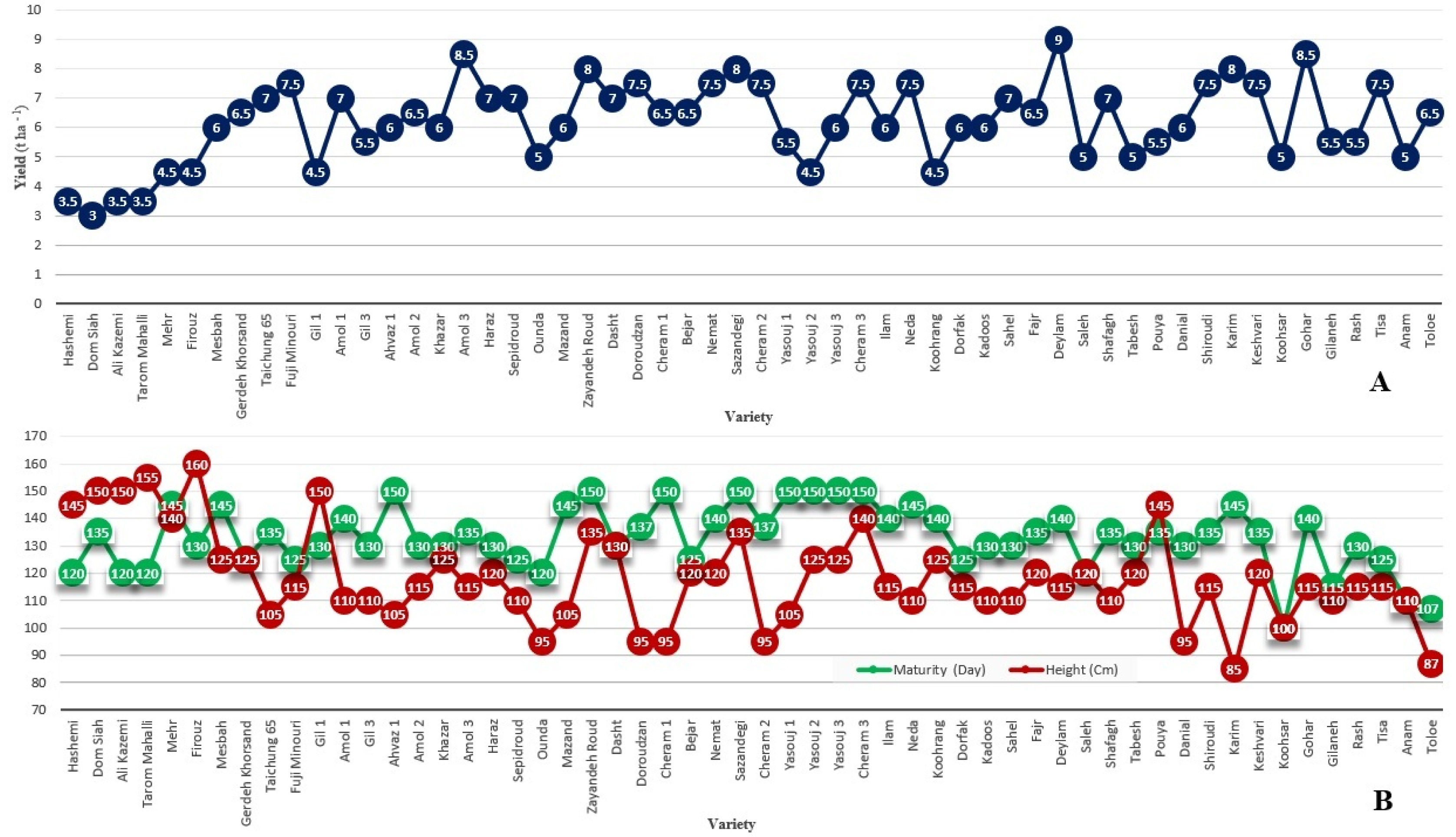
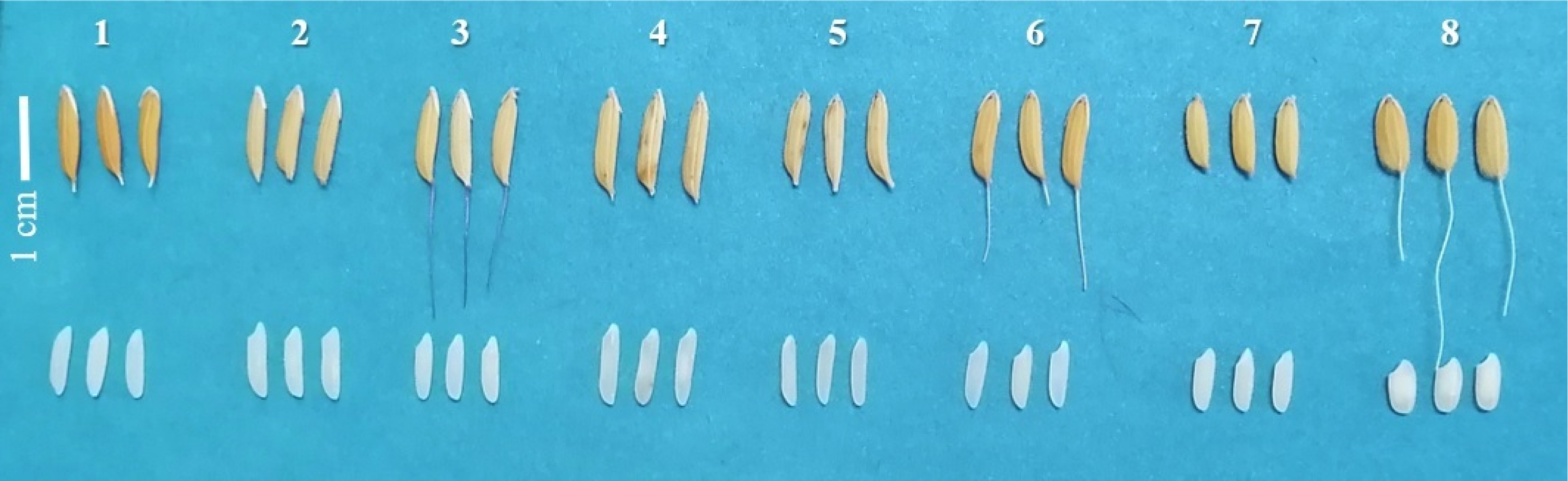
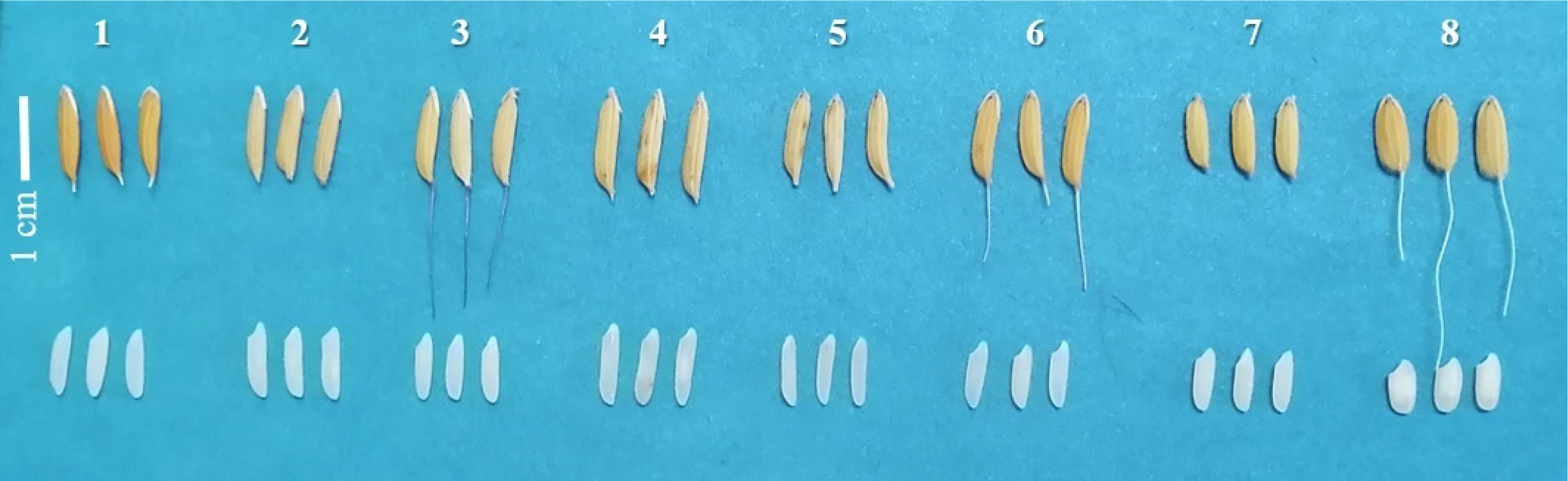
Fig. 1, the trend of rice breeding in Iran is shown based on yield, growth period, and plant height. Early maturity, low yielding, and high height of Iranian local cultivars are usually in contrast with late maturity, medium to high yielding, and semi-dwarfism of improved cultivars. Late maturity and low quality (com-pared to Iranian local cultivars) are the most important factors preventing the spread of improved cultivars, which have been taken into consideration in the introduction of new cultivars. Also, the high similarity of white kernels of new varieties to the landraces is important (
Fig. 2). For example, even though the average yield of the Gohar variety is higher than the yield of the Shiroudi variety and both are almost the same late mature, due to the similarity of Gohar rice to Indian imported varieties, its cultivation is not very prosperous, while the cultivated area of Shiroudi variety (fine-grain type) is expanding. Today, in Guilan province, the most cultivated area of improved cultivars belongs to Khazar, Shiroudi, and Fajr, and local cultivars Hashemi, Jamshidjo, and Ali Kazemi. In Mazandaran, Shiroudi, Fajr, and Neda (improved varieties) and Tarom Mahali, Hashemi, and Deylamani (landraces) are welcomed by farmers (
RRIRAN 2019).
Artificial mutants (using chemical and physical mutagenic agents) can still be used to produce new cultivars, but due to the need for a large population for phenotypic screening and problems related to the induction of unwanted traits, as well as the need to carry out additional processes to achieve due to the homozygosity of genotypes, their creation is a time-consuming process. Today, with the help of genomic selection technologies, this path can be shortened, but the cost of examining a large population with these tools is heavy (
Schaart et al. 2016). In recent years, many advances have been made in genome editing (such as CRISPR) (
Ahmar et al. 2020), which can increase the speed of plant breeding. But due to the classification of the plants resulting from these technologies in the category of genetically modified plants and legal restrictions on the cultivation of these plants (
Callaway 2018), they cannot be the flagship of rice breeding in Iran. Also, the use of technologies such as genomic selection and systems bio-logy, despite significant achievements, requires a lot of money due to its infancy and requires time to increase efficiency and reduce costs (Jonas and de Koning 2013;
Varshney et al. 2021).
In conventional plant breeding, the development of new lines is very long. Carrying out multiple crossings, selec-tion, uniformity, and stability test, and examination for the value for cultivation or use etc. makes the process of introducing a new variety take up to 20 years. It is hardly possible to continue this process in the future because today’s world is involved in climate change and rice fields are increasingly affected by stresses such as heat and drought (
Voss-Fels et al. 2019). For example, it has been estimated that if cultivar compatibility does not increase, for each one-degree increase in temperature, the rice yield in tropical regions will decrease between 1.3-3.5 percent (Ramirez‐Villegas
et al. 2018). Therefore, breeders must have the ability to provide a quick response to the needs of agricultural communities, and for this reason, it is neces-sary to use new, efficient, and cheap methods in plant breeding.
In recent years, an approach called rational design and the creation of ideal-type plants is expanding (
Qian et al. 2016). The basis of this approach is the use of accumulated knowledge about genes regulating important traits, which can increase the accuracy and effectiveness of selection and shorten the time required to pyramid multiple desired traits in plants (
Zeng et al. 2017). Today, many genes controlling seed quality such as aroma, seed length and width, amylose content, gelatinization temperature, and grain chalkiness (
Cheng et al. 2017;
Ma et al. 2019), large effect genes such as IPA1 and Ghd7 in plant yield (
Zhang et al. 2017), resistance to diseases (
Chukwu et al. 2020) and pests (
Wang et al. 2017) were identified and functional markers associated with those traits were designed for rational breeding. At present, initial measures for breeding by rational design of rice plants have been started in Iran and it is hoped that it can cause a change in the creation of new varieties of rice in the country.
CONCLUSION
Research on rice production over the past 60 years, brought 2.5 times improvement in the average yield of rice plants in Iran. Amongst the factors involved, using im-proved rice cultivars is of utmost importance. Many re-searchers tried adopting different rice breeding methods to increase the quantity and quality of the new cultivars in these years. The present article has reflected on some of these efforts, achievements, and existing problems. Des-pite all these results, there is still a long way to reach the desired situation. It is hoped that the speed of creating new lines will increase in the future using new rice breeding methods.
Supplemental Material
Notes
-
CONFLICT OF INTEREST
The author declares that he has no competing interests.
Fig. 1The rice breeding process in Iran. (A) Diagram of changes in the yield of improved rice cultivars in comparison with four native populations (Hashemi, Domsiah, Ali Kazemi, and Tarom Mahali). (B) Comparison of height and growth period of Iranian rice cultivars.
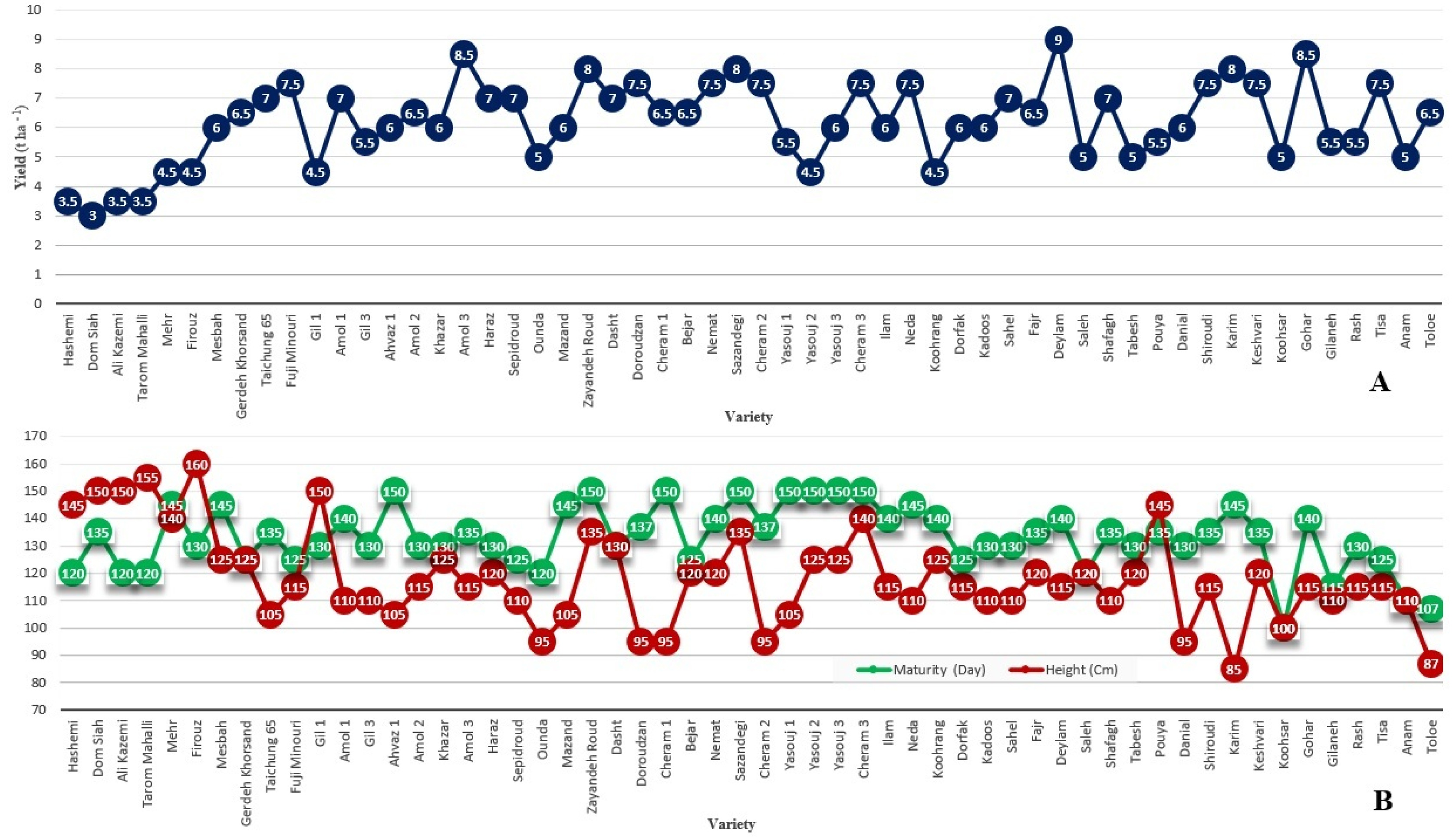
Fig. 2Comparison of paddy and white rice of local and improved Iranian rice cultivars. 1- Khazar (improved), 2- Shiroudi (improved), 3- Anam (improved), 4- Gohar (improved), 5- Fajr (improved), 6- Hashemi (landrace), 7- Tarom Mahalli (landrace), and 8- Hassani (landrace).
References
- The 3,000 RGP2014. The 3,000 rice genomes project. Gigascience. 3(1): 2047-217X.
- Afza R, Shen M, Zapata-Arias FJ, Xie J, Fundi HK, Lee K-S, et al. 2000. Effect of spikelet position on rice anther culture efficiency. Plant Sci.. 153(2): 155-159.
- Ahmadi K, Ebadzadeh H, Hatami F, Abdshah H, Kazemian A. 2019. Agricultural Statistics of Iran, 2017-2018 Volume One: Crops. Ministry of Jihad-e-Agriculture. Deputy for Planning and Economy, Information and Communication Technology Center, Tehran, Iran (in Persian)..
- Ahmar S, Gill RA, Jung K-H, Faheem A, Qasim MU, Mubeen M, et al. 2020. Conventional and molecular techniques from simple breeding to speed breeding in crop plants: recent advances and future outlook. Int. J. Mol. Sci.. 21(7): 2590
- al-Athir Ai.1231. The Complete History (trans: Azhir HR). Asatir Publication. Tehran, Iran..
- Alinia F, Nouri Delavar MZ, Hosseini Chaleshtori M. 2015. Evolution in the Iran rice production through the intro-duction of high-yielding cultivars. Rice Research Institute of Iran. Rasht, Iran p62 (in Persian)..
- RRIRAN.2019. Effectiveness of rice research. Rice research institute of Iran. Rasht, Iran..
- Asaduzzaman M, Bari M, Rahman M, Khatun N, Islam M, Rahman M. 2003. In vitro plant regeneration through anther culture of five rice varieties. OnLine Journal of Biological Sciences (Pakistan)..
- Bai S, Yu H, Wang B, Li J. 2018. Retrospective and pers-pective of rice breeding in China. J Genet Genomics.. 45(11): 603-612.
- Callaway E. 2018. EU law deals blow to CRISPR crops. Nature. 560(7716): 16
- Cheng A, Ismail I, Osman M, Hashim H, Mohd Zainual NS. 2017. Rapid and targeted introgression of fgr gene through marker-assisted backcrossing in rice (Oryza sativa L.). Genome. 60(12): 1045-1050.
- Chukwu SC, Rafii MY, Ramlee SI, Ismail SI, Oladosu Y, et al. Muhammad Ii2020. Recovery of recurrent parent genome in a marker-assisted backcrossing against rice blast and blight infections using functional markers and SSRs. Plants. 9(11): 1411
- Collard B, Ismail A. 2013. EIRLSBN: Twenty years of achievements in rice breeding. IRRI..
- Collard BC, Beredo JC, Lenaerts B, Mendoza R, Santelices R, Lopena V, et al. 2017. Revisiting rice breeding methods–evaluating the use of rapid generation advance (RGA) for routine rice breeding. Plant Prod. Sci.. 20(4): 337-352.
- Ferreres I. d'Hooghvorst I.Nogués S.2021. Anther Culture and Chromosome Doubling in Mediterranean Japonica Rice Doubled Haploid Technology. Springer. p 333-341.:
- Ebadi AA, Torabi Jafroudi A, Shafiee Sabet H, Alizadeh K. 2012. The effects of cold pre-treatment and induction medium on anther culture efficiency of rice. Agronomy Journal (Pajouhesh and Sazandegi). 94: 7-15.
- Gupta MK, Gouda G, Donde R, Sabarinathan S, Dash GK, Rajesh N, et al. 2021. 3000 Genome Project: A Brief Insight Bioinformatics in Rice Research. Springer. p 89- 100.:
- He T, Yang Y, Tu S, Yu M, Li X. 2006. Selection of interspecific hybrids for anther culture of indica rice. Plant Cell Tissue Organ Cult.. 86(2): 271-277.
- Jahani M. 2013. Assessment of phenotypic and haplotype diversity and association mapping in rice genotypes. Sari University of Agricultural Sciences and Natural Resources..
- Jonas E, de Koning D-J. 2013. Does genomic selection have a future in plant breeding? Trends Biotechnol.. 31(9): 497-504.
- Kage U, Kumar A, Dhokane D, Karre S, Kushalappa AC. 2016. Functional molecular markers for crop improve-ment. Crit. Rev. Biotechnol.. 36(5): 917-930.
- Li W, Zeng X, Li S, Chen F, Gao J. 2020. Development and application of two novel functional molecular markers of BADH2 in rice. Electron. J. Biotechnol.. 46: 1-7.
- Maltzahn LE, Venske E. Luz VKd.Oliveira VFd.2020. Muta-tion breeding for rice grain quality: aspects, considerations, and promising results The Future of Rice Demand: Quality Beyond Productivity. Springer. p 349-368.:
- Ma X, Feng F, Zhang Y, Elesawi IE, Xu K, Li T, et al. 2019. A novel rice grain size gene OsSNB was identified by genome-wide association study in natural population. PLoS Genetics. 15(5): e1008191
- Mishra R, Rao GJN. 2016. In-vitro androgenesis in rice: advantages, constraints and future prospects. Rice Sci.. 23(2): 57-68.
- Modarresi M. 2022. Formation of new rice breeding popu-lation with the aim of early-maturity, high yield potential and desirable quality. Rice research institute ot Iran. Rasht, Iran (in Persian)..
- Modarresi M, Allahgholipour M, Sayyadi Fatmehsari M. 2020. Guide for identifying Iranian rice varieties (mobile application). Agricultural Research. Education and Ex-tension Organization, Tehran, Iran, p 220 (in Persian)..
- Mohammad Salehi MS. 1987. Genetic diversity of rice and its collection status in Iran. Paper presented at the The first national seminar on plant heritage (Iran). Karaj, Iran..
- Moin M, Bakshi A, Saha A, Dutta M, Kirti P. 2017. Gain-of- function mutagenesis approaches in rice for functional genomics and improvement of crop productivity. Brief Funct Genomics.. 16(4): 238-247.
- Nematzadeh GA, Karbalaie M, Farrokhzad F, Ghareyazie B. 2000. Aromatic rices of Iran. Aromatic rices. IRRI: 191- 193..
- Niizeki H, Oono K. 1968. Induction of haploid rice plant from anther culture. Proc. Jpn.. 44(6): 554-557.
- Patra B, Anilkumar C, Chakraborti M. 2020. Rice breeding in India: A journey from phenotype based pure-line selec-tion to genomics assisted breeding. Agric. Res. J.. 57(6): 816-825.
- Pazuki A, Sohani MM. 2013. Phenotypic evaluation of scutellum- derived calluses in 'Indica'rice cultivars. Acta Agric. Slov.. 101(2): 239-247.
- Qian Q, Guo L, Smith SM, Li J. 2016. Breeding high-yield superior quality hybrid super rice by rational design. Natl. Sci.. 3(3): 283-294.
- Raina S, Irfan S. 1998. High-frequency embryogenesis and plantlet regeneration from isolated microspores of indica rice. Plant Cell Rep.. 17(12): 957-962.
- Heinemann AB, Breseghello F, Li T, et al. Ramirez‐Villegas JPereira de Castro ANavarro‐Racines C2018. Breeding implications of drought stress under future climate for upland rice in Brazil. Glob. Chang Biol.. 24(5): 2035-2050.
- Sabouri A, Toorchi M, Rabiei B, Aharizad S, Moumeni A, Singh R. 2010. Identification and mapping of QTLs for agronomic traits in indica-indica cross of rice (Oryza sativa L.). Cereal Res. Commun.. 38(3): 317-326.
- Schaart JG, van de Wiel CC, Lotz LA, Smulders MJ. 2016. Opportunities for products of new plant breeding techni-ques. Trends Plant Sci.. 21(5): 438-449.
- Spielmeyer W, Ellis MH, Chandler PM. 2002. Semidwarf (sd-1), "green revolution" rice, contains a defective gib-berellin 20-oxidase gene. Proc. Natl. Acad. Sci. U.S.A.. 99(13): 9043-9048.
- Trejo-Tapia G, Amaya UM, Morales GS, Bonfil BM, et al. Sánchez ADJRodríguez-Monroy M2002. The effects of cold-pretreatment, auxins and carbon source on anther culture of rice. Plant Cell Tissue Organ Cult.. 71(1): 41-46.
- Tripathy SK. 2018. Anther culture for double haploid breed-ing in rice-a way forward. Rice Genom Genet.. 9: 2241-2250.
- Tripathy SK. 2021. High-Throughput Doubled Haploid Pro-duction for Indica Rice Breeding Doubled Haploid Technology. Springer. p 343-360.:
- Varshney RK, Bohra A, Yu J, Graner A, Zhang Q, Sorrells M. 2021. Designing future crops: genomics-assisted breeding comes of age. Trends Plant Sci..
- Viana VE, Pegoraro C, Busanello C. Costa de Oliveira A2019. Mutagenesis in rice: the basis for breeding a new super plant. Front. Plant Sci.. 10: 1326
- Voss-Fels KP, Stahl A, Hickey LT. 2019. Q&A: Modern crop breeding for future food security. BMC biology. 17(1): 1-7.
- Wang Y, Jiang W, Liu H, Zeng Y, Du B, Zhu L, et al. 2017. Marker assisted pyramiding of Bph6 and Bph9 into elite restorer line 93–11 and development of functional marker for Bph9. Rice. 10(1): 1-13.
- Zeng D, Tian Z, Rao Y, Dong G, Yang Y, Huang L, et al. 2017. Rational design of high-yield and superior-quality rice. Nat. plants.. 3(4): 1-5.
- Zhang L, Yu H, Ma B, Liu G, Wang J, Wang J, et al. 2017. A natural tandem array alleviates epigenetic repression of IPA1 and leads to superior yielding rice. Nat. commun.. 8(1): 1-10.