Abstract
Hops are dioecious, with only female plants cultivated for resin production and primarily used in brewing. Therefore, early sex identification at the seedling stage is crucial for breeding and cultivation. Molecular marker-assisted selection facilitates rapid and reliable sex identification of hops. We developed molecular male markers by leveraging sequence information from male-specific regions in a designated public database. To assess the accuracy of sex identification using the newly generated markers, we performed PCR analysis on four cultivars of hops with known sexes. Seventy-eight percent of the tested PCR primers correlated with the male sex phenotype. Following optimization, four primer pairs were successfully converted into male-specific PCR markers.
-
Key words: Hop, Marker-assisted selection (MAS), Dioecious plant, Sex identification, Male-specific chromosomal region
Introduction
The hop (
Humulus lupulus) is a diploid (2n=18 + XX/XY), dioecious, perennial plant (
Edwardson 1952,
Shephard et al. 2000). Hop cones (female inflorescences) contain lupulin glands that produce and store resins, bitter acids, oils, and flavonoids (
Korpelainen et al. 2021;
Wang et al. 2008). Rich in secondary metabolites, hop cones have been used as a critical ingredient in beer brewing for flavoring and preservation (
Chopra et al. 1956). In hop fields, a single male plant can cause damage because the hop is wind-pollinated, and the presence of seeds in pollinated cones reduces the brewing quality (
Thomas et al. 1976). Thus, the rapid identification of female hop plants is essential for commercial cultivation.
Molecular breeding methods, such as marker-assisted selection (MAS) (
Hong et al. 2022), have the potential to determine the sex of hop plants before phenotypic differences. Although a few markers have been developed, their quality could be enhanced using Y chromosome-specific sequences (
Cerenak et al. 2019;
Patzak et al. 2002). Dioecious plants exhibit genotypic differences between males and females, characterized by a non-recombining region in the heterogametic sex and a pseudo-autosomal region (
Ming et al. 2011;
Shephard et al. 2000). An ideal marker system would utilize a male marker situated on the non-recombining region of the Y chromosome, enabling a simple and cost-effective PCR test for detecting its presence or absence.
Recently,
Hill et al. (2016) identified a 1.3 Mb set of scaffolds, presumed to be the male-specific chromosomal region (MSR) in the Y-chromosome of a draft genome for the male hop line USDA 21422M. The MSR comprises a high-confidence 18 Kb set of scaffolds, supported by the USDA World Collection of Hop Varieties and two mapping populations with genotyping by sequencing. The authors proposed that these loci are prime candidates for male molecular markers (
Hill et al. 2016). Building upon this proposition, we developed PCR markers to identify male hops using MSR sequence information from the public HopBase database (
https://hopbase.cgrb.oregonstate.edu).
Materials and Methods
Plant material and DNA extraction
Four hop varieties with known sex [Calypso and El Dorado (American varieties) and German Magnum and Saaz (European varieties)] were sourced from Hop & Hope Co., Ltd. (
http://www.hopnhope.com). Cultivation took place in an experimental field at Kongju National University. The sex of the hop cultivars was determined during the flower development stage by closely observing the morphological characteristics of their flower organs. For the subsequent PCR analysis, total genomic DNA was extracted from the leaves of both male and female hop plants. The extraction process involved using the Qiagen DNeasy Plant Mini Kit (Qiagen, Hilden, Germany) following the manufacturer's instructions.
We developed male-specific PCR markers (Table S1) based on the MSR sequence at
https://hopbase.cgrb.oregonstate.edu. Primers were created using Primer3Plus (
http://www.primer3plus.com). Amplification reactions were carried out in a 20 μl AccuPower PCR Premix kit (Bioneer, Daejeon, Korea) with 30 ng genomic hop DNA. For thermal cycling, the process began with a 7-minute denaturation at 94℃. This was followed by 35 cycles of 30 seconds each at 94℃, 60℃ (or 65℃), and 72℃, respectively. Finally, the process concluded with an 8-minute extension at 72℃. Amplified products were visualized on a 2% agarose gel with StaySafe Nucleic Acid Gel Stain (Real Biotech Corporation, Taipei, Taiwan). Male-specific primers were chosen by comparing phenotypic sex identification with molecular marker results from four hop varieties. PCR products were analyzed for the presence or absence of the desired band size in tested hop cultivars.
Results and Discussion
The 32 primer pairs developed based on MSR_contigs were designated as
Humulus lupulus Male Specific Markers (
HlMSMs) (Table S1). Owing to insufficient DNA sequence length, the MSR contigs MSR_26729 and MSR_33889 were excluded from the primer design. Male-specific marker screening utilized four-hop cultivars with confirmed sex (
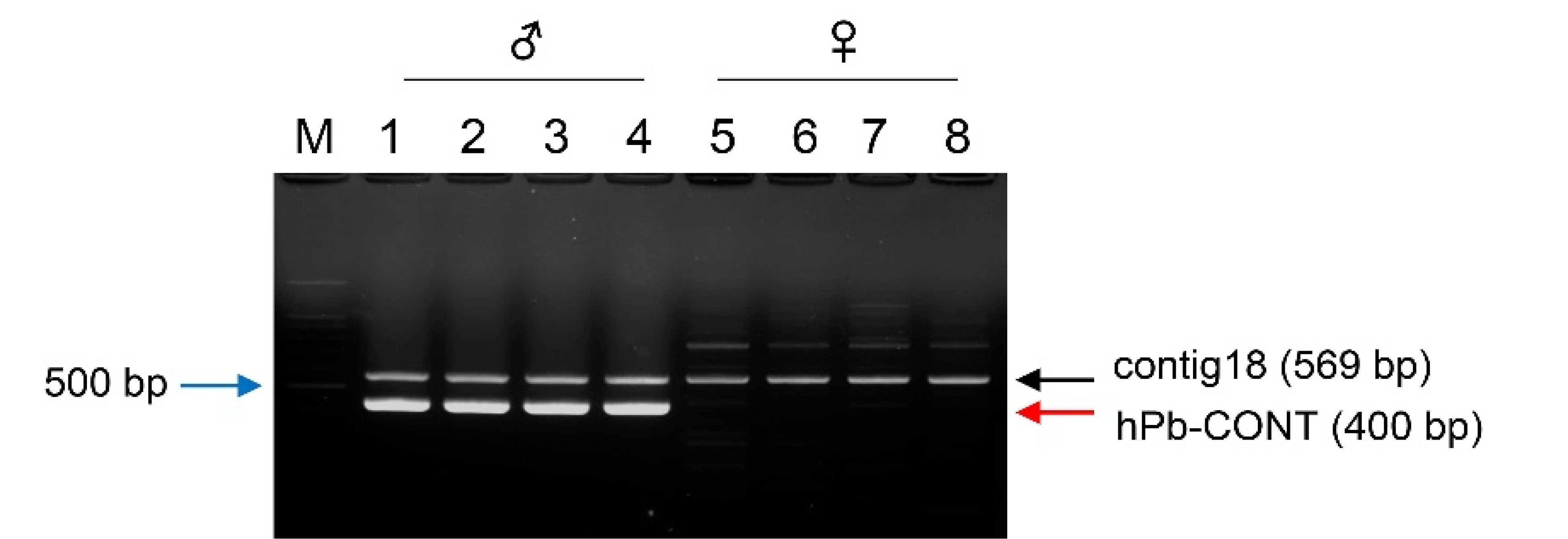
Fig. 1). PCR verification of the 32 HlMSM primers was performed on genomic DNA samples from eight hops (four females and four males). The sex confirmation was achieved using the hPb-CONT primer, a published male-specific primer (
Cerenak et al. 2019), while the Contig18 primer served to confirm DNA amplification and exclude false negatives (
Cerenak et al. 2019). Results for
HlMSMs are depicted in
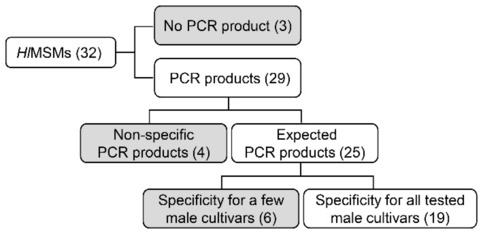
Fig. 2 and Table S2. Despite being designed using MSR, four primers exhibited identical PCR band sizes in both sexes, indicating a lack of male specificity. Additionally, three primers failed to produce amplification products. Out of the 32 primers tested, 25 (78%) demonstrated specificity for males in one or more cultivars. Notably, 19 of these primers displayed male specificity across all four cultivars (
Fig. 2 and Table S2). Remarkably, four of the nineteen primers (
HlMSM1,
HlMSM17,
HlMSM22, and
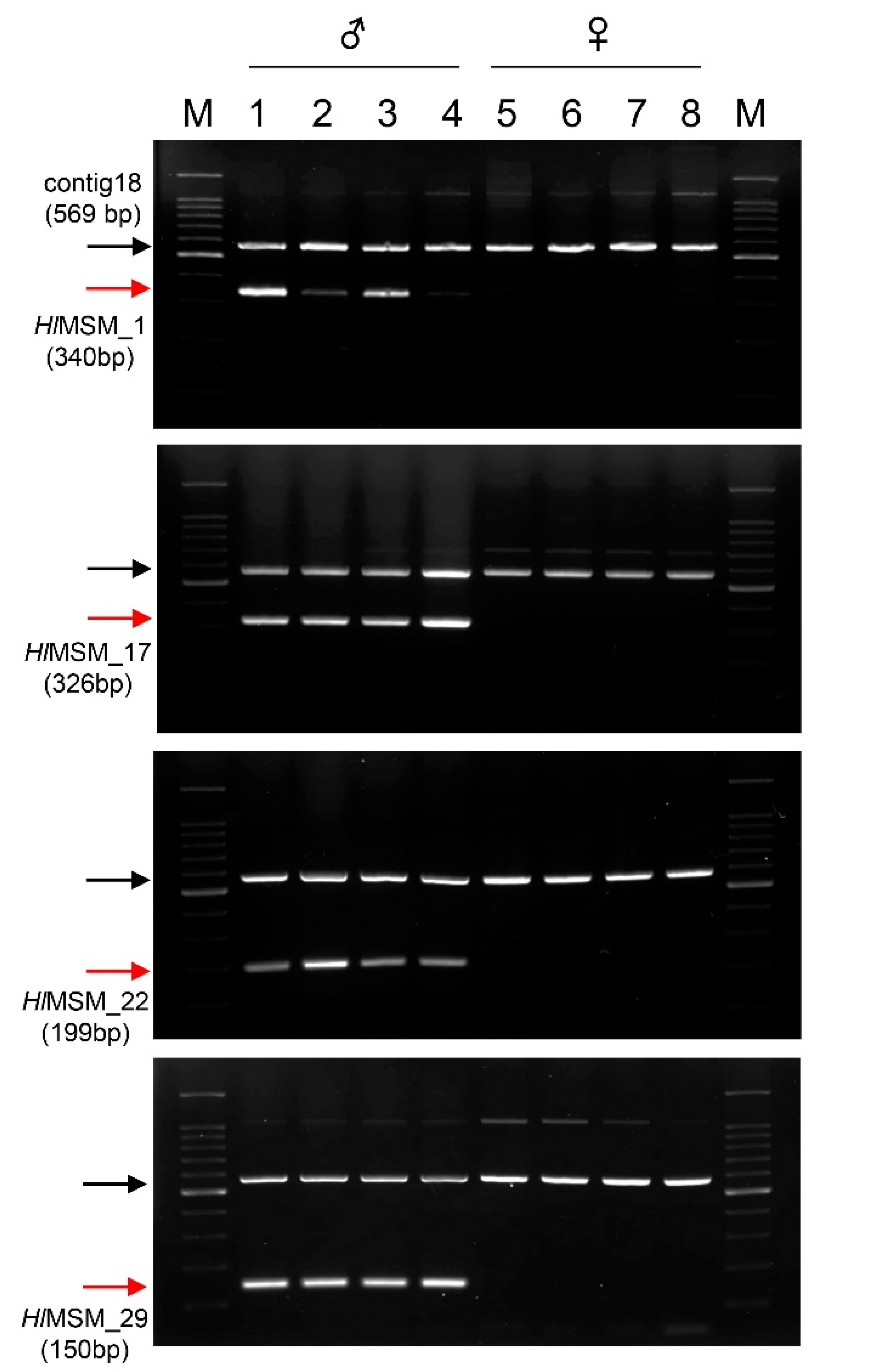
HlMSM29) showed potential as male-specific PCR markers by consistently producing single bands in male genotypes (
Fig. 3 and
Table 1).
We developed male markers in MSR, which are Y-chromosome-specific regions that may not recombine with the X chromosome. This MSR-based PCR marker suggests a new method for developing a stable and practical male molecular marker in hops, a dioecious plant.
Acknowledgments
This research was supported by the Basic Science Research Program through the National Research Foundation of Korea (NRF), funded by the Ministry of Education (2021R1l1A3044254).
Fig. 1Sex identification of hop cultivars for marker analysis. The result of Duplex PCR amplification with the male-specific marker, hPb-CONT (red arrow), and the positive control, contig18 (black arrow). M, 100 bp size marker; lanes 1 and 5, Calypso; lanes 2 and 6, El Dorado; lanes 3 and 7, German Magnum; lanes 4 and 8, Saaz.
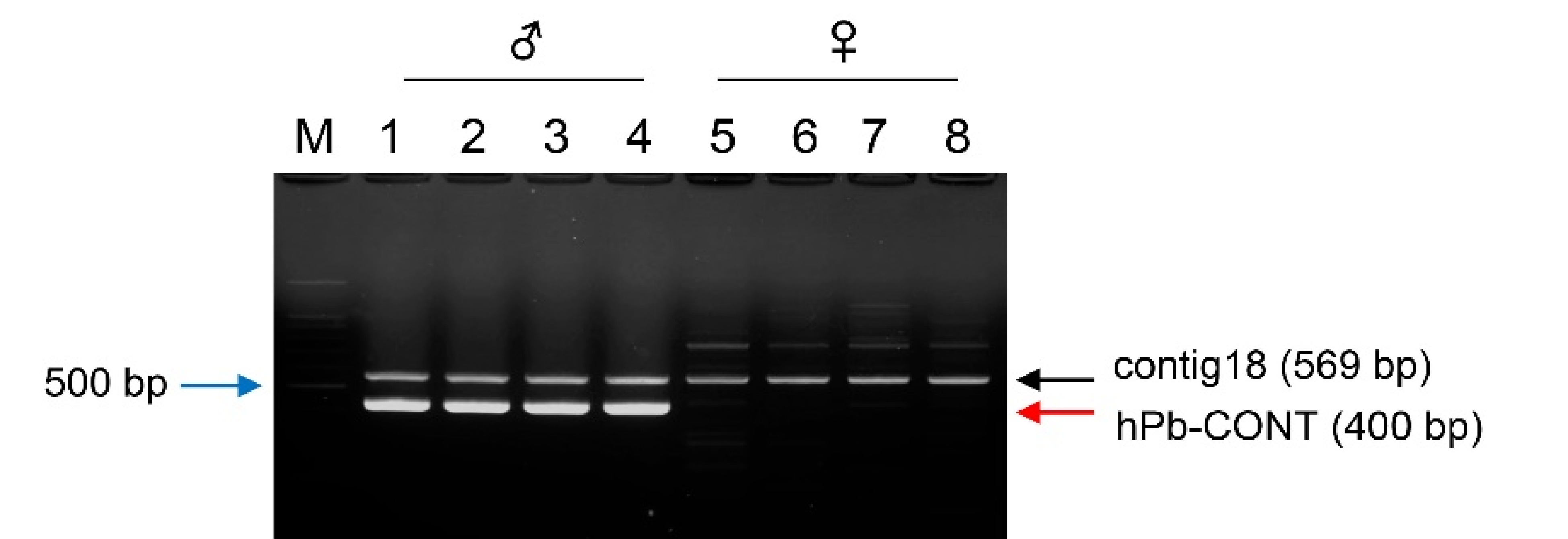
Fig. 2The validation results of 32 HlMSMs in four cultivars of hops with known sex. The numbers in the box indicate the number of HlMSMs representing each PCR result. Refer to Tables S1 and S2 for primer sequences and PCR analysis results.
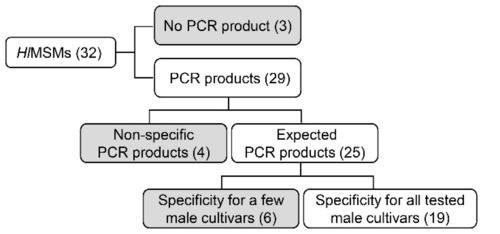
Fig. 3PCR for sex identification in four hop cultivars. Red arrows indicate male-specific bands and black arrows indicate chloroplast DNA-derived positive control. M, 100 bp size marker; lanes 1 and 5, Calypso; lanes 2 and 6, El Dorado; lanes 3 and 7, German Magnum; lanes 4 and 8, Saaz.
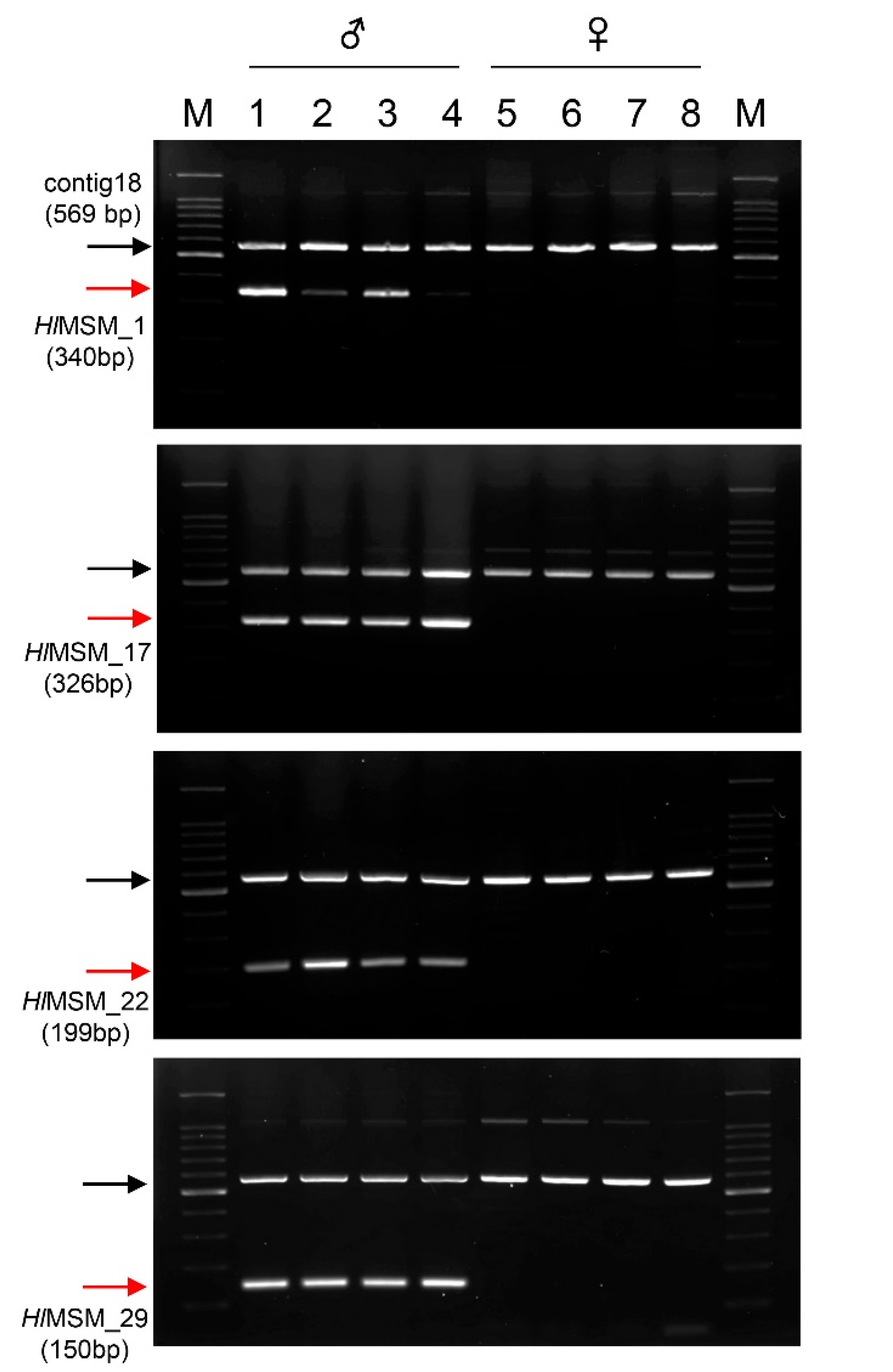
Table 1Primer sequences and PCR conditions.
Table 1
|
Marker name |
Primer sequence (5'→3') |
Cycles |
Tann
|
size |
Reference |
|
HlMSM_1_F |
TCAGTCCCTAACGCAACACC |
35 |
60 |
340 |
|
|
HlMSM_1_R |
TGTGTTGAAATTGCCGGCTG |
|
|
|
|
|
|
HlMSM_17_F |
TTCTCCTCCGAACCCGTTTC |
35 |
65 |
326 |
|
|
HlMSM_17_R |
CCCGCAGCCTCTTTTATTGC |
|
|
|
|
|
|
HlMSM_22_F |
TGCCCGTATCAACAGAAGCG |
35 |
65 |
199 |
|
|
HlMSM_22_R |
GTGGCAGCATAGGGGAAGAA |
|
|
|
|
|
|
HlMSM_29_F |
AGGTAGTAATCCCATGCAGCTC |
35 |
65 |
150 |
|
|
HlMSM_29_R |
TGCACTTTCACGACCCAAGT |
|
|
|
|
|
|
hPb-CONT_F |
TCATCAGCAGGTGGGTCAGGCA |
35 |
60 |
400 |
(Cerenak et al. 2019) |
|
hPb-CONT_R |
TCCGCACTTCTCTCACAGGCGA |
|
|
|
|
|
|
contig18_F |
TCCTGGTCCCTGCGGAAAGGAA |
35 |
60 |
569 |
(Cerenak et al. 2019) |
|
contig18_R |
AGAGCGCGCCCCTGATAATTGC |
|
|
|
|
References
- Cerenak A, Kolenc Z, Sehur P, Whittock SP, Koutoulis A, Beatson R, et al. 2019. New male specific markers for hop and application in breeding program. Sci. Rep-Uk. 9: 14223
- Chopra RN, Nayar SL, Chopra IC. 1956. Glossary of Indian medicinal plants: Council of Scientific & Industrial Research.
- Edwardson JR. 1952. Hops-Their botany, history, production and utilization. Economic Botany. 6: 160-175.
- Hill ST, Coggins J, Liston A, Hendrix D, Henning JA. 2016. Genomics of the hop pseudo-autosomal regions. Euphytica. 209: 171-179.
- Hong J-E, Hossain MR, Jung H-J, Nou I-S. 2022. Inheritance of resistance to race 5 of powdery mildew fungus Podosphaera xanthii in melon and development of race 5-specific high resolution melting markers. Plant Breed. Biotech. 10: 272-281.
- Korpelainen H, Pietiläinen M. 2021. Hop (Humulus lupulus L.): Traditional and present use, and future potential. Economic Botany. 75: 302-322.
- Ming R, Bendahmane A, Renner SS. 2011. Sex chromosomes in land plants. Annual Review of Plant Biology. 62: 485-514.
- Patzak J, Vejl P, Skupinová S, Nesvadba V. 2002. Identification of sex in F1 progenies of hop (Humulus lupulus L.) by molecular marker. Plant, Soil and Environment. 48: 318-321.
- Shephard HL, Parker JS, Dabby P, Ainsuorth CC. 2000. Sexual development and sex chromosomes in hop. New Phytologist. 148: 397-411.
- Thomas GG, Neve RA. 1976. Studies on the effect of pollination on the yield and resin content of hops (Humulus Lupulus L.). Journal of the Institute of Brewing. 82: 41-45.
- Wang G, Tian L, Aziz N, Broun P, Dai X, He J, et al. 2008. Terpene biosynthesis in glandular trichomes of hop. Plant Physiology. 148: 1254-1266.
Citations
Citations to this article as recorded by