Abstract
Rice cold tolerance is an important breeding target, particularly for Tongil-type rice. In this study, six molecular markers were developed for cold tolerance-related genes using five rice cultivars. dCAPS markers targeted OsCTK1 and OsSAPK6, tetra-primer ARMS-PCR markers targeted COLD1, LTG1, and HAN1, and a KASP marker targeted OsLUX. The markers discriminated allelic variation among cultivars. COLD1, LTG1, and HAN1 markers targeted characterized functional polymorphisms, whereas OsCTK1 targeted a haplotype-linked SNP and OsSAPK6 and OsLUX targeted parental polymorphisms. These markers may facilitate parental allele tracking and marker-assisted selection for cold-tolerance breeding in rice.
-
Key words: Cold tolerance, Molecular marker, Marker-assisted selection, Rice, Tongil-type rice
Introduction
Rice (
Oryza sativa L.) is one of the most important staple crops worldwide and provides a major source of food for a large proportion of the global population. However, low-temperature stress is one of the major abiotic constraints affecting rice growth, development, and productivity (
Thomashow 1999). Low-temperature stress causes distinct phenotypic damage at different developmental stages of rice. At the seedling stage, low-temperature stress causes growth retardation, leaf yellowing, wilting, and reduced survival in rice (
Pradhan et al. 2019). During the reproductive stage, particularly at the booting and flowering stages, low temperature disrupts pollen development and fertilization, leading to increased spikelet sterility and consequent yield loss (
Arshad et al. 2017).
Cold tolerance varies widely among rice accessions;
indica rice, mainly grown in tropical and subtropical regions, is generally more sensitive to cold than
japonica rice, which predominates in temperate regions (
Lu et al. 2014;
Shakiba et al. 2017;
Zhang et al. 2017). This contrasting geographical distribution is accompanied by differences in cold tolerance, which may partly result from the selection of cold-adaptive alleles during rice domestication and adaptation.
This difference in cold tolerance between japonica and indica rice is particularly relevant to Korean rice breeding. Tongil-type rice, which was developed through inter-subspecific crosses between indica and
japonica rice, was introduced to achieve high yield potential in Korea (
Kim et al. 2014). Korean Tongil-type varieties generally produced 20-40% higher yields than japonica varieties. However, Tongil-type varieties are generally more susceptible to low-temperature stress, which can limit their cultivation adaptability (
Jeong et al. 2005;
Lee et al. 2024;
Lee et al. 2025).
Several genes underlying chilling tolerance have been characterized.
COLD1 mediates cold sensing and Ca
2+ signaling through interaction with RGA1 (
Ma et al. 2015), and the kinases
OsCTK1 and
OsSAPK6 positively regulate chilling tolerance through phosphorylation signaling (
Jia et al. 2022;
Wu et al. 2024).
LTG1 controls adaptive growth at low temperature through auxin-dependent processes (
Lu et al. 2014),
HAN1 modulates the jasmonate-mediated chilling response by inactivating JA-Ile (
Mao et al. 2019) and
OsLUX enhances ROS scavenging under cold stress (
Huang et al. 2023).
Molecular markers have already been developed for some rice cold-tolerance loci. For example, KASP and tetra-primer ARMS-PCR assays have been reported for functional polymorphisms in
HAN1 and
COLD1, respectively, and have been applied to diverse rice germplasm (
Lee et al. 2025;
Yongbin et al. 2023;
Yu et al. 2025). However, practical marker assays remain limited for several other cold tolerance-related genes, and integrated marker sets that enable the tracking of multiple target loci in breeding materials are still needed. In the present study, functional, haplotype-linked, and parental polymorphisms in six cold tolerance-related genes were converted into dCAPS, tetra-primer ARMS-PCR, or KASP assays according to the characteristics of each target locus.
Geumgang1 is a high-yielding Tongil-type cultivar that showed a leaf discoloration score of 7, a 15-day delay in heading, and 28.3% grain fertility under 17℃ cold-water irrigation, indicating relatively weak cold tolerance (
Jo et al. 2026). Improving the cold tolerance of Tongil-type rice while retaining its high-yielding and agronomically desirable characteristics is therefore an important breeding objective. Odaebyeo is a japonica cultivar that has shown relatively high tolerance to low-temperature conditions in mountainous areas of Korea (
Park et al. 2006), whereas Unkwang is an early-maturing japonica cultivar with well-characterized cold tolerance (
Kim et al. 2006;
Kim et al. 2017). In particular, Unkwang has been used as a cold-tolerant parent for genetic analysis of seedling-stage cold tolerance in rice. Marker-assisted selection enables target alleles to be tracked across generations and facilitates their combination in breeding populations (
Hasan et al. 2015). Therefore, this study developed gene-specific markers for six cold tolerance-related genes to discriminate parental alleles among breeding cultivars and facilitate marker-assisted breeding for improved cold tolerance.
Materials and Methods
Plant materials and DNA extraction
Five rice (Oryza sativa L.) cultivars, Odaebyeo, Unkwang, Geumgang1, IR64, and Basmati, were used for the development and evaluation of gene-specific molecular markers. Odaebyeo and Unkwang are temperate japonica cultivars, Geumgang1 is a Tongil-type cultivar, IR64 is an indica cultivar, and Basmati is an aromatic cultivar. Geumgang1 (IT351474), IR64 (IT191696), and Basmati (IT264634) were obtained from the National Agrobiodiversity Center, Rural Development Administration (RDA), Jeonju, Republic of Korea. Odaebyeo and Unkwang were available as existing breeding materials at Konkuk University. All plant materials were grown under field conditions during the 2025 growing season at the Konkuk University experimental farm in Yeoju, Republic of Korea. Young leaf tissues were collected during the vegetative growth stage for genomic DNA extraction. Genomic DNA was extracted using the cetyltrimethylammonium bromide (CTAB) method and subsequently used for genotyping with markers developed for six cold tolerance-related genes.
Selection of target genes
Six genes previously reported to be associated with rice cold tolerance or identified as candidate genes for cold tolerance were selected for marker development. Sequence polymorphisms between the parental/breeding cultivars were identified within or near the target genes, and suitable polymorphic sites were selected for the development of gene-based molecular markers (
Table 1).
dCAPS markers were developed to genotype sequence polymorphisms in the exonic regions of OsCTK1 and OsSAPK6. For OsCTK1, a SNP linked to the previously reported chilling-tolerant and chilling-sensitive haplotypes was selected as the target polymorphism. For OsSAPK6, an exon SNP showing parental polymorphism among the breeding cultivars was selected.
dCAPS primers were designed using the dCAPS Finder web tool (
https://helix.wustl.edu/dcaps/) by introducing an appropriate mismatch into the primer sequence to generate an allele-specific restriction enzyme recognition site. PCR amplification was performed in a total reaction volume of 20 μL using AccuPower Taq PCR Master Mix (Bioneer, Daejeon, Republic of Korea). The PCR conditions consisted of initial denaturation at 95℃ for 5 minutes, followed by 34 cycles of 95℃ for 30 seconds, annealing at the primer-specific temperature (
Table 2) for 30 seconds, and 72℃ for 45 seconds, with a final extension at 72℃ for 5 minutes. The resulting PCR products were purified using a PCR purification kit (Bioneer, Daejeon, Republic of Korea). Approximately 400 ng of purified PCR product was digested in a total volume of 50 μL containing 2 U of BsaXI or 10 U of SfcI (New England Biolabs, Ipswich, MA, USA) and 5 μL of 10× rCutSmart Buffer at 37℃ for 1 hour, followed by heat inactivation at 80℃ for 30 minutes.
Tetra-primer ARMS-PCR markers were developed to genotype sequence polymorphisms in
COLD1, HAN1, and
LTG1. Previously characterized functional polymorphisms associated with cold tolerance were selected in the exonic regions of
COLD1 and
LTG1 and the promoter region of
HAN1. For each target SNP, two outer primers and two allele-specific inner primers were designed using the Primer1 web tool (
https://primer1.soton.ac.uk/primer1.html). The allele-specific inner primers were designed so that their 3' terminal nucleotide corresponded to the target SNP allele. All primer solutions were prepared at 10 pmol/μL, and the volume of each primer used in the reaction is provided in
Table 3.
PCR amplification was performed in a total volume of 20 μL using AccuPower Taq PCR Master Mix (Bioneer, Daejeon, Republic of Korea). The PCR conditions consisted of initial denaturation at 95℃ for 5 minutes, followed by 34 cycles of 95℃ for 30 seconds, primer-specific annealing at the temperatures indicated in
Table 3 for 30 seconds, and extension at 72℃ for 45 seconds, followed by a final extension at 72℃ for 5 minutes. The amplified products were separated on 1.5% agarose gels at 100 V for 20 min, with 4 μL of each PCR product loaded per lane. Genotypes were determined based on the expected allele-specific banding patterns.
A Kompetitive Allele-Specific PCR (KASP) marker was developed to genotype a sequence polymorphism in
OsLUX. The target SNP was selected based on a parental polymorphism identified among the breeding cultivars. The KASP assay consisted of two allele-specific forward primers and one common reverse primer targeting the selected SNP. The allele-specific primers contained distinct fluorescence-reporting tails, enabling discrimination between the two parental alleles based on fluorescence signals (
Table 4).
Each 10-μL KASP reaction contained 1 μL of genomic DNA (20 ng/μL; 20 ng per reaction), 5 μL of 2×KASP-TF V4.0 Master Mix (LGC Genomics, London, UK), 1.4 μL of KASP-by-Design primer mix, and 2.6 μL of nuclease-free water. KASP amplification was performed using a touchdown PCR protocol. Following an initial activation step at 94℃ for 15 minutes, touchdown amplification was conducted for 10 cycles consisting of denaturation at 94℃ for 20 seconds and annealing for 60 seconds, with the annealing temperature gradually decreasing from 62℃. This was followed by 26 additional cycles of 94℃ for 20 seconds and 55℃ for 60 seconds. After amplification, the reaction was held at 30℃ for 60 seconds and subsequently at 4℃. Fluorescence signals were detected using a StepOne Real-Time PCR System (Applied Biosystems, USA), and genotypes were assigned to the FAM or HEX allele cluster based on allele-specific fluorescence signals.
Results and Discussion
Development of parental allele-specific markers
Six molecular markers targeting cold tolerance-related genes were developed and evaluated for their ability to discriminate genotypes among five rice cultivars (
Fig. 1). The Tetra-primer ARMS-PCR markers produced allele-specific amplification patterns for
LTG1, COLD1, and
HAN1. For
LTG1, the Geumgang1-type allele produced a 249-bp product, whereas the Odaebyeo-type allele produced a 164-bp product, together with a 371-bp outer control band. The
COLD1 marker generated 367- and 219-bp products corresponding to the Geumgang1-type and Odaebyeo-type alleles, respectively, whereas the
HAN1 marker produced corresponding products of 190 and 418 bp. The dCAPS markers for
OsCTK1 and
OsSAPK6 also showed genotype-specific restriction patterns among the cultivars. In addition, the
OsLUX KASP marker assigned Geumgang1, IR64, and Basmati to the HEX cluster representing the Geumgang1-type allele, whereas Odaebyeo and Unkwang were assigned to the FAM cluster representing the Odaebyeo-type allele.
The
LTG1 marker targeted the functional nucleotide polymorphism at nucleotide 1070 in the coding region, which causes the I357K amino acid substitution. The T allele, corresponding to the cold-tolerant
LTG1 allele reported in Asominori, was detected in Odaebyeo, Unkwang, Basmati, and IR64, whereas only Geumgang1 carried the A allele associated with greater sensitivity to low temperature. This polymorphism has previously been shown to affect growth, heading date, and yield under low-temperature conditions (
Lu et al. 2014). Although the cold-sensitive
LTG1 haplotype reported by
Lu et al. (2014) was identified among indica accessions, not all indica accessions carried the sensitive allele. Therefore, the T allele observed in IR64 is consistent with the allelic variation previously reported within indica rice. These results indicate that
LTG1 alleles should be determined directly rather than inferred from the genetic background of the cultivar when applying this marker in breeding programs. The
COLD1 marker targeted the functional SNP at nucleotide 1091 in the fourth exon. Previous studies demonstrated that the A allele encoding Lys187 is characteristic of the chilling-tolerant
COLD1jap allele, whereas T/C alleles encode Met187 or Thr187 and are associated with greater chilling sensitivity (
Ma et al. 2015). In the present study, Odaebyeo and Unkwang carried the A allele, whereas Geumgang1, Basmati, and IR64 carried the T allele, indicating clear differentiation of the previously characterized
COLD1 alleles among the tested cultivars. The
HAN1 marker targeted the functional promoter polymorphism at position -1543. Previous studies showed that the A allele is associated with the temperate japonica Hap1 and enhanced chilling tolerance, whereas the G allele is associated with relatively greater chilling sensitivity (
Mao et al. 2019). In the present study, Geumgang1, Basmati, and IR64 carried the chilling-sensitive G allele, whereas Odaebyeo and Unkwang carried the chilling-tolerant A allele. These results indicate that the developed
HAN1 marker clearly differentiated the previously characterized cold-tolerance-associated alleles among the tested cultivars.
The OsCTK1 dCAPS marker targeted a C/T polymorphism at position 7,268,879 on chromosome 1 that is linked to the previously reported chilling-tolerant (CT) and chilling-sensitive (CS) OsCTK1 haplotypes. OsCTK1 was originally identified as a major gene contributing to chilling-tolerance variation within the indica subpopulation, and the CT variant was shown to confer greater chilling tolerance than the CS variant through enhanced kinase activity (Wu et al. 2024). The T allele at the marker locus was associated with the CT haplotype, whereas the C allele was associated with the CS haplotype. Geumgang1, IR64, and Basmati carried the T allele, whereas Odaebyeo and Unkwang carried the C allele. Therefore, this marker can be used to distinguish the parental OsCTK1 haplotypes and may facilitate the retention of the Geumgang1-derived CT-associated allele during marker-assisted selection.
OsSAPK6 and
OsLUX have previously been implicated in rice chilling tolerance; however, the functional significance of the SNPs targeted in the present study has not been established.
OsSAPK6 positively regulates chilling tolerance through phosphorylation and stabilization of IPA1, which subsequently promotes the expression of OsCBF3, whereas
OsLUX positively regulates chilling tolerance through the regulation of oxidative stress-responsive genes and ROS homeostasis (
Huang et al. 2023;
Jia et al. 2022). Therefore, the polymorphisms used in this study were employed primarily to distinguish parental alleles rather than as functionally validated cold-tolerance variants.
For OsSAPK6, a C/G polymorphism located at position 20,746,946 on chromosome 2, within exon 9, was targeted. Geumgang1 carried the G allele, whereas Odaebyeo carried the C allele. Odaebyeo and Unkwang showed the same C allele, while Geumgang1, Basmati, and IR64 carried the G allele. For OsLUX, a C/T polymorphism located at position 42,874,958 on chromosome 1, within exon 1, was targeted. Geumgang1, Basmati, and IR64 carried the T allele, whereas Odaebyeo and Unkwang carried the C allele. These markers therefore enabled discrimination of parental alleles at the OsSAPK6 and OsLUX loci.
Collectively, the developed markers can be used to track the inheritance of parental alleles in subsequent generations and may facilitate marker-assisted selection during rice breeding. In particular, these markers can support the introgression of selected Odaebyeo-derived alleles while retaining the Geumgang1-derived CT-associated allele at OsCTK1. The current validation primarily demonstrates the ability of these markers to discriminate parental alleles among the tested cultivars, and further evaluation using broader rice germplasm and segregating populations will be required to assess their general applicability. For OsSAPK6 and OsLUX, the markers developed in this study should be regarded as tools for parental allele tracking rather than as validated markers for favorable cold-tolerance alleles.
Notes
-
Acknowledgments
This research was funded by the Rural Development Administration, Republic of Korea (RS-2025-02214096).
Fig. 1.Validation of molecular markers developed for six cold tolerance-related genes in rice. Gel electrophoresis of Tetra-primer ARMS-PCR markers for (a) LTG1, (b) COLD1, and (c) HAN1. Gel electrophoresis of dCAPS markers for (d) OsCTK1 and (e) OsSAPK6. M, DNA size marker (500bp ladder). (f) In the KASP assay, each data point represents an individual technical replicate. Geumgang1 and Odaebyeo were analyzed in duplicate (n = 2), whereas Unkwang, IR64, and Basmati were analyzed once (n = 1). No-template controls are shown in black.
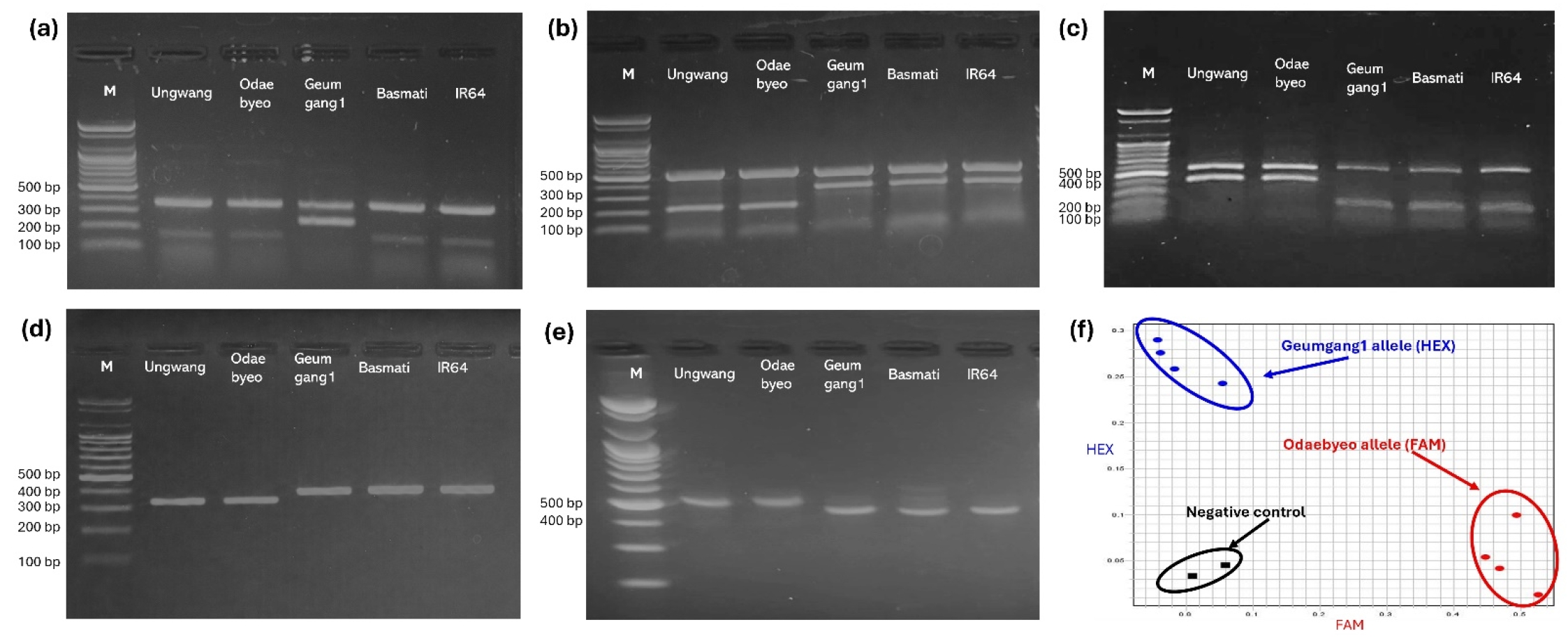
Table 1.Cold tolerance-related genes selected for marker development.
Table 1.
|
Gene |
Locus ID |
Chr. |
Reported role in cold tolerance |
Evidence for polymorphism |
Reference |
|
Osctk1
|
Os01g0231500 |
1 |
Positive regulation of chilling tolerance through phosphorylation-mediated signaling |
Haplotype-linked polymorphism. Target snp not functionally validated |
Wu et al. (2024) |
|
Oslux
|
Os01g0971800 |
1 |
Positive regulation of chilling tolerance through ros-scavenging and oxidative stress-responsive gene expression |
Parental polymorphism. Target snp not functionally validated |
Huang et al. (2023) |
|
Ossapk6
|
Os02g0551100 |
2 |
Phosphorylation and stabilization of ipa1, resulting in activation of the ipa1-oscbf3 cold-response pathway |
Parental polymorphism. Target snp not functionally validated |
Jia et al. (2022) |
|
Cold1
|
Os04g0600800 |
4 |
Cold sensing and ca2+-mediated signaling through interaction with rga1 |
Functionally validated variant |
Ma et al. (2015) |
|
Ltg1
|
Os10g0167600 |
10 |
Regulation of adaptive growth under low temperature through auxin-dependent processes |
Functionally validated variant |
Lu et al. (2014) |
|
Han1
|
Os11g0495000 |
11 |
Regulation of ja-ile metabolism and jasmonate-mediated chilling response |
Functionally validated variant |
Mao et al. (2019) |
Table 2.Primer sequences and restriction digestion conditions for dCAPS markers.
Table 2.
|
Gene |
Primer |
Sequence (5’->3’) |
Restriction enzyme |
PCR product size (bp) |
Annealing temp. (℃) |
Fragment size (bp) |
|
OsCTK1
|
OsCTK1_F |
CGCCCTCCCCATTCTGGTAATCTTCATCCCTATCAGGGCTTCCTGATTATGCCTTTGTGAAACGCCTT |
BsaXI |
410 bp |
56 |
328 / 52 / 30 (Odaebyeo-type allele) |
|
OsCTK1_R |
TCAAGGCCCCAAATACACCA |
|
OsSAPK6
|
OsSAPK6_F |
ACCCTTTATGTGATGCTCGT |
SfcI |
532 bp |
58 |
455 / 77 (Geumgang1-type allele) |
|
OsSAPK6_R |
CCCAAGCGTTCAGGGTGGGCTTTGCTACGACTTCCGAGTCCAAAGACTCCTCGTCGACGGTCTGATCCGAGACTGTA |
Table 3.Primer sequences and expected allele-specific amplicon sizes for tetra-primer ARMS-PCR markers.
Table 3.
|
Gene |
Primer |
Primer Volume (µL) |
Sequence (5’→3’) |
Annealing temp. (℃) |
Outer band (bp) |
Geumgang1-type band (bp) |
Odaebyeo-type allele band (bp) |
|
LTG1
|
OP_F |
0.5 |
ACCATCTGCAGAACGGACTG |
56 |
371 |
249 (OP_F + IP_R) |
164 (IP_F + OP_R) |
|
OP_R |
0.5 |
TTTCTGCGAAAAGATGGTCAAG |
|
IP_F |
0.7 |
GCACACAAAGCACAGAAACAT |
|
IP_R |
0.5 |
GGTGCAAGTAATGAATCCAGTT |
|
COLD1
|
OP_F |
1 |
GTGTCATGGCTGTTCTTTCT |
55 |
540 |
367 (IP_F + OP_R) |
219 (OP_F + IP_R) |
|
OP_R |
1 |
CCATCAATCTCGCCACAT |
|
IP_F |
0.5 |
GGCTTACAGGGAAATTGATGAGAT |
|
IP_R |
0.5 |
CCTTTCCAATGTTTTGATGTTCT |
|
HAN1
|
OP_F |
0.3 |
TGTACATGGGCTTAATCACCAT |
55 |
565 |
190 (IP_F + OP_R) |
418 (OP_F + IP_R) |
|
OP_R |
0.3 |
TCAATTTGGTCCCTGATGTTTC |
|
IP_F |
0.6 |
ACTACGAAAACCGATGGAAAAAACG |
|
IP_R |
0.3 |
GGCGGTTATTGCGGTCCAT |
Table 4.Primer sequences for the KASP marker of OsLUX.
Table 4.
|
Gene |
Primer |
Parental polymorphism |
Sequence (5’->3’) |
|
OsLUX
|
FAM_F |
Odaebyeo - type allele |
GAAGGTGACCAAGTTCATGCTAACGGGAACACCAACAACAG |
|
HEX_F |
Geumgang1 - type allele |
GAAGGTCGGAGTCAACGGATTAACGGGAACACCAACAACAA |
|
Common_R |
|
ACCTCTTGTGCAGCTGCG |
References
- Arshad MS, Farooq M, Asch F, Krishna JS, Prasad PV, Siddique KH. 2017. Thermal stress impacts reproductive development and grain yield in rice. Plant Physiol. Biochem. 115: 57-72.
- Hasan MM, Rafii MY, Ismail MR, Mahmood M, Rahim HA, Alam MA, et al. 2015. Marker-assisted backcrossing: A useful method for rice improvement. Biotechnol. Biotechnol. Equip. 29(2): 237-254.
- Huang P, Ding Z, Duan M, Xiong Y, Li X, Yuan X, et al. 2023. OsLUX confers rice cold tolerance as a positive regulatory factor. Int. J. Mol. Sci. 24(7): 6727.
- Jeong E, Ahn S, Yea J, Baek M, Choi H, Yi G, et al. 2005. Evaluation of cold tolerance-related traits of recombinant inbred lines in rice. Korean J. Crop Sci. 50(3): 205-211.
- Jia M, Meng X, Song X, Zhang D, Kou L, Zhang J, et al. 2022. Chilling-induced phosphorylation of IPA1 by OsSAPK6 activates chilling tolerance responses in rice. Cell Discov. 8(1): 71.
- Jo S, Cho J-H, Kwon Y, Lee S-M, Kang J-W, Kim W-J, et al. 2026. ‘Geumgang 1’, High-yielding Tongil-type Rice Cultivar with Medium-late Maturing and Multiple Disease Resistance. Korean. J. Breed. Sci. 58(3): 379-388.
- Kim B, Kim D-G, Lee G, Seo J, Choi I-Y, Choi B-S, et al. 2014. Defining the genome structure of ‘Tongil’ rice, an important cultivar in the Korean “Green Revolution”. Rice. 7(1): 22.
- Kim K, Ha K, Ko J, Choung J, Lee J, Ko J, et al. 2006. A New Early Maturity Rice Cultivar, “Unkwang” with High Grain Quality and Cold Tolerance. Korean. J. Breed. Sci. 38(4): 261-262.
- Kim T, Lee J, Jo S, Cho J, Lee J, Song Y, et al. 2017. QTL analysis for cold tolerance at seedling stage using Hanareum2/Unkwang recombinant inbreeding lines in rice. Korean. J. Breed. Sci. 49(4): 334-343.
- Lee Y, Jang S-G, Jin B, Jo S-M, Kang J-W, Lee S-M, et al. 2025. Integrating molecular markers and phenotypic analysis to assess cold tolerance in rice germplasm. Mol. Breed. 45(2): 23.
- Lee Y, Lee S-B, Kang J-W, Cho J-H, Park D-S, Lee J-H, et al. 2024. Haplotype analysis of Tongil-type rice varieties through sequence polymorphism analysis of cold tolerance-enhancing genes. J. Plant Biotechnol. 51(1): 294-306.
- Lu G, Wu FQ, Wu W, Wang HJ, Zheng XM, Zhang Y, et al. 2014. Rice LTG 1 is involved in adaptive growth and fitness under low ambient temperature. Plant J. 78(3): 468-480.
- Ma Y, Dai X, Xu Y, Luo W, Zheng X, Zeng D, et al. 2015. COLD1 confers chilling tolerance in rice. Cell. 160(6): 1209-1221.
- Mao D, Xin Y, Tan Y, Hu X, Bai J, Liu Z-Y, et al. 2019. Natural variation in the HAN1 gene confers chilling tolerance in rice and allowed adaptation to a temperate climate. Proc. Natl. Acad. Sci. U.S.A. 116(9): 3494-3501.
- Park H, Choi W, Back N, Nam J, Kim K, Kim S, et al. 2006. A survey on low temperature injury of rice at south-western alpine area of Korea in 2003. Korean J. Agric. For. Meteorol. 8(3): 125-131.
- Pradhan SK, Pandit E, Nayak DK, Behera L, Mohapatra T. 2019. Genes, pathways and transcription factors involved in seedling stage chilling stress tolerance in indica rice through RNA-Seq analysis. BMC Plant Biol. 19(1): 352.
- Shakiba E, Edwards JD, Jodari F, Duke SE, Baldo AM, Korniliev P, et al. 2017. Genetic architecture of cold tolerance in rice (Oryza sativa) determined through high resolution genome-wide analysis. PloS One. 12(3): e0172133.
- Thomashow MF. 1999. Plant cold acclimation: Freezing tolerance genes and regulatory mechanisms. Annu. Rev. Plant Biol. 50(1): 571-599.
- Wu J, Liu H, Zhang Y, Zhang Y, Li D, Liu S, et al. 2024. A major gene for chilling tolerance variation in Indica rice codes for a kinase OsCTK1 that phosphorylates multiple substrates under cold. New Phytol. 242(5): 2077-2092.
- Yongbin Q, Summat P, Panyawut N, Sikaewtung K, Ditthab K, Tongmark K, et al. 2023. Identification of Rice Accessions Having Cold Tolerance at the Seedling Stage and Development of Novel Genotypic Assays for Predicting Cold Tolerance. Plants (Basel). 12(1): 215.
- Yu J, Suo S, Zhou H, Li W, Zhang D, Li L, et al. 2025. Haplotype analysis and molecular marker development of the COLD1 for cold stress tolerance at the germination stage in rice. Gene. 964: 149600.
- Zhang Z, Li J, Pan Y, Li J, Zhou L, Shi H, et al. 2017. Natural variation in CTB4a enhances rice adaptation to cold habitats. Nat. Commun. 8(1): 14788.