Abstract
Eggplant (Solanum melongena L.) is an excellent source of vitamins A and C and of flavonoid compounds, which are important antioxidant components believed to reduce the risk of various diseases. We investigated the antioxidant activity and flavonoid content in eggplant leaves and fruits to identify genetic resources with high antioxidant capacity for use in food or as feed additives, and also determined the influence of days to flowering, leaf blade colors, and latitudes of origin on the antioxidant activity and flavonoid content in eggplant leaves. The accessions originating from 45°N showed the highest flavonoid contents (AVG. = 15.4 μg mg−1) followed by accessions from 30°~45°N (AVG. = 13.0 μg mg−1), 15°~30°N (AVG. = 11.0 μg mg−1), and 0°~15°N (AVG. = 9.5 μg mg−1). The same pattern was also found in 2,2′-azino-bis(3-ethylbenzothiazoline-6-sulfonic acid) (ABTS) and 1,1-diphenyl-2-picryl-hydrazil (DPPH) antioxidant activities. High ABTS and DPPH activity and flavonoid content were found in the early-flowering accessions. All flavonoids of the greenish violet leaves were significantly higher than those of green leaves. The flavonoid concentration in eggplant leaves was 10 to 20 fold greater, at an average of 15.6 μg mg−1, than that of the fruit (AVG. = 0.9 μg mg−1). Taken together, eggplant leaves represent a potential source of natural antioxidants due to their high flavonoid content.
-
Key words: Antioxidant activity, Eggplant, Flavonoid aglycone, Germplasm
INTRODUCTION
Eggplant (
Solanum melongena L.) is a vegetable crop from the nightshade family (Solanaceae) that originated in warm regions of India and China (
Lawande and Chavan 1998). Eggplant is an excellent source of vitamin A and C and of flavonoid compounds, which are important antioxidant components that may reduce the risk of disease (
George 1985;
Konys 1993). Flavonoid compounds and antioxidant activity occur in most parts of the eggplant, including the calyx, leaf, fruit, and stem (
Saddiqe et al. 2011). Methods using the stable 2,2′-azino-bis(3-ethylbenzothiazoline-6-sulfonic acid) (ABTS) or 1,1-diphenyl-2-picryl-hydrazil (DPPH) radicals are widely used to evaluate the free radical-scavenging ability of antioxidants (
Nabavi et al. 2009). Both methods have excellent reproducibility under certain assay conditions, but they show significant differences in their responses to antioxidants (
Arnao 2000). The range of flavonoids occurring in plant materials is usually large, and every plant has an original and unique flavonoid profile, which makes quantification difficult. For this reason, flavonoid aglycones are frequently used to determine total flavonoid content, which can reduce the variability (
Webb and Harborne 1991). These aglycones can be quantified using ultraviolet (UV) spectrophotometric methods, as described previously (
Miean and Mohamed 2001), and several high-performance liquid chromatography procedures have been used to quantify flavonoid aglycones. Quercetin, myricetin, kaempferol, and isorhamnetin are the four most widespread flavonoid aglycones (
Olszewska 2007).
Although previous studies have revealed that ethanol (EtOH) extracts of eggplant leaves have higher antioxidant activity and total flavonol content than do their fruits (
Jung et al. 2011), most eggplant leaves are discarded as waste. To the best of our knowledge, no published studies have determined the influences of agronomic traits and latitudes of origin of specific accessions on the antioxidant activity and flavonoids in eggplant leaves. In this study, we investigated the antioxidant activity and flavonoid content in eggplant leaves and fruits to identify genetic resources with a high antioxidant capacity for use in food or as feed additives, and also determined how days to flowering, leaf blade colors, and latitudes of origin influenced the antioxidant activity and flavonoid content in eggplant leaves.
MATERIALS AND METHODS
Materials
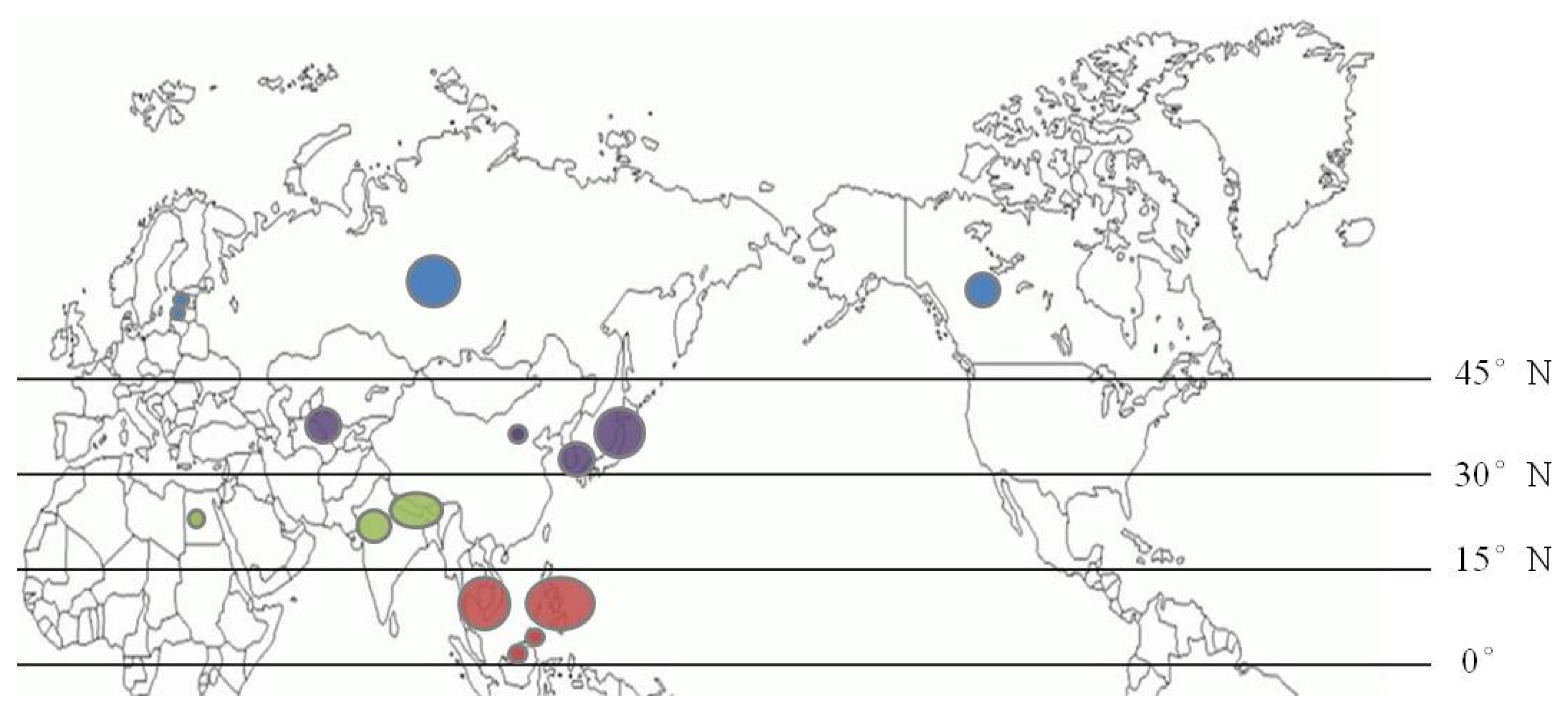
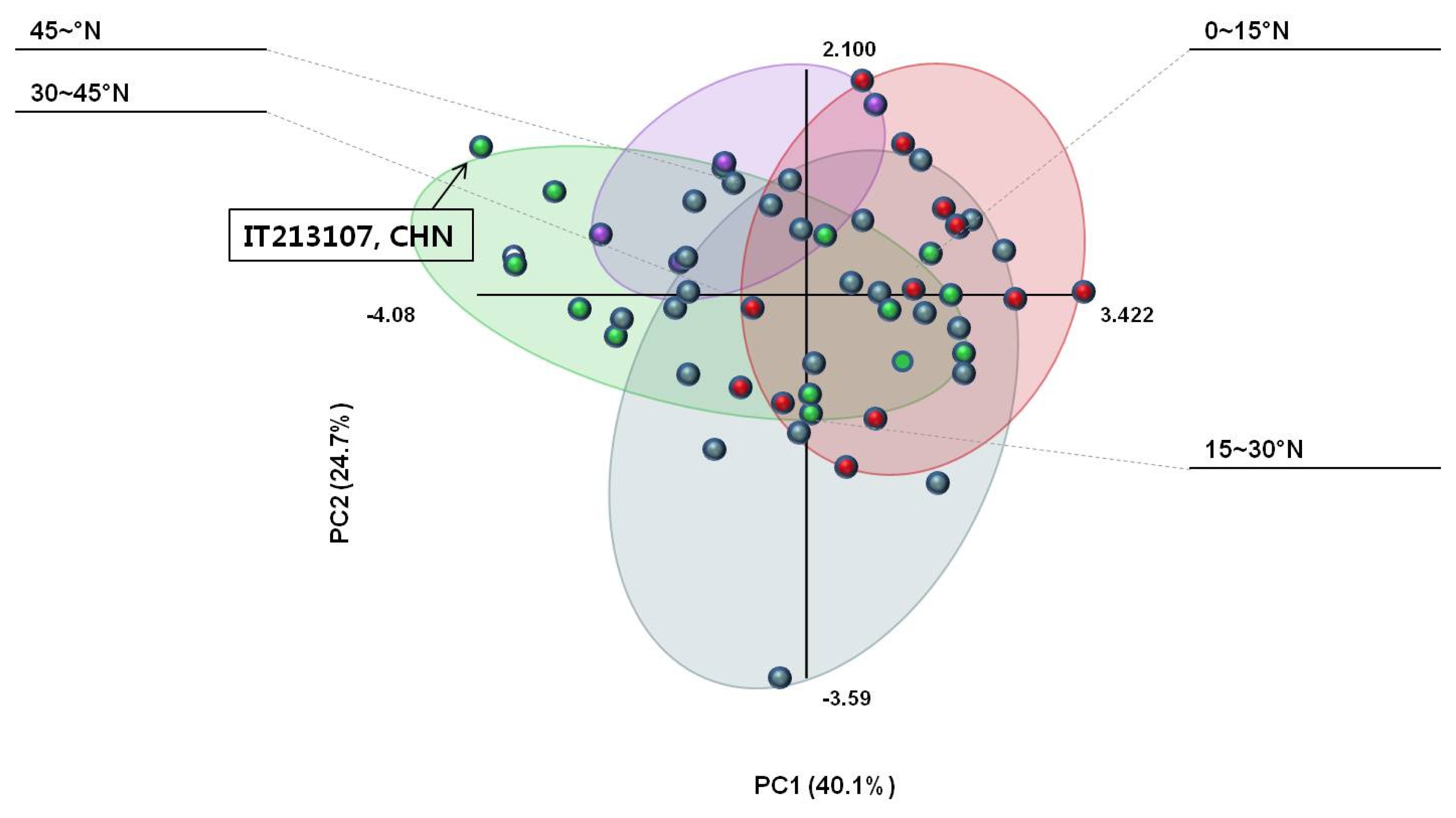
In total, 102 eggplant accessions collected from 15 countries (
Table 1,
Fig. 1) were classified into four clusters by their latitudes of origin, 45°N (
n = 9), 30°~45°N (
n = 31), 15°~30°N (
n = 22), and 0°~15°N (
n = 40), and then divided into three groups based on their days to flowering (80 days,
n = 26; 80~90 days,
n = 44, and 90 days,
n = 32). All accessions were sown on April 4 in the plug plate and planted on June 5, 2013 in an open field at National Agrobiodiversity Center in Suwon, Korea. The experiment was laid out in completely randomized design (CRD) with three replications. A plot was consisted of six plants of each accession in one row. Plant spacing was 100 cm between rows and 30 cm between plants.
DPPH, l-ascorbic acid, ABTS, 6-hydroxy-2,5,7,8-tetra-methylchroman-2-carboxylic acid (Trolox), quercetin, apigenin, kaempferol, and isorhamnetin were purchased from Sigma-Aldrich (St. Louis, MO, USA). All other reagents were of analytical grade.
Sample preparation
Crude extracts were produced using 7 g of oven-dried eggplant leaves and fruits from each accession using an ASE-200 extractor (Dionex, Sunnyvale, CA, USA). Extractions were performed in 40 ml of 75% EtOH under nitrogen gas at 1500 psi and 70°C. Extracted samples were dried using an HT-4X vacuum concentrator (Genevac, Stone Ridge, NY, USA).
DPPH assay
The free radical-scavenging activity of the extracts was assessed by the DPPH method proposed by
Lee and Lee (2004), with slight modifications. A DPPH solution (150 μl; 150 μM in anhydrous EtOH) was added to 100 μl of sample solution. The mixture was shaken vigorously and left to stand at 25°C in the dark for 30 min. Absorbance at 517 nm was then measured with a ELISA (Bio-Teck, Epoch, US). DPPH free radical scavenging activity was calculated using the following equation:
where A0, A1, A2, and A3 are the absorbance of the sample, the sample blank, the control, and the control blank, respectively. The radical scavenging effect is expressed as micrograms l-ascorbic acid equivalent antioxidant capacity (ASC) per 1 mg dried extract (μg ASC mg−1 dry weight).
ABTS assay
ABTS radical scavenging activity was estimated using the method in
Re et al. (1999) with some modifications. The ABTS radical cation was generated by adding 7 mM ABTS to 2.45 mM potassium persulfate, followed by overnight incubation of the mixture in the dark at room temperature. The ABTS radical cation solution was diluted with methanol (MeOH) to obtain an absorbance of 0.7 ± 0.02 at 735 nm. A diluted ABTS radical cation solution (190 μl) was added to 10 μl of sample solution. After 6 min, absorbance at 735 nm was determined using ELISA. The capability to scavenge the ABTS radical was calculated using the following equation:
where A0, A1, A2, and A3 are defined as above. The free radical scavenging effect of each sample was reported as the Trolox equivalent antioxidant activity obtained by comparing the changes in absorbance at 735 nm in reaction mixtures containing a sample eggplant extract or a Trolox equivalent.
Flavonoid aglycones assay
Flavonoid aglycone contents of the eggplant fruits and leaves were investigated using high-performance liquid chromatography (Thermo Scientific, Waltham, MA, USA) with a hypersil ODS column (125 × 4 mm, 5-μm particle, HP). Flavonoid aglycone contents were estimated using the method in
Olszewska (2007) with some modifications. Fifty milligrams of eggplant leaf and fruit extracts was heated at 90°C for 2 h with 10 ml of 1 N hydrochloric acid, followed by shaking for 2 h with 10 ml of MeOH. The hydrolysate was diluted with MeOH to 25 ml using a volumetric flask and filtered through a PTFE syringe filter (13 mm, 0.45-μm pore; Whatman, Maidstone, Kent, UK). Detection was performed at 370 nm.
Duncan’s multiple range tests (DMRTs) were carried out to test for significant differences among eggplant germplasms using SAS (version 9.1; SAS Institute, Inc., Cary, NC, USA). Principal components analysis (PCA) was applied to identify the antioxidant activity and flavonoids, which were the main source of the variability, and to explain the genetic diversity in eggplant germplasm.
RESULTS
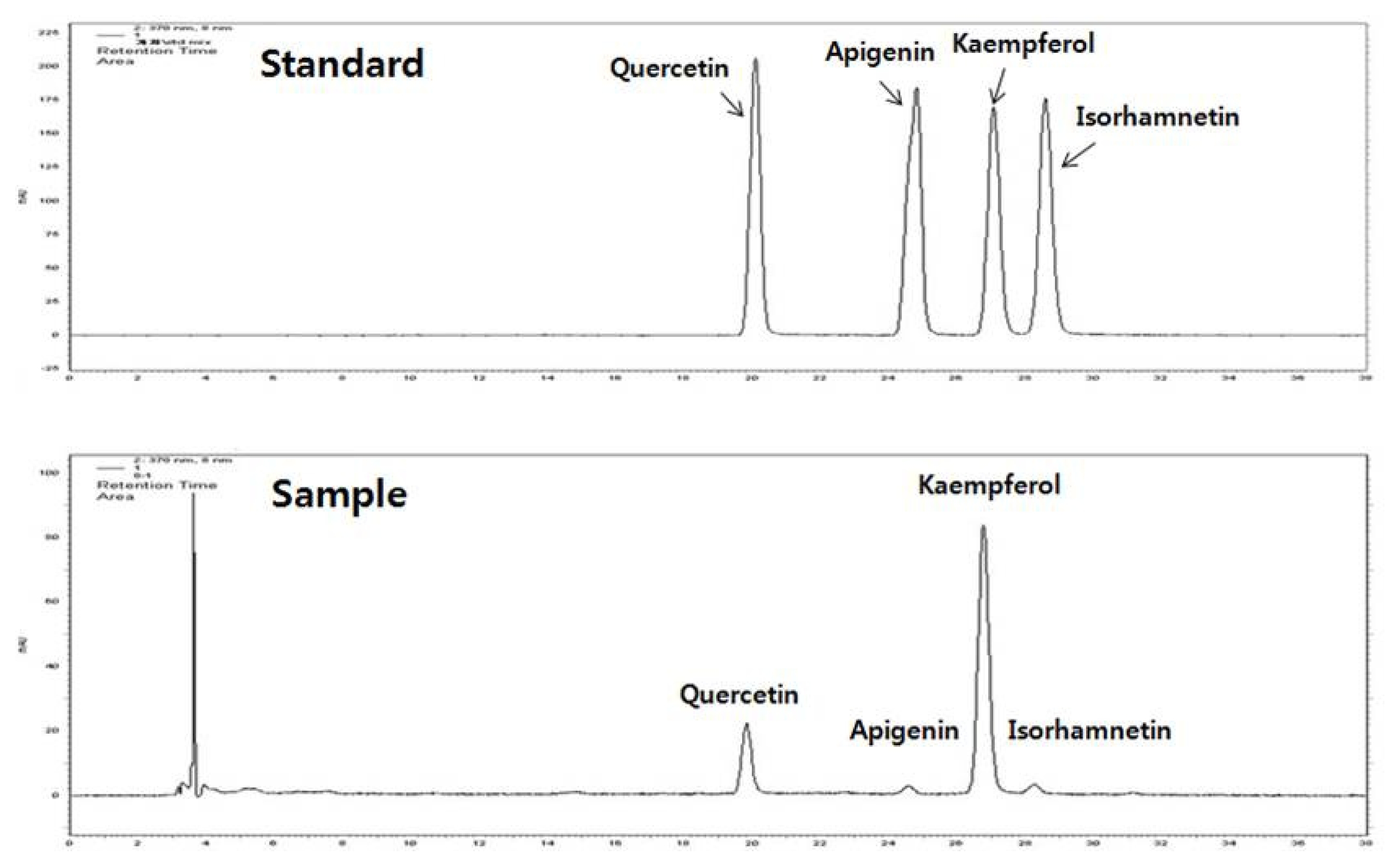
Four typical flavonoid aglycones were observed in all eggplant leaf samples, which were identified as quercetin, apigenin, kaempferol, and isorhamnetin by comparing them with the retention times of standard compounds (
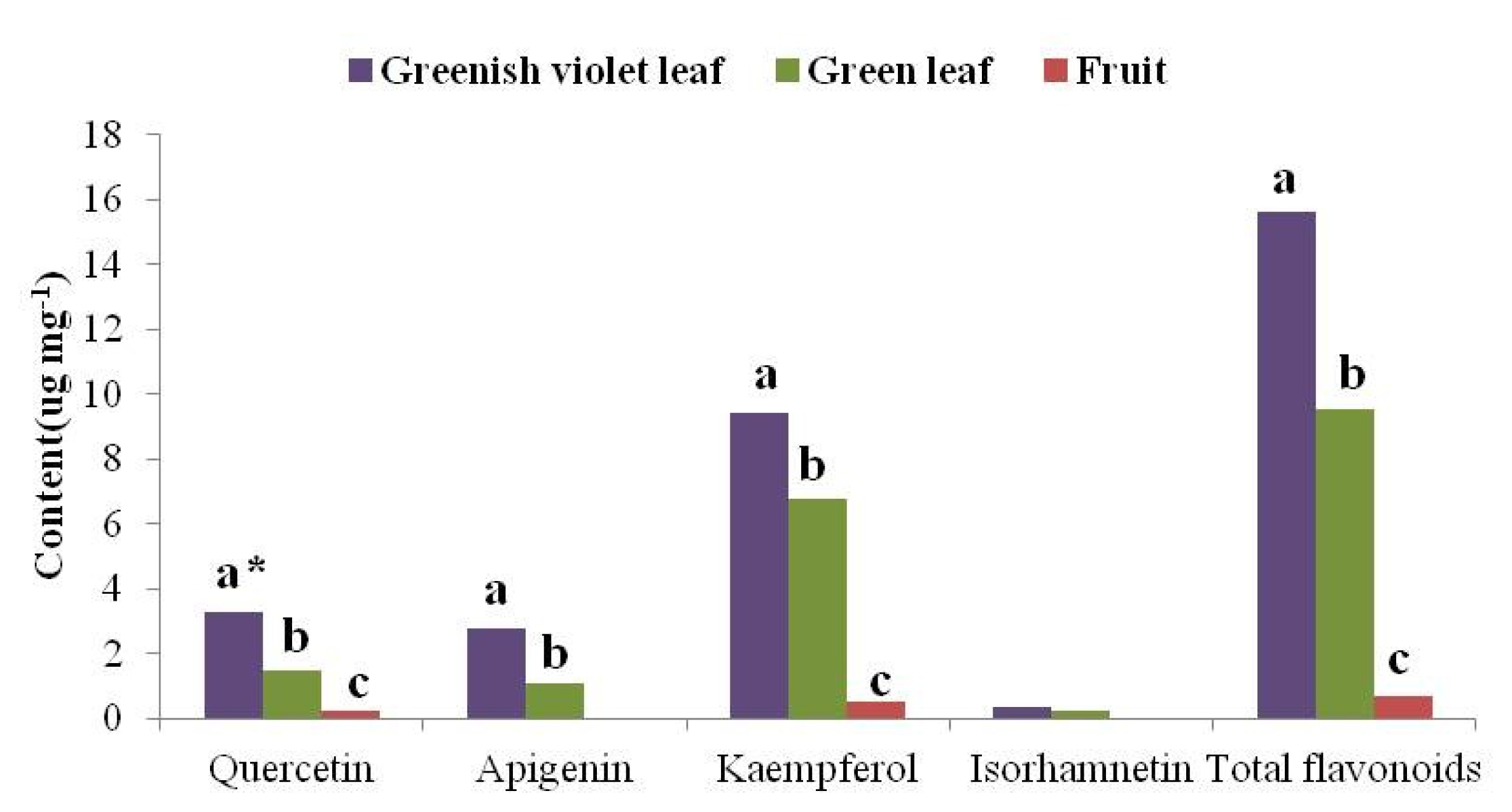
Fig. 2). Flavonoid aglycone concentrations in eggplant green leaves, greenish violet leaves, and fruits are compared in
Fig. 3. All flavonoids of the greenish violet leaves were significantly higher than those of green leaves. The flavonoid concentration in eggplant leaves was 10 to 20 fold higher (with an average of 15.6 μg mg
−1) than that of the fruit (AVG. = 0.9 μg mg
−1), and apigenin and isorhamnetin were not detected in eggplant fruit, which suggests that eggplant leaves represent a potential source of natural antioxidants due to their very high flavonoid concentrations. ABTS (73.9 μg Trolox mg
−1) and DPPH (53.1 μg ASC mg
−1) activity, and quercetin (3.0 μg mg
−1), apigenin (1.6 μg mg
−1), kaempferol (8.8 μg mg
−1), and total flavonoid aglycone concentrations (12.9 μg mg
−1) in the early-flowering accessions (days to flowering <80 days) were found to be significantly higher than those in other accessions (
Table 2). The accessions originating from 45°N showed the highest flavonoid concentrations (AVG. = 15.4 μg mg
−1), followed by accessions that originated from 30°~45°N (AVG. = 13.0 μg mg
−1), 15°~30°N (AVG. = 11.0 μg mg
−1), and 0°~15°N (AVG. = 9.5 μg mg
−1). The same patterns were also found in ABTS and DPPH antioxidant activities (
Table 3). The PCA using a correlation matrix and Pearson correlation coefficients indicated that the first three principal components (PCs) explained 79% of the total variance among accessions; PC1, PC2, and PC3 explained 40%, 25%, and 14% of the variance, respectively. Thus, based on PC1, ABTS and DPPH antioxidant activity and all flavonoid aglycones displayed relatively high contributions to the total variance, whereas PC2 was characterized mainly by ABTS and DPPH antioxidant activity (
Table 4). The biplot of the first two PCs, including loading of the ABTS and DPPH antioxidant activity and flavonoid aglycone content, is given in
Fig. 4. This figure indicates that the 45°N group including Canada, Russia, Ukraine, and Moldova resources had high ABTS and DPPH antioxidant activity, whereas high flavonoid level resources were clustered in the 30°~ 45°N group. The first two components accounted for 65% of the total variance in 102 eggplant accessions. IT213107 from China was recommended as a potential source of natural antioxidants due to its high ABTS (83.6 μg Trolox mg
−1) and DPPH (73.6 μg ASC mg
−1) antioxidant activity and high total flavonoid content (21.0 μg mg
−1) among accessions.
DISCUSSION
The range of flavonoids occurring in plant materials is generally reported to be large, and every plant has an original and unique flavonoid profile, which makes quantification difficult. For this reason, flavonoid aglycones are frequently used to determine the total flavonoid content, which can lower the variability (
Webb and Harborne 1991). So in this study, eggplant flavonoids were investigated by calculating the flavonoid aglycone concentrations of quercetin, apigenin, kaempferol, and isorhamnetin. Quercetin has been reported to be a major flavonoid in most plant extracts (
Miean and Mohamed 2001). However, in this study, eggplant leaves were found to mainly accumulate kaempferol, which accounted for more than 70% of the total flavonoids. This finding will provide valuable information for developing resources having high kaempferol concentrations. A previous study indicated that the temperature of the place of collection showed a negative correlation with antioxidant activities and flavonoids (
Åkerstöm et al. 2010). Similar results were found in our study; accessions originating from 45°~60°N displayed the highest flavonoid concentrations, followed by accessions originating, in order, from 30°~45°N, 15°~30°N, and 0°~15°N. This result concurred with the PCA reported earlier in this paper, which showed that the 0~15°N group and 45°~60°N group were different (
Fig. 4). These results can be explained by the other finding, namely that either low latitude or high temperature at the geographical origin may lead to low antioxidant activity (
Ghasemi et al. 2011;
Piao et al. 2013). Previous studies reported that EtOH extracts of eggplant leaves had higher DPPH radical scavenging activity and total flavonol content than did their fruits (
Jung et al. 2011;
Madukwe et al. 2013). Similarly, in this study, eggplant leaves had significantly higher flavonoid concentrations than their fruit had (
Fig. 3). From these results, it can be concluded that eggplant leaves represent a potential source of natural antioxidants due to their very high flavonoid concentrations. The biplot (
Fig. 4) indicates that the 45°N group had high ABTS and DPPH antioxidant activity, whereas high flavonoid-level resources were clustered in the 30°~45°N group. Thus, this plot can be used to categorize genetic entities in making eggplant breeding decisions.
ACKNOWLEDGMENTS
This work was supported by the Rural Development Administration (RDA), Republic of Korea (Project No. PJ008625), and postdoctoral program.
Fig. 1Distribution of 102 eggplant accessions by their countries of collection.
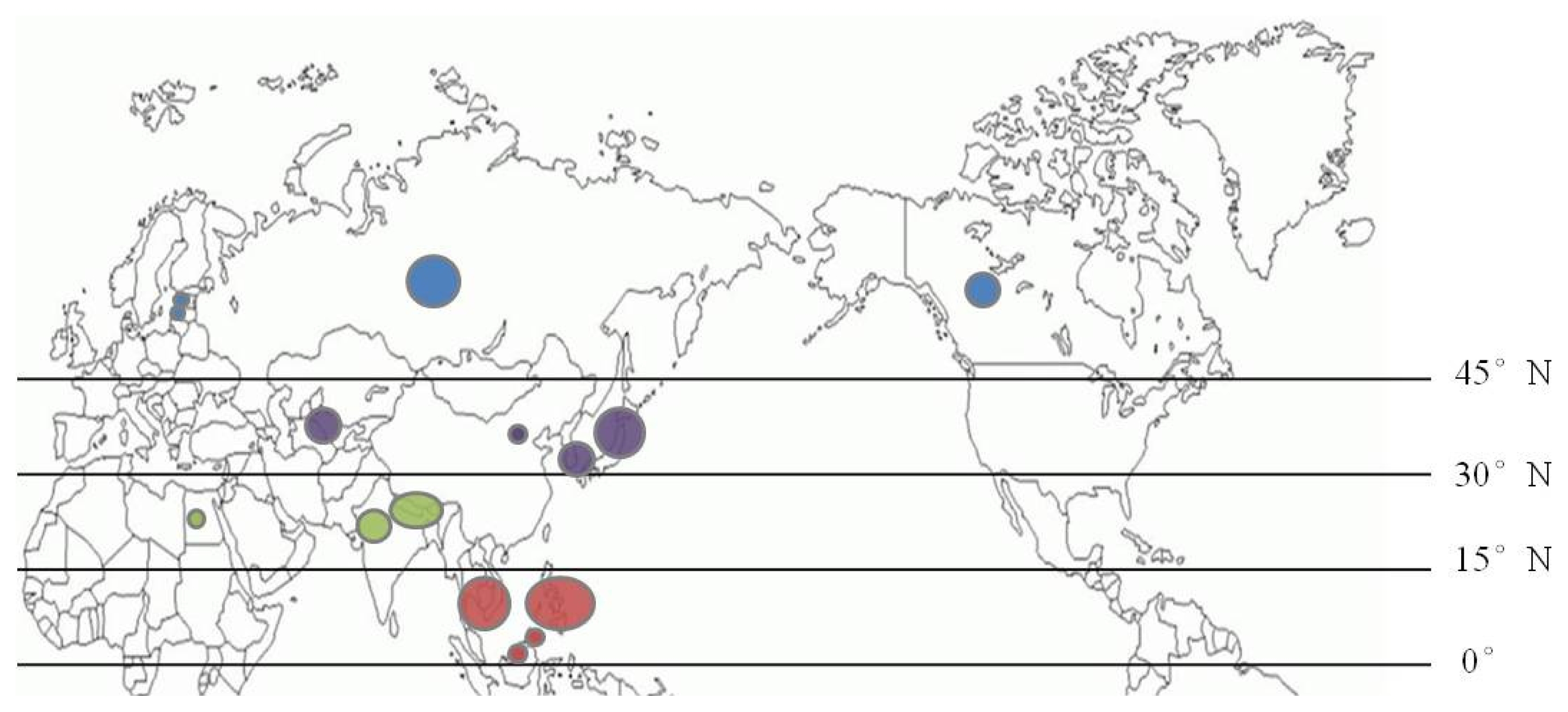
Fig. 2Standard and sample chromatograms of flavonoid aglycones in eggplant.
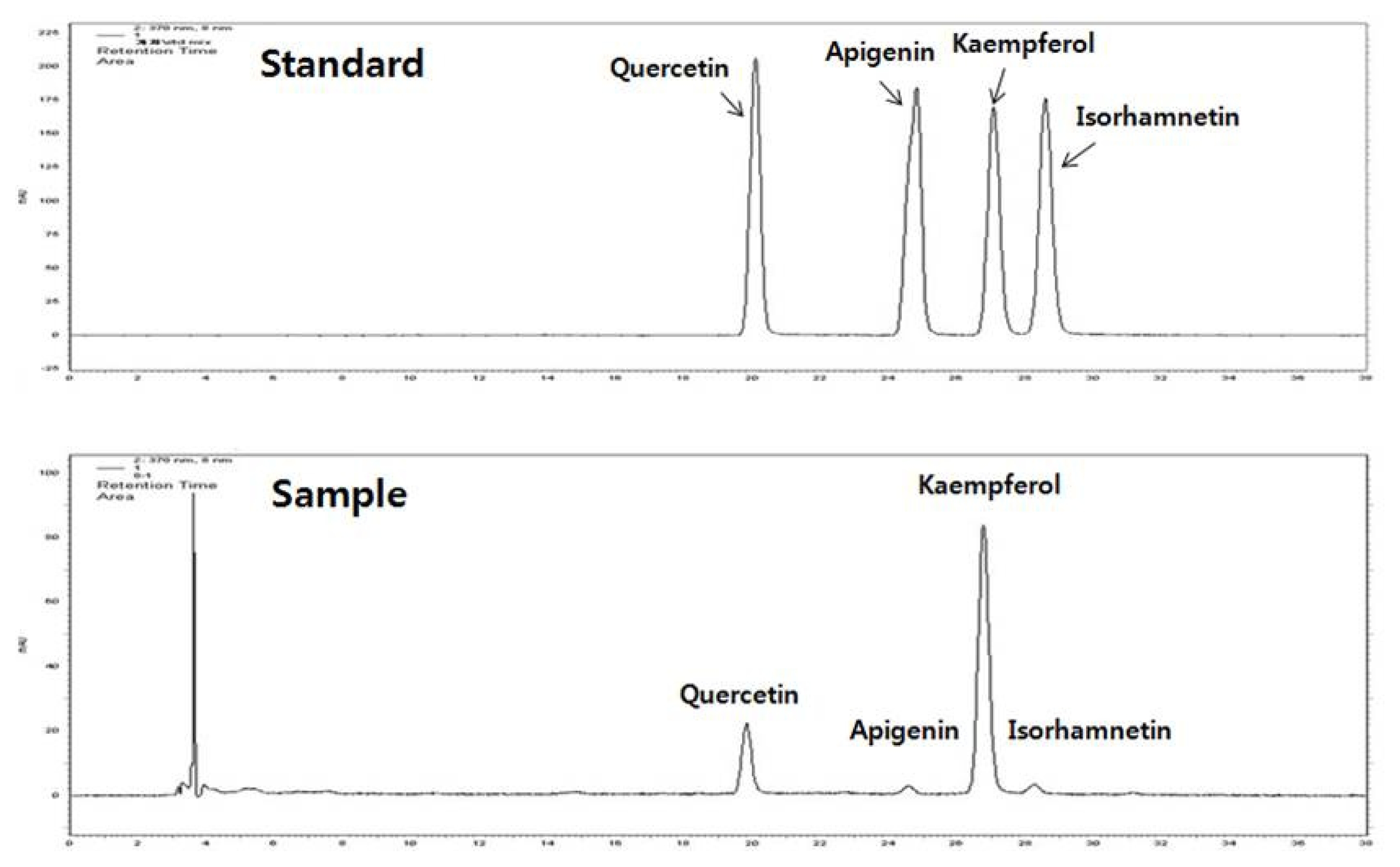
Fig. 3
Flavonoid contents classified by leaves and fruits in 102 eggplant germplasm.
*The same letter in each column indicates no significant difference by Duncan’s multiple range test, p < 0.05
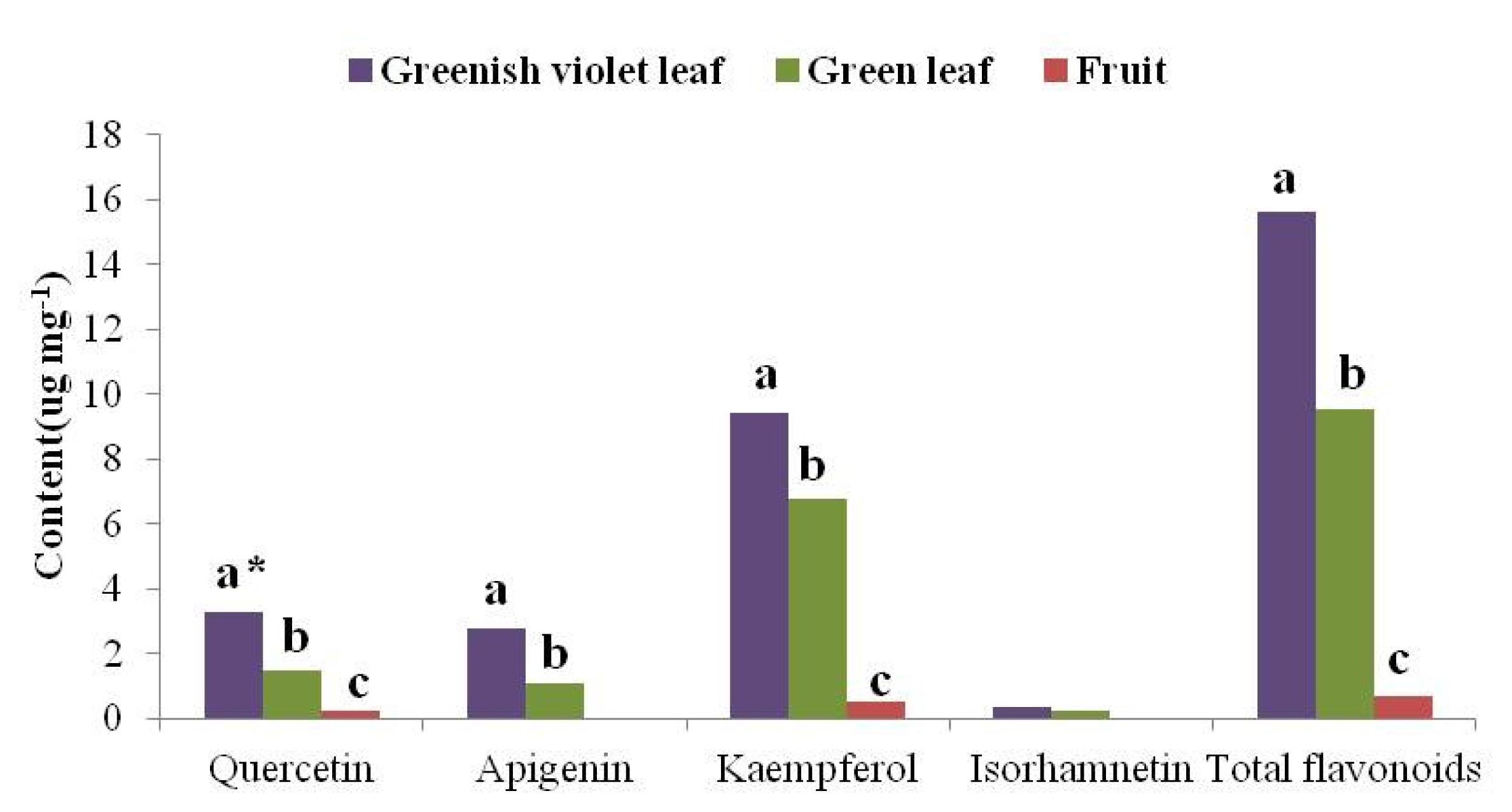
Fig. 4Plot of the first and second principal components classified by the latitude of origin for 102 eggplant leaves.
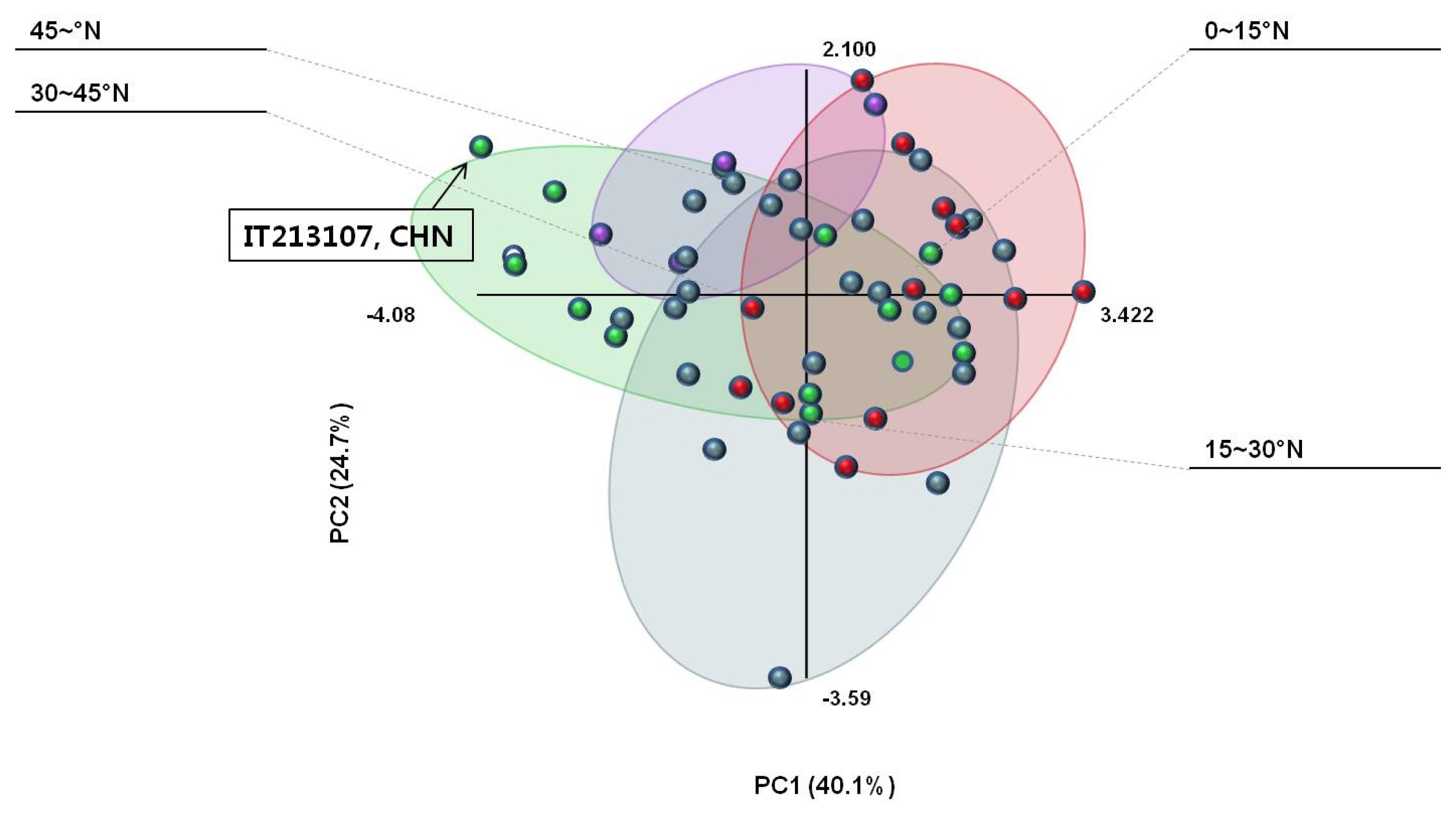
Table 1NAC
z) registration numbers and origins of 102 eggplant accessions investigated in this study.
Table 1
|
NAC registration number |
Country of origin |
|
1. IT219140 |
CAN |
|
2. IT170475 |
CHN |
|
3. IT208418 |
CHN |
|
4. IT213107 |
CHN |
|
5. IT218742 |
CHN |
|
6. IT218770 |
CHN |
|
7. IT218771 |
CHN |
|
8. IT180718 |
EGY |
|
9. IT180719 |
EGY |
|
10. IT189729 |
IDN |
|
11. IT136568 |
IND |
|
12. IT136569 |
IND |
|
13. IT136570 |
IND |
|
14. IT208416 |
IND |
|
15. IT208417 |
IND |
|
16. IT218701 |
IND |
|
17. IT189720 |
JPN |
|
18. IT189721 |
JPN |
|
19. IT189722 |
JPN |
|
20. IT189724 |
JPN |
|
21. IT189725 |
JPN |
|
22. IT189726 |
JPN |
|
23. IT189727 |
JPN |
|
24. IT189728 |
JPN |
|
25. IT189763 |
JPN |
|
26. IT189764 |
JPN |
|
27. IT189769 |
JPN |
|
28. IT189770 |
JPN |
|
29. IT102771 |
KOR |
|
30. IT103969 |
KOR |
|
31. IT104244 |
KOR |
|
32. IT136571 |
KOR |
|
33. IT220040 |
KOR |
|
34. IT203193 |
MDA |
|
35. IT183769 |
MYS |
|
36. IT110943 |
NPL |
|
37. IT136552 |
NPL |
|
38. IT136553 |
NPL |
|
39. IT136554 |
NPL |
|
40. IT136556 |
NPL |
|
41. IT136557 |
NPL |
|
42. IT136558 |
NPL |
|
43. IT136561 |
NPL |
|
44. IT136562 |
NPL |
|
45. IT136564 |
NPL |
|
46. IT136566 |
NPL |
|
47. IT189771 |
NPL |
|
48. IT200247 |
NPL |
|
49. IT200249 |
PHL |
|
50. IT201053 |
PHL |
|
51. IT201057 |
PHL |
|
52. IT201059 |
PHL |
|
53. IT201060 |
PHL |
|
54. IT201063 |
PHL |
|
55. IT201071 |
PHL |
|
56. IT201072 |
PHL |
|
57. IT201073 |
PHL |
|
58. IT201074 |
PHL |
|
59. IT201077 |
PHL |
|
60. IT201078 |
PHL |
|
61. IT201079 |
PHL |
|
62. IT201080 |
PHL |
|
63. IT201081 |
PHL |
|
64. IT201082 |
PHL |
|
65. IT201084 |
PHL |
|
66. IT201087 |
PHL |
|
67. IT201088 |
PHL |
|
68. IT201089 |
PHL |
|
69. IT201090 |
PHL |
|
70. IT201091 |
PHL |
|
71. IT201092 |
PHL |
|
72. IT201096 |
PHL |
|
73. IT201100 |
PHL |
|
74. IT201101 |
PHL |
|
75. IT201102 |
PHL |
|
76. IT201103 |
PHL |
|
77. IT201112 |
PHL |
|
78. IT201113 |
PHL |
|
79. IT201116 |
PHL |
|
80. IT201117 |
PHL |
|
81. IT201118 |
PHL |
|
82. IT201124 |
PHL |
|
83. IT203188 |
RUS |
|
84. IT203189 |
RUS |
|
85. IT218791 |
RUS |
|
86. IT218790 |
RUS |
|
87. IT224506 |
RUS |
|
88. IT224477 |
RUS |
|
89. IT218616 |
THA |
|
90. IT218694 |
THA |
|
91. IT218697 |
THA |
|
92. IT218699 |
THA |
|
93. IT218700 |
THA |
|
94. IT218772 |
THA |
|
95. IT218774 |
THA |
|
96. IT218775 |
THA |
|
97. IT218776 |
THA |
|
98. IT203186 |
UKR |
|
99. IT203178 |
UZB |
|
100. IT203179 |
UZB |
|
101. IT218709 |
UZB |
|
102. IT218722 |
UZB |
Table 2Flavonoid contents and antioxidant activity classified by days to flowering in germplasm of leaves of 102 eggplant accessions.
Table 2
|
Days to flowering |
Flavonoid aglycnes (ug mg−1) |
Antioxidant activity |
|
|
|
Quercetin |
Apigenin |
Kaempferol |
Isorhamnetin |
Total flavonoid |
DPPHy)
|
ABTSx)
|
|
<~80 (n = 26) |
3.0 ± 1.1az)
|
1.6 ± 0.5a |
8.8 ± 2.5a |
0.3 ± 0.1 |
12.9 ± 3.7a |
53.1 ± 12.1a |
73.9 ± 11.2a |
|
81~90 (n = 44) |
2.0 ± 0.6b |
1.3 ± 0.5b |
6.5 ± 1.7b |
0.4 ± 0.1 |
9.5 ± 2.8b |
50.9 ± 12.2ab |
62.9 ± 10.1b |
|
> 91 (n = 32) |
1.7 ± 0.5b |
1.2 ± 0.4b |
5.5 ± 1.1b |
0.3 ± 0.1 |
8.5 ± 2.0b |
46.3 ± 13.3b |
56.2 ± 10.8b |
Table 3Flavonoid contents and antioxidant activity classified by origin latitude in germplasm of leaves of 102 eggplant accessions.
Table 3
|
Latitude |
Flavonoid aglycones (ug mg−1) |
Antioxidant Activity |
|
|
|
Quercetin |
Apigenin |
Kaempferol |
Isorhamnetin |
Total flavonoid |
DPPHy)
|
ABTSx)
|
|
45°N (n = 9) |
2.5 ± 0.5 |
1.9 ± 0.4az)
|
10.9 ± 1.6a |
0.3 ± 0.2 |
15.4 ± 2.7a |
56.5 ± 16.3a |
75.6 ± 10.5a |
|
30~45°N (n = 31) |
2.5 ± 0.8 |
1.4 ± 0.5ab |
8.5 ± 2.0b |
0.4 ± 0.1 |
13.0 ± 3.7ab |
52.2 ± 15.1b |
67.1 ± 12.3ab |
|
15~30°N (n = 22) |
1.9 ± 0.6 |
1.4 ± 0.6ab |
6.8 ± 1.5c |
0.3 ± 0.1 |
11.0 ± 3.3bc |
51.8 ± 16.1b |
66.5 ± 17.3ab |
|
0~15°N (n = 40) |
1.8 ± 0.6 |
1.1 ± 0.5b |
6.3 ± 1.9c |
0.3 ± 0.1 |
9.5 ± 2.8c |
51.4 ± 15.0b |
60.6 ± 12.4b |
Table 4Principal components analysis of germplasm of 102 eggplant accessions, with the eigenvalues and eigenvectors of antioxidant activity and flavonoids.
Table 4
|
Variables |
Comp 1 |
Comp 2 |
Comp 3 |
|
Quercetin |
−0.46 |
−0.37 |
0.27 |
|
Apigenin |
−0.46 |
−0.27 |
0.18 |
|
Kaempferol |
−0.32 |
−0.08 |
−0.94 |
|
Isorhamnetin |
−0.46 |
−0.26 |
0.07 |
|
DPPH |
−0.36 |
0.61 |
0.06 |
|
ABTS |
−0.38 |
0.59 |
0.10 |
|
Contribution |
40% |
25% |
14% |
|
Cumulative contribution |
40% |
65% |
79% |
|
Eigenvalue |
2.06 |
1.27 |
0.72 |
References
- Akerstöm A, Jaakola L, Bang U, Jäderlund A. 2010. Effects of latitude-related factors and geographical origin on anthocyanidin concentrations in fruits of Vaccinium myrtillus L. Agric Food Chem. 58: 11939-11945.
- Arnao MB. 2000. Some methodological problems in the determination of antioxidant activity using chromogen radicals: a practical case. Trends Food Sci Technol. 11: 419-421.
- George R. 1985. Vegetable seed production. London and New York. 223-229.
- Ghasemi K, Ghasemi Y, Ehteshamnia A, Nabavi SM, Nabavi SF, Ebrahimzadeh MA, Pourmorad F. 2011. Influence of environmental factors on antioxidant activity, phenol and flavonoids contents of walnut (Juglans regia L.) green husks. J Med Plant Res. 5: 1128-1133.
- Jung EJ, Bae MS, Jo EK, Jo YH, Lee SC. 2011. Antioxidant activity of different parts of eggplant. J Med Plant Res. 5: 4610-4615.
- Konys E. 1993. Warzywa psiankowate. Gapiński M, editor. Warzywa mało znane i zapomniane. PWRiL. Poznań: pp. 78-82.
- Lawande KE, Chavan JK. 1998. Eggplant (Brinjal), handbook of vegetable science and technology. Production, composition, storage and processing. New York: pp. 225-244.
- Lee DJ, Lee JY. 2004. Antioxidant activity by DPPH assay. Korean J Crop Sci. 49: 187-194.
- Madukue EU, Ani PN, Ezeonu C. 2013. Comparative Analysis of Antioxidant Vitamins in Extracts of Three Vegetables among the Commonly Consumed in South-Eastern Nigeria. Global Res Anal. 2: 94-95.
- Miean KH, Mohamed S. 2001. Flavonoid (myricetin, quercetin, kaempferol, luteolin, and apigenin) content of edible tropical plants. J Agric Food Chem. 49: 3106-3112.
- Nabavi SM, Ebrahimzadeh MA, Nabavi SF, Fazelian M, Eslami B. 2009. In vitro antioxidant and free radical scavenging activity of Diospyros lotus and Pyrus boissieriana growing in Iran. Pharmacog Mag. 5: 122-126.
- Olszewska M. 2007. Quantitative HPLC analysis of flavonoids and chlorogenic acid in the leaves and inflorescences of Prunus aerotina EHRH. Acta Chromatogr. 19: 253-269.
- Piao XM, Jang EK, Chung JW, Lee GA, Lee HS, Sung JS, Jeon YA, Lee JR, Kim YG, Lee SY. 2013. Variation in antioxidant activity and polyphenol content in tomato stems and leaves. Plant Breed Biotechnol. 1: 366-373.
- Re R, Pellegrini N, Proteggente A, Pannala A, Yang M, Rice-Evans C. 1999. Antioxidant activity applying an improved ABTS radical cation decolorisation assay. Free Rad Biol Med. 26: 1231-1237.
- Saddiqe Z, Naeem I, Mughal T, Taskeen A, Mubeen H. 2011. Characterization of flavonoid aglycones in aerial parts of Hypericum oblongifolium L. Asian J Chem. 23: 939-940.
- Webb ME, Harborne JB. 1991. Leaf flavonoid aglycone patterns and sectional classification in the genus Vicia (Leguminosae). Biochem Syst Ecol. 19: 81-86.