Abstract
Aerial surfaces of terrestrial plants are protected from the uncontrolled loss of water and gas by the cuticle, a membrane of fatty acid polymers on the outer surface of epidermal cells. Composed of cutin and waxes, the cuticle protects against a wide range of external stresses and has an important role in plant development and reproduction. Plants with reduced cuticular waxes often exhibit glossy, bright green leaves, which in rice are only observed in the presence of water adhesion. In this study, a wet leaf/glossy (wlg) mutant KDS-2249D was subjected to targeted exon capture and sequencing to identify candidate mutations. A single nonsynonymous, homozygous mutation was found in the KDS-2249D mutant. The mutation (G1080A) is predicted to change a tryptophan at position 360 to a stop codon in the Glossy1-like-1/wax crystal-sparse leaf 2 gene. This mutation completely co-segregated with the wlg phenotype in an F2 mapping population (n = 435) and the KDS-2249D mutant exhibited a 40–50% decrease in total wax and significant increase in membrane permeability. This mutant will be useful for studies examining the role of cuticle waxes in protecting rice plants from environmental stresses.
-
Key words: Cuticle wax mutants, Exon capture, Glossy1-like genes, Rice
INTRODUCTION
The uncontrolled diffusion of water and gases from terrestrial plants is prevented by the cuticle, a hydrophobic layer of fatty acid polymers on the outer surface of epidermal cells. Consisting of two major components (i.e., cutin and wax), the cuticle also provides protection from many environmental stresses (
Jenks et al. 1994;
Riederer 2006;
Yeats and Rose 2013;
Serrano et al. 2014) and has a significant role in developmental and reproductive processes (
Lolle et al. 1992;
Preuss et al. 1993;
Fiebig et al. 2000;
Sieber et al. 2000). In the cuticle membrane, waxes are found embedded within and on the outer surface of a cutin polymer matrix where they form microscopic crystals of various morphologies depending on the plant species (
Baker 1982). These epicuticular wax crystals refract light resulting in the grayish green/blue appearance of aerial surfaces (
Clark and Lister 1975). In contrast, plants with mutations affecting the accumulation of epicuticular waxes often have glossy, bright green leaves. This phenotype has facilitated the identification of many mutants in
Zea mays (
Post-Beittenmiller 1996) and
Arabidopsis thaliana (
Koornneef et al. 1989). Epicuticular waxes also strongly influence leaf wettability; wax-deficient leaves are more hydrophilic, enabling water adhesion. The rice cuticle is not smooth and the glossy trait seen in maize and Arabidopsis is observed only in the presence of water (
Qin et al. 2011).
Fewer than twenty of the genes involved in rice cuticle formation have been characterized to date. This number includes half a dozen or so wax biosynthesis genes, most of which have been identified using reverse genetics approaches based on the well-established maize and Arabidopsis models. In rice, eleven putative homologues of the maize
Glossy1 / Arabidopsis
CER3/WAX2/YRE/FLP gene have been identified (
Islam et al. 2009). These
Glossy1-like genes can be classified into three groups based on their sequence homology: GL1-related (
OsGL1-1, 1-2, and
1-3); CER-related (
OsGL1-4, 1-5, 1-6, and
1-7); and SUR2/sterol desaturase-related (
OsGL1-8, 1-9, 1-10, and
1-11). So far, five of these genes,
OsGL1-1/wax crystal-sparse leaf 2 (
Qin et al. 2011;
Mao et al. 2012),
OsGL1-2 (
Islam et al. 2009),
OsGL1-3 (
Zhou et al. 2015),
OsGL1-5/Wax-deficient anther1 (
Jung et al. 2006), and
OsGL1-6 (
Zhou et al. 2013a), have been cloned and characterized. Analysis of the content and composition of the cuticular waxes in knockout mutants suggests similar functions for
OsGL1-1 and
1-3 and distinct roles for
OsGL1-2, 1-5, and
1-6 (
Zhou et al. 2015). In addition to the
wax crystal-sparse leaf 2 mutant (
Mao et al. 2012), three other
wsl mutants have been characterized. The corresponding genes encode β-ketoacyl CoA synthase (
wsl1;
Yu et al. 2008), β-ketoacyl CoA reductase (
wsl3;
Gan et al. 2016), and β-ketoacyl CoA synthase 6 (
wsl4;
Gan et al. 2017). These are key components of the fatty acid elongation complex and thus function in synthesis of very long-chain fatty acids (VLCFAs) from which cuticular waxes are primarily derived (
Yeats and Rose 2013). Recently, the involvement of a fourth non-
GL1-like gene,
OsWS1, in cuticle wax biosynthesis has been found to be under the regulation of the miRNA
osa-miR1848 (
Xia et al. 2015).
OsWS1 (
O. sativa wax synthase isoform 1) is a member of the membrane-bound
O-acyl transferase gene family and is thought to be involved in VLCFA elongation.
A small number of genes involved in regulating cuticle formation and wax biosynthesis in rice have also been identified. The rice
Wax Synthesis Regulatory genes
OsWR1 and
OsWR2 are ethylene response factor-type transcriptional factors and are homologues of the Arabidopsis
WIN1/SHN1 gene (
Wang et al. 2012;
Zhou et al. 2013b). While
OsWR1 primarily affects cuticle wax biosynthesis and composition,
OsWR2 has been found to transcriptionally regulate both cuticular wax and cutin biosynthesis. Other genes that appear to influence cuticular wax biosynthesis include
OsHsd1, which encodes a hydroxysteroid dehydrogenase member of the short-chain dehydrogenase reductase superfamily (
Zhang et al. 2016), and
Drought-Induced Wax Accumulation 1 (
DWA1) which encodes a putative megaenzyme (
Zhu and Xiong 2013).
OsHsd1 was identified from a spontaneous mutant, which exhibited reduced epicuticular wax crystals, but unlike other wax-deficient mutants has a thicker cuticle membrane. Analysis of the cuticular waxes revealed an increased amount of VLCFAs and soluble fatty acids in the leaves. Characterization of
OsHsd1 and the function of other HSDs suggests that it may affect wax metabolism via steroid signaling pathways (
Zhang et al. 2016). Like
OsHSD1, the specific mode of action of
DWA1 remains unknown, but initial characterization of a
dwa1 knockout mutant indicates that it regulates cuticular wax accumulation in rice under drought stress (
Zhu and Xiong 2013).
In this study, we employed an in-solution target enrichment approach in conjunction with next-generation sequencing to analyze a reduced epicuticular wax (i.e.,
wax crystal-sparse leaf;
wsl) rice mutant. Using biotinylated RNA probes designed from a very limited number of coding sequences, this exon capture and sequencing strategy resulted in the identification of a single mutation which completely co-segregated with the mutant phenotype in an F
2 mapping population (n = 435). The mutation, a G→A transition at nucleotide 1080 resulting in a premature termination of the protein, was found in the previously reported
OsGL1-1/wsl2 gene (
Qin et al. 2011;
Mao et al. 2012).
MATERIALS AND METHODS
Plant materials, mutagenesis, and phenotyping
The KDS-2249D mutant was derived by sodium azide mutagenesis of the
temperate japonica variety Kitaake (
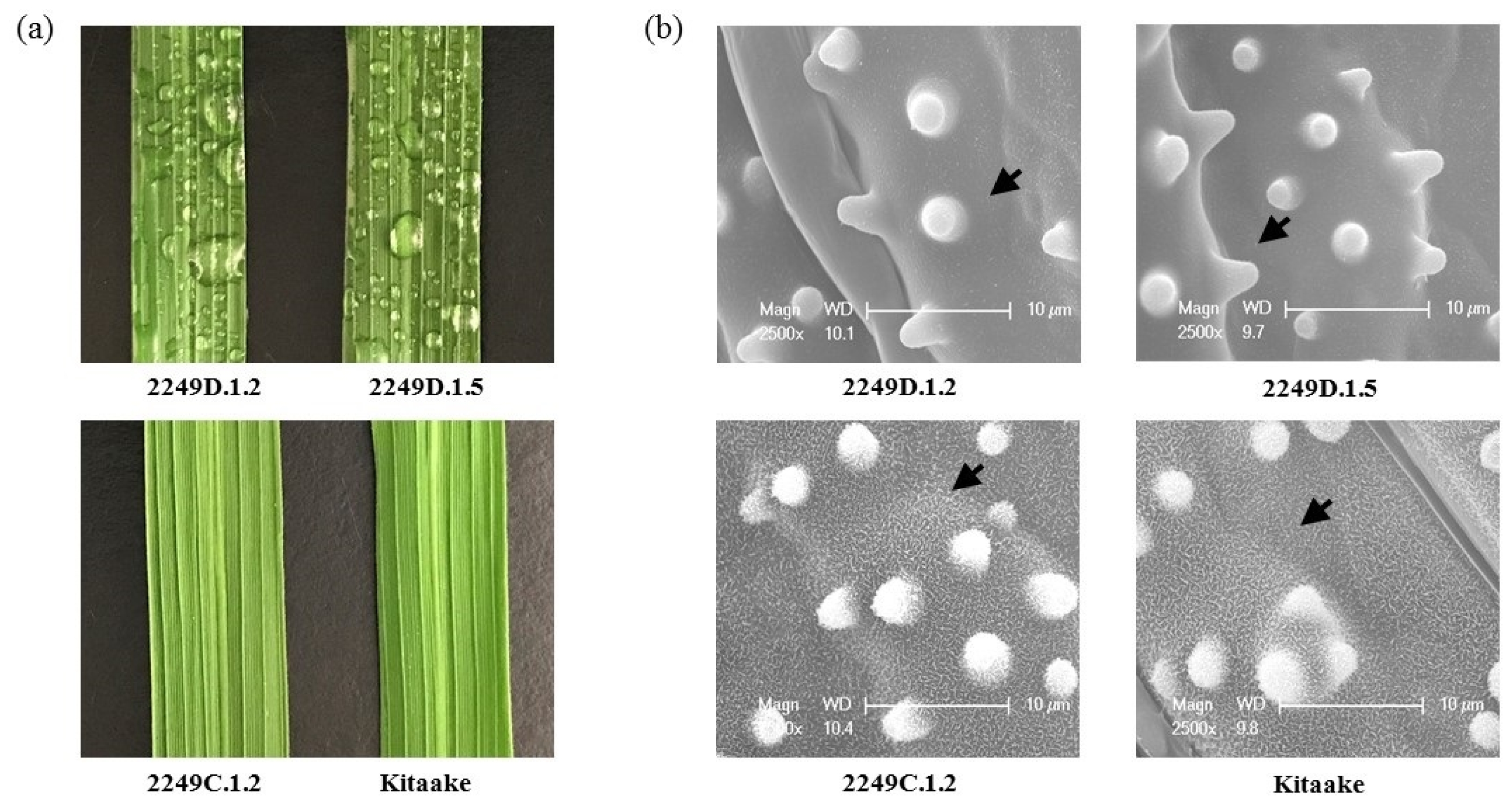
Monson-Miller et al. 2012). Originally, the sibling mutant line KDS-2249C (derived from the same M1 plant) was identified as exhibiting opaque rice grains (A. Chun, M. Yoon, and T. Tai, unpublished) and the KDS-2249D mutant was maintained as a wild-type grain control. During growth of these lines, the wet leaf/glossy (wlg) mutant phenotype of KDS-2249D (
Fig. 1) was discovered inadvertently. Under standard greenhouse conditions, no clear morphological or developmental differences were observed between the KDS-2249 sibling mutant lines or wild-type Kitaake with the exception of reduced fertility in the KDS-2249D mutant. Genetic crosses between KDS-2249D and wild-type Kitaake and L-202 (a California long grain
temperate japonica variety;
Tseng et al. 1984) were made to facilitate inheritance analysis. An F
2 mapping population derived from a KDS-2249D/Kitaake F
1 was used to conduct segregation analysis. The wlg phenotyping of F
1 and F
2 plants was typically performed on greenhouse-grown plants at the 3–4 leaf seedling stage by watering the leaves of the plants using a “shower”-type water nozzle or by misting the leaves with water using a spray bottle.
Exon capture was performed using MYbaits
® (MYcroarray, Ann Arbor, MI, USA). The custom biotinylated RNA probes or baits were designed from a set of 321 rice genes that were selected to cover various biosynthetic pathways and gene families of interest to our research program (
Supplementary Table S1). These included starch biosynthesis genes (
Kharabian-Masouleh et al. 2011), glutathione transferases (
Jain et al. 2010), phytic acid biosynthesis genes (
Kim and Tai 2014), microtubule cytoskeleton genes (
Guo et al. 2009), ATP-binding cassette (ABC) transporter genes (
Nguyen et al. 2014), and the
Glossy1-like (
GL1-like) genes (
Islam et al. 2009). For the
GL1-like genes, only ten out of the eleven family members were used for the bait design;
OsGL1-5 (LOC_Os010g3320) was not a current Rice Genome Annotation Project locus or gene model (
Oryza sativa ssp.
japonica cv. Nipponbare pseudomolecules version 7.0;
http://rice.plantbiology.msu.edu). Sequences (CDS FASTA files) were submitted to MYcroarray for bait design and production. Briefly, 80-mer baits with flexible 2X tiling density were designed and then screened against the
Oryza sativa Nipponbare pseudomolecules (MSU version 7.0) using BLAST to identify and remove non-unique baits. Baits with repetitive sequences were removed with RepeatMasker (
www.repeatmasker.org) and the final capture reagent consisted of 19,748 baits with about 2.85X tiling density (~28 bp spacing between bait starting positions).
For exon capture and sequencing, three wild type controls (Nipponbare, Kitaake, and Sabine) and nine mutants including KDS-2249D were selected. Of the remaining mutants, three were wlg mutants in the Sabine background and the remaining five were grain quality mutants in the Kitaake (four) and Nipponbare (one) backgrounds. DNA samples were extracted from one month-old seedlings of M4 generation mutants and wild-type lines using a DNeasy® CA, USA) and quantified using a Synergy H1 multi-mode plate reader with a Take3 micro-volume plate (BioTek, Winooski, VT, USA) and a Qubit fluorometer (Invitrogen, Carlsbad, CA, USA). One μg of genomic DNA from each sample was sheared with the Covaris Sonicator 220 (average fragment size of 300 bp). Genomic libraries were constructed with KAPA HyperPlus Kit according to manufacturer’s instructions (KAPA Biosystems, Wilmington, MA, USA) and equal amounts of 12 libraries were pooled and subjected to in-solution target enrichment using the MYbaits® kit.
Sequencing was performed using the Illumina HiSeq2500 (3% of a lane; SR50 run) and HiSeq4000 (5% of a lane; PE150 run) platforms. Candidate mutations were detected using the Mutation and Polymorphism Survey tool with parameter 10 threads, minimum of 6 libraries, minimum coverage of 20, maximum coverage of 2000 (
Henry et al. 2014). Protein effect was determined based on the
Oryza sativa ssp.
japonica cv. Nipponbare pseudomolecules (MSU version 7.0) using Geneious v9.1.5 (
www.geneious.com;
Kearse et al. 2012). Novelty of the mutations was identified based on 32-Mb single nucleotide polymorphism (SNP) dataset from the IRRI 3,000 Rice Genomes Project sequence information without any threshold (
Alexandrov et al. 2014;
Mansueto et al. 2017). Information on protein families and transmembrane regions was predicted using Pfam 31.0 (
http://pfam.xfam.org) and TMHMM (
Krogh et al. 2001), respectively, and implemented by the Rice Genome Annotation Project server (
http://rice.plantbiology.msu.edu).
Tissue from fully expanded leaves (1–2 leaves from the youngest leaf) of 4–5 week-old plants were cut into small pieces (≤1 cm in length) and immersed in modified Karnovsky’s fixative (2% paraformaldehyde and 2.5% glutaraldehyde in 0.06 M Sorensen’s phosphate buffer, pH 7.3). Fixing was assisted by using a Pelco 34700 BioWave (Ted Pella, Inc., Redding, CA, USA) and allowed to proceed at room temperature for 1–2 hours followed by overnight incubation at 4°C. After dehydration in a graded ethanol series (30–100%), samples were subjected to critical point drying in a Tousimis® 931.GL Supercritical Autosamdri® (Tousimis Research Corp., Rockville, MD, USA) and sputter coated with gold using a Pelco Auto Sputter Coater SC-7 (Ted Pella, Inc., Redding, CA, USA). Samples were observed and images were taken using a Philips XL30 TMP (F.E.I. Co., Hillsboro, OR, USA). SEM analysis was performed at the Electron Microscopy Laboratory, Department of Pathology and Laboratory Medicine, University of California, Davis.
Total wax content by weight
The total wax content was determined using the weight method as described by
Zhou et al. (2013a) with minor modification. Flag leaves of booting tillers of eight plants from each accession (KDS-2249D.1.2, KDS-2249D.1.5, KDS-2249C.1.2, and wild-type Kitaake) were harvested and cut into approximately 3 cm lengths. For each accession, three samples of approximately two grams of leaf blade tissue were weighed and transferred to a pre-weighed test tube (25 × 150 mm). Thirty mL of hot chloroform (60°C) was added to extract the cuticle waxes from the leaf surfaces. Leaves were removed after 30 seconds and the wax content was determined by re-weighing the tubes on an analytical balance after complete evaporation of the chloroform. Total wax content (mg per g of leaf tissue) for each individual was determined.
Cuticle membrane permeability was examined by measuring water loss using a detached leaf assay. The second leaves from the top of three booting-stage tillers per plant were detached by cutting below the auricles and submerged in distilled water in the dark for ≥ 2 hours. All subsequent manipulations were conducted in a darkened room. The leaves were removed, blotted dry, and cut at the auricle (i.e. interface between the leaf blade and sheath) prior to weighing using an analytical balance. Leaf blades were weighed at 0, 0.5, 1, 1.5, 2.5, and 3 hours. Leaves were kept in the dark at room temperature between measurements. The percentage of weight loss was determined based on the initial leaf blade weight. Three leaves of three plants from the lines KDS-2249D.1.2 (wsl), KDS-2249D.1.5 (wsl), KDS-2249C.1.2 (wild-type), and the parental variety Kitaake (wild-type) were assayed (total of 9 leaf blades per accession).
Validation of mutation and segregation analysis
Putative mutations identified by exon capture and next-generation sequencing were validated by Sanger sequencing of PCR products spanning those mutations. Sanger sequencing was also used to confirm the F
1 of crosses made between mutants and with wild types. The KDS-2249D/Kitaake F
2 population was scored for the wlg phenotype using the water spray method as described earlier. The segregation ratio of non-wlg (wild-type) to wlg (mutant) phenotype was subjected to Pearson’s χ
2 test for goodness-of-fit to the single recessive gene mode of inheritance. For genotyping of the mapping population, genomic DNA samples were extracted from the F
2 seedlings using a DNeasy
® 96 Plant Kit. The DNAs were subjected to PCR with primers (5’-ACCACACGATCCATCACACC-3 and 5’-ATCTCGTTGAGGATCACCGC-3) which amplified a 1,639-bp DNA fragment containing the SNP generated in the KDS-2249D mutant. PCR reactions and conditions used for amplifying DNA fragments for sequencing were as previously described (
Kim and Tai 2014). PCR products were purified using the Agencourt Ampure
® XP magnetic beads (Beckman Coulter Genomics, Danvers, MA, USA) and Sanger sequencing was performed by the College of Biological Sciences UCDNA Sequencing Facility at UC Davis. Sequence data alignment and analysis were performed using Geneious v9.1.5. Additional F
2 genotyping was performed using rhAmp
® SNP assays (Integrated DNA Technologies, Coralville, Iowa, USA). Up to 5 ng of DNA was PCR-amplified based on the manufacturer’s protocol with custom rhAmp
® allelic specific primers; FAM dye-slabeled forward: 5’-GCCTCCACCAGATGTGGGCCGT-3’, Yakima Yellow (YY) dye-labeled forward: 5’-GCCTCC ACCAGATGTGAGCCGT-3’, and reverse: 5’-GCGAGC TCGATCTGGTTGTTGATGCCGT-3’. PCR amplification and reporter dye detection were performed using a QuantStudio 6 Flex real-time PCR system (Thermo Fisher Scientific Inc., Waltham, MA, USA).
The means, standard deviation (SD), and significant differences (t-test for unequal variance) between wild-type and mutants for total wax and membrane permeability measurements were determined using MS Excel 2016 (Microsoft, Redmond, WA, USA) and JMP v13 (SAS Institute Inc., Cary, NC, USA).
RESULTS
Identification and preliminary evaluation of a reduced cuticle wax mutant
KDS-2249D mutant was inadvertently identified as a putative
wsl mutant based on its wet leaf/glossy appearance while being grown as a control for its sibling line KDS-2249C, a mutant exhibiting opaque rice grains but not having the wlg phenotype (
Fig. 1A). No obvious morphological differences were observed between KDS-2249D, KDS-2249C or wild-type Kitaake under standard greenhouse conditions although KDS-2249D did exhibit variable reduction in fertility. Characterization in growth and development under field conditions (i.e., flooded paddy) await the development of lines by backcrossing KDS-2249D with Kitaake to remove background mutations. SEM analysis of KDS-2249D confirmed that this mutant has a significant reduction in the number of epicuticular wax crystals compared to its wild-type progenitor, Kitaake, and its sibling line, KDS-2249C (
Fig. 1B). To characterize KDS-2249D, the weight method was employed to examine the total epicuticular wax content (
Zhou et al. 2013a). Comparison of total wax content from Kitaake, two KDS-2249D mutant lines (M5 generation; D.1.2 and D.1.5), and one KDS-2249C line (M5 generation; C.1.2) revealed a reduction of 40–50% in the KDS-2249D lines (
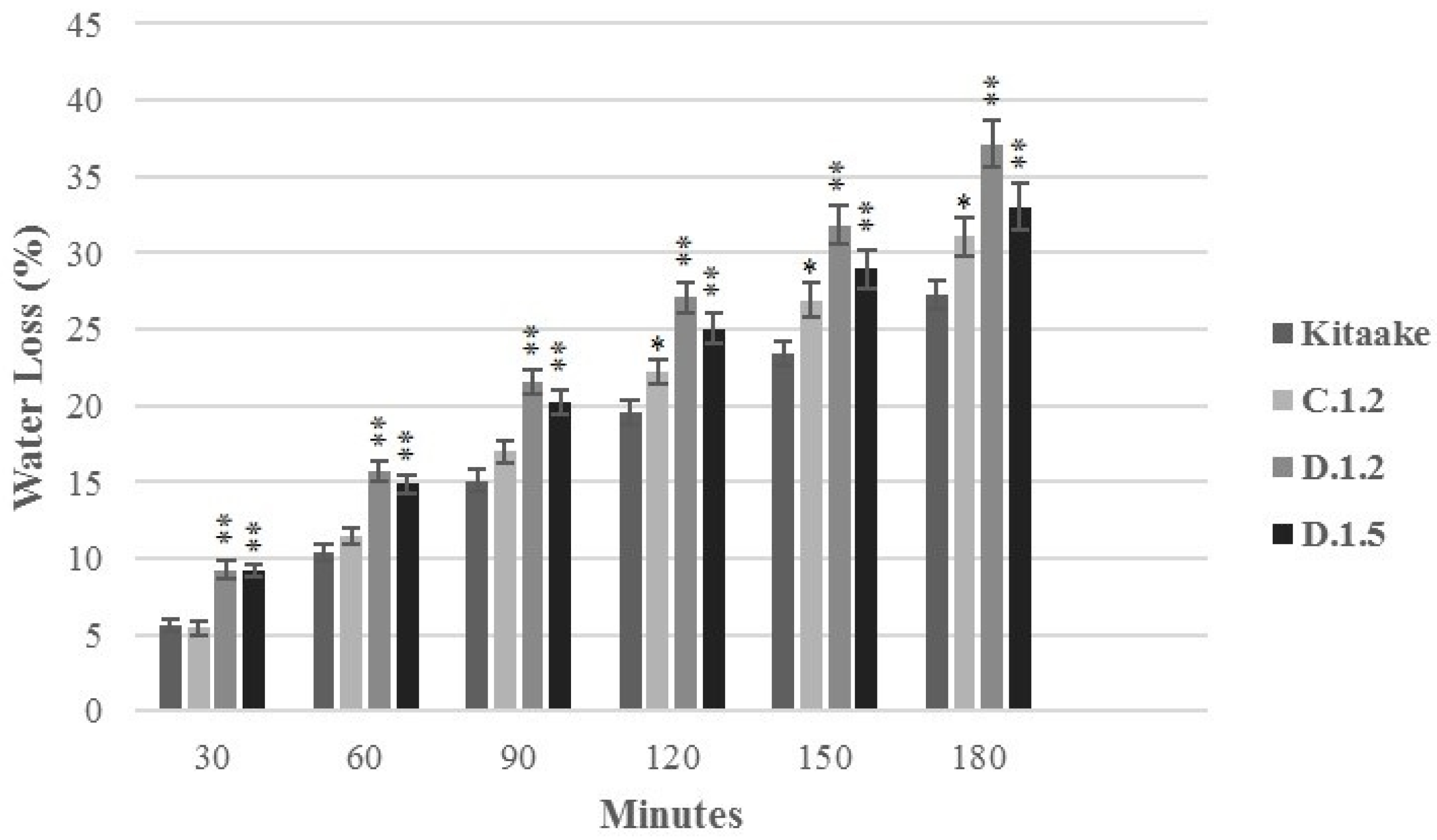
Table 1). To assess the cuticle membrane permeability, a detached leaf blade assay was conducted to evaluate water loss over time (
Fig. 2). Consistent with the reduced epicuticular wax (i.e.,
wsl) trait, both KDS-2249D lines (D.1.2 and D.1.5) exhibited significantly greater water loss over the entire time course (
t-test,
P < 0.01). The non-
wsl KDS-2249C. 1.2 line exhibited similar water loss to Kitaake until 120 min at which time a statistically significant difference was observed (
t-test,
P < 0.05).
To examine the utility of the exon capture and sequencing approach for identifying candidate mutations underlying phenotypes of interest, we employed in-solution target enrichment and next generation sequencing using the MYbaits
® capture reagent designed for twelve libraries. Custom biotinylated RNA probes were designed from 321 genes of interest including ten
Glossy1-like homologues (
Islam et al. 2009). Results of the targeted sequencing strategy for the KDS-2249D mutant and the wild-type progenitor cultivar Kitaake are shown in
Table 2. The number of sequencing reads that were “on target” (i.e., covering the baits used for enrichment) for KDS-2249D and Kitaake were 92 and 103 million representing 58 and 65X coverage of the coding regions (i.e. exons) of the 321 genes from which the baits were designed. Results for the remaining eight mutants and the Nipponbare and Sabine wild type controls included in the targeted exon capture and sequencing will be reported elsewhere.
A single, nonsynonymous homozygous point mutation was detected in the KDS-2249D mutant (
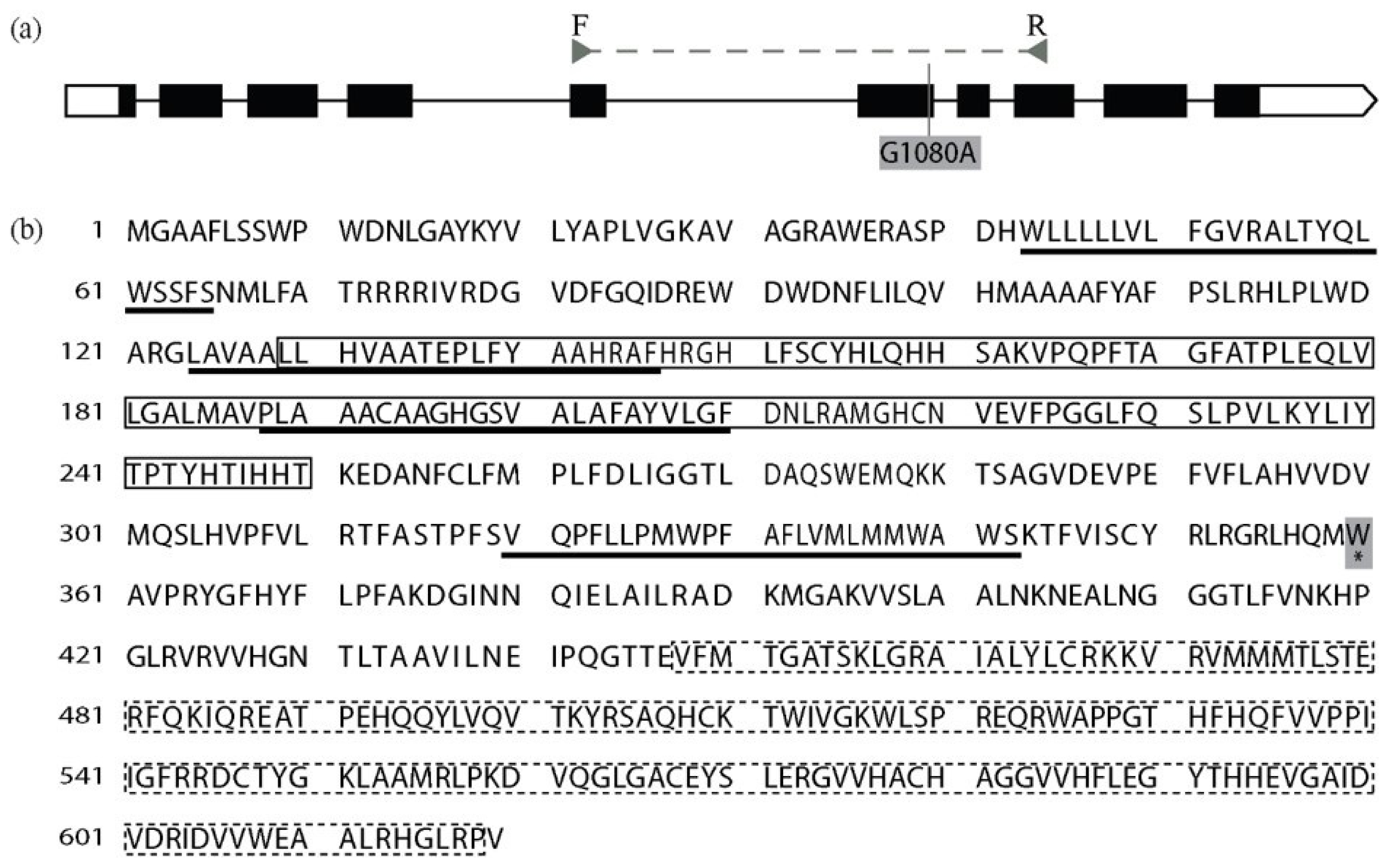
Table 2) and validated by Sanger sequencing of the original DNA (M4 generation) used for exon capture and DNA from a M5 generation mutant. The mutation detected in KDS-2249D (a transition from G to A at position 1080 in the gene) is predicted to result in the substitution of a tryptophan at positon 360 with a stop codon causing premature termination of the protein encoded by
OsGL1-1, one of the
Glossy1-like homologues in rice (
Islam et al. 2009) (
Fig. 3). This mutation was not found in any of the naturally-occurring alleles of
OsGL1-1 in the 3,000 Rice Genomes Project database. A spontaneous mutation in this gene was previously reported to result in a wax deficient, hydrophilic leaf phenotype (
Qin et al. 2011).
To examine the inheritance of the mutation, crosses were performed between the KDS-2249D mutant and the varieties Kitaake and L-202 which have normal (non-wlg) wax phenotypes (KDS-2249D.1.1/Kitaake and L-202/KDS-2249D.1.4). All the F
1 produced from these crosses were confirmed by sequencing of the KDS-2249D mutant SNP (
Table 2). All F
1 were wild-type (i.e., non-wlg) based on the wet leaf assay indicating that the wlg phenotype exhibited by KDS-2249D and its underlying mutation are recessive. An F
2 mapping population (n = 440) from one of the KDS-2249D/Kitaake F
1 was phenotyped for the wlg trait resulting in the identification of 337 wild type (non-wlg) and 103 mutant (wlg) progeny (
Supplementary Table S2). This phenotypic segregation ratio is consistent with a single gene recessive mutation (χ
2 = 0.594, df = 1,
P = 0.441; not significant at
P ≤0.01). The F
2 were then genotyped for the
OsGL1-1 SNP identified in KDS-2249D using Sanger sequencing and a SNP genotyping assay. Sanger sequencing results for 127 and SNP genotyping of the remaining 308 of the F
2 (n = 435; DNA samples from five F
2 progeny were not of sufficient quantity/quality) were in total agreement with the phenotypic data indicating complete co-segregation of the
OsGL1-1 SNP with the wlg phenotype (
Supplementary Table S2).
DISCUSSION
Several cuticle wax-deficient mutants have been isolated in rice using reverse and forward genetic screens. The majority of these harbor mutations in wax biosynthesis genes that have been characterized in Arabidopsis and maize (
Bernard and Joubès 2013;
Yeats and Rose 2013). Previously, we conducted a screen of sodium azide-induced rice mutants resulting in the identification of eleven independently-derived mutants, which exhibited a wet leaf/glossy appearance and reduced epicuticular wax crystals as observed under scanning electron microscopy (
Tai 2015). The phenotype of these mutants was essentially as described for the
wax crystal-sparse leaf (
wsl) mutants (
Yu et al. 2008). Due to the large number of these
wsl mutants, we sought to determine the utility of a targeted exome capture and sequencing approach for rapidly identifying and prioritizing candidate mutations for further analyses.
Target selection or enrichment was achieved using in-solution capture of sequences complementary to bait probes designed from coding sequences of 321 rice genes. Of these genes, ten were
Glossy1-like homologues (
OsGL1-5 was not included as the locus was not present in the Nipponbare reference genome version 7.0 used for the bait design) and 125 ABC transporter genes including all 50 of the ABCG transporter genes (
Nguyen et al. 2014). The remaining genes were targets of interest in other studies. Due to the relatively small number of individuals (n = 12) subjected to exon capture and sequencing, the sequence coverage was very high. In the case of KDS-2249D and Kitaake, the coverage was 58 and 65X, respectively, which was about 5–6 fold more than needed for reliable mutation calling (
Henry et al. 2014). In addition to the putative mutations identified, the sequence coverage provided a high level of confidence that any mutations in the exons of the targeted genes would have been detected.
Putative mutations detected by sequencing were screened by two criteria: nonsynonymous changes and homozygosity. A single mutation meeting those criteria was identified. The KDS-2249D mutation was predicted to result in the knockout of the cuticle wax synthesis gene
OsGL1-1. Induced in the genetic background of the very short duration variety Kitaake (
Kim et al. 2013), the KDS-2249D was backcrossed to wild-type Kitaake and an F
2 mapping population was rapidly produced, enabling genetic analysis to confirm complete co-segregation of the mutation and the wlg phenotype. Further backcrossing to eliminate background mutations and to develop an isogenic mutant line has been initiated and will be greatly facilitated by the short life-cycle of Kitaake. Development of such a line will enable clear comparisons of the mutant and wild type with regard to differences in response to environmental stresses.
The results of our study suggest that this exon capture and sequencing approach will prove effective in identifying candidate mutations from many if not most of our remaining
wsl mutants (
Tai 2015). New baits targeting all the known rice cuticle-related genes and the homologues of Arabidopsis and maize will improve the probability of identifying the causal mutations. A better understanding of cuticle formation provides a foundation for enhancing tolerance to abiotic and biotic stresses in rice.
Supplementary Information
ACKNOWLEDGEMENTS
This work was supported by the U.S. Department of Agriculture, Agricultural Research Service Current Research Information System Project 2032-21000-021-00D (T.H.T.). The authors thank P. Kysar and B. Shibata (Electron Microscopy Laboratory, Department of Pathology and Laboratory Medicine, University of California, Davis) for SEM sample preparation and imaging, I.M. Henry and M. Lieberman for Mutation and Polymorphism Survey analysis, and S. Magee for technical assistance.
Mention of trade names or commercial products in this publication is solely for the purpose of providing specific information and does not imply recommendation or endorsement by the U.S. Department of Agriculture. USDA is an equal opportunity provider and employer.
ACKNOWLEDGEMENTS
This work was supported by the U.S. Department of Agriculture, Agricultural Research Service Current Research Information System Project 2032-21000-021-00D (T.H.T.). The authors thank P. Kysar and B. Shibata (Electron Microscopy Laboratory, Department of Pathology and Laboratory Medicine, University of California, Davis) for SEM sample preparation and imaging, I.M. Henry and M. Lieberman for Mutation and Polymorphism Survey analysis, and S. Magee for technical assistance.
Mention of trade names or commercial products in this publication is solely for the purpose of providing specific information and does not imply recommendation or endorsement by the U.S. Department of Agriculture. USDA is an equal opportunity provider and employer.
Fig. 1Wet leaf/glossy and reduced epicuticular wax phenotypes exhibited by wsl mutant line KDS-2249D. (a) KDS-2249D mutant lines (top panels) exhibit adhesion of water after misting resulting in a wet leaf/glossy appearance not observed in the KDS-2249C sister line or the wild-type Kitaake progenitor (bottom panels). (b) Corresponding SEM images of abaxial leaf surfaces (2,500× magnification) show the reduction in the density of epicuticular wax crystals (white, irregular-shaped projections) associated with the wsl mutants. Individual crystals indicated by black arrows. Large knob-like structures are papillae.
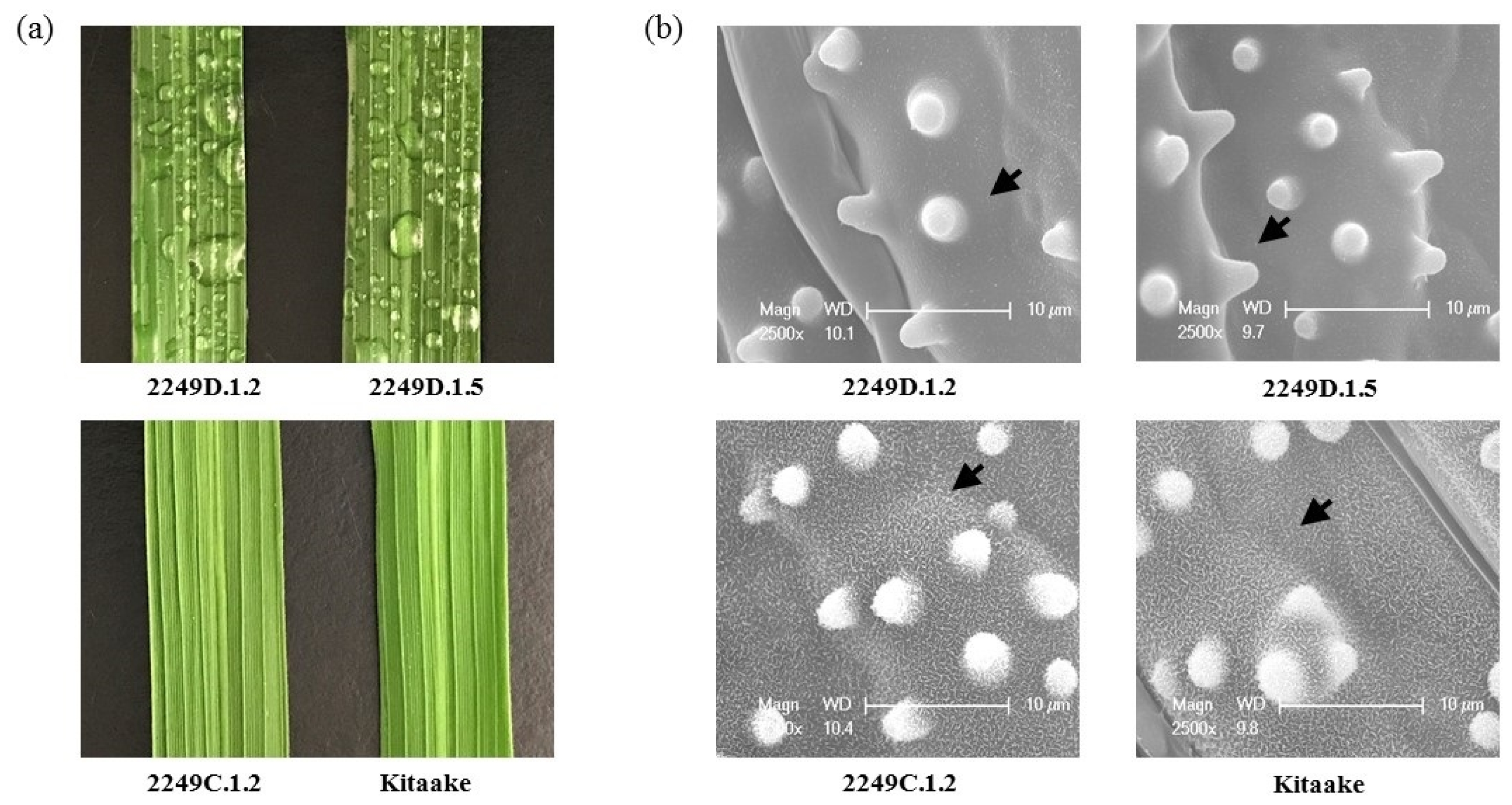
Fig. 2Rate of water loss from detached leaves. Each bar represents the mean ± SD of nine replications (three leaf blades from three plants). Levels of significance between wild-type Kitaake and each mutant were determined by t-test assuming unequal variance; * and ** indicate significant difference from wild type at P < 0.05 and P < 0.01, respectively.
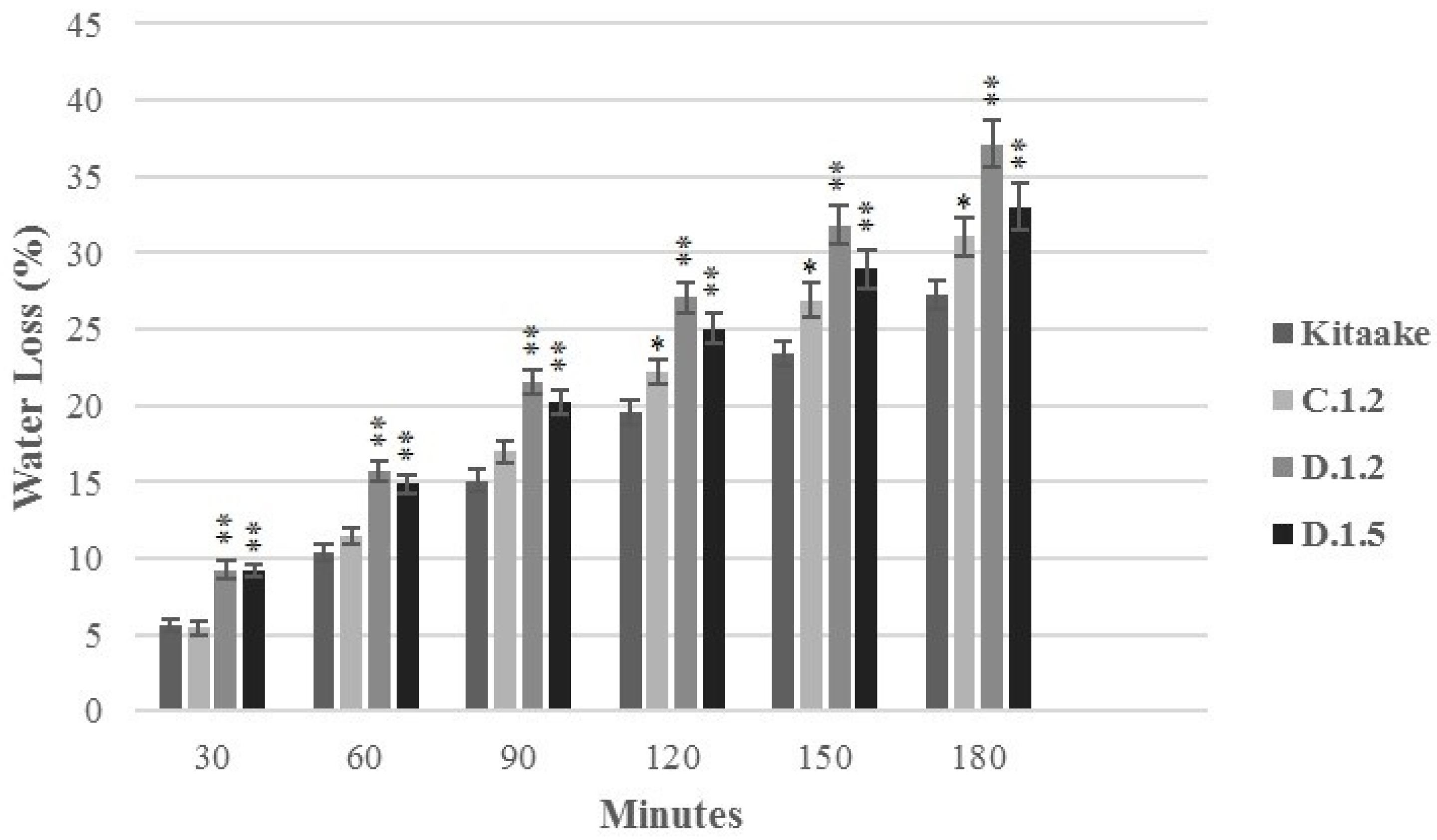
Fig. 3Mutation in the OsGL1-1 (LOC_Os09g25850) gene (a) and corresponding protein sequence (b). Gene model (5’ → 3’) showing location of SNP mutation from KDS-2249D in the 6th on with gray line and box; 5’ and 3’ untranslated regions indicated by open boxes; exons by filled box; introns by lines between boxes; 1,639-bp amplified region for sequencing shown in gray broken lines with forward (F) and reverse (R) primers upon the gene model. Protein sequence change from W (Tryptophan) to stop codon in KDS-2249D with gray box; Fatty acid hydroxylase superfamily domain (PF04116) in closed rectangle; WAX2 C-terminal domain (PF012076) in dashed rectangle; transmembrane regions indicated with black line.
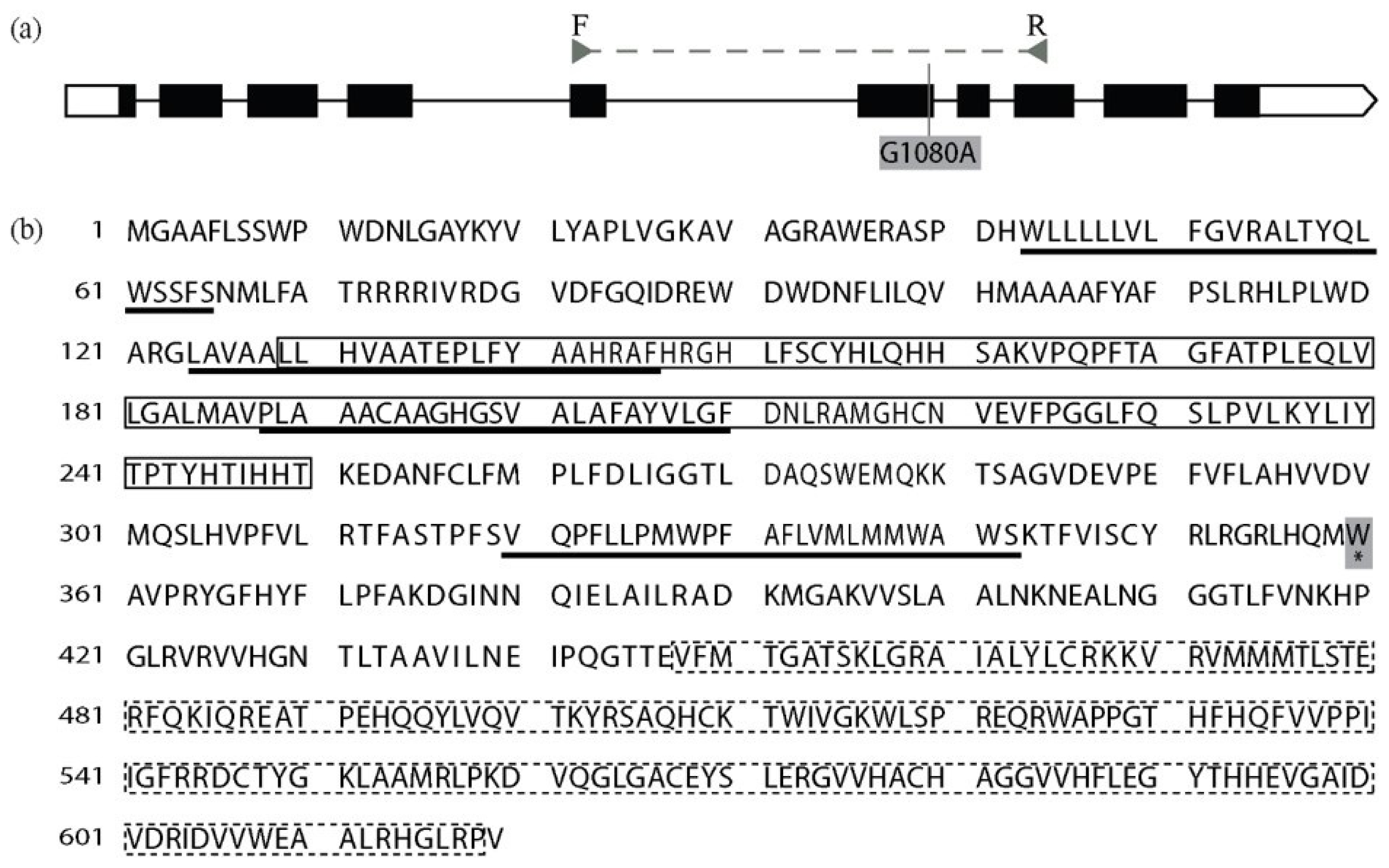
Table 1Total epicuticular wax content of KDS-2249D mutant and wild-type Kitaake lines by weight method.
Table 1
|
Line |
Wax content (mg/g)z)
|
Reduction in wax content (%) |
|
Kitaake (wild-type) |
3.32 ± 0.30 |
|
|
KDS-2249D.1.2 |
1.62 ± 0.32**
|
51.09 |
|
KDS-2249D.1.5 |
1.98 ± 0.02*
|
40.40 |
|
KDS-2249C.1.2 (wild-type) |
3.33 ± 0.29 |
|
Table 2Homozygous nonsynonymous mutation detected in KDS-2249D by target enrichment and next generation sequencing.
Table 2
|
Accession |
Readsz) (106) |
Coveragey)
|
Gene |
Locus IDx)
|
Mutationw)
|
Effectv)
|
|
Kitaake |
102.84 |
65.11 |
|
|
|
|
|
KDS-2249D |
92.05 |
58.28 |
OsGL1-1
|
LOC_Os09g25850 |
G1080A |
W360*
|
References
- Alexandrov N, Tai S, Wang W, Mansueto L, Palis K, Fuentes RR, et al. 2014. SNP-Seek database of SNPs derived from 3000 rice genomes. Nucleic Acids Res. 43: D1023-D1027.
- Baker EA. 1982. Chemistry and morphology of plant epicuticular waxes. pp. 139-165. Cutler DF, Alvin KL, Price CE, editors. The plant cuticle. Academic Press. London, UK.
- Bernard A, Joubès J. 2013. Arabidopsis cuticular waxes: advances in synthesis, export and regulation. Prog Lipid Res. 52: 110-129.
- Clark JB, Lister GR. 1975. Photosynthetic action spectra of trees: II. The relationship of cuticle structure to the visible and ultraviolet spectral properties of needles from four coniferous species. Plant Physiol. 55: 407-413.
- Fiebig A, Mayfield JA, Miley NL, Chau S, Fischer RL, Preuss D. 2000. Alterations in CER6, a gene identical to CUT1, differentially affect long-chain lipid content on the surface of pollen and stems. Plant Cell. 12: 2001-2008.
- Gan L, Wang X, Cheng Z, Liu L, Wang J, Zhang Z, et al. 2016. Wax crystal-sparse leaf 3 encoding a β-ketoacyl-CoA reductase is involved in cuticular wax biosynthesis in rice. Plant Cell Rep. 35: 1687-1698.
- Gan L, Zhu S, Zhao Z, Liu L, Wang X, Zhang Z, et al. 2017. Wax Crystal-Sparse Leaf 4, encoding a β-ketoacyl-coenzyme A synthase 6, is involved in rice cuticular wax accumulation. Plant Cell Rep. 36: 1655-1666.
- Guo L, Ho C-MK, Kong Z, Lee YR, Qian Q, Liu B. 2009. Evaluating the microtubule cytoskeleton and its interacting proteins in monocots by mining the rice genome. Ann Bot. 103: 387-402.
- Henry IM, Nagalakshmi U, Lieberman MC, Ngo KJ, Krasileva KV, Vasquez-Gross H, et al. 2014. Efficient genome-wide detection and cataloging of EMS-induced mutations using exome capture and next-generation sequencing. Plant Cell. 26: 1382-1397.
- Islam MA, Du H, Ning J, Ye H, Xiong L. 2009. Characterization of Glossy1-homologous genes in rice involved in leaf wax accumulation and drought resistance. Plant Mol Biol. 70: 443-456.
- Jain M, Ghanashyam C, Bhattacharjee A. 2010. Comprehensive expression analysis suggests overlapping and specific roles of rice glutathione S-transferase genes during development and stress responses. BMC Genomics. 11: 73
- Jenks MA, Joly RJ, Peters PJ, Rich PJ, Axtell JD, Ashworth EN. 1994. Chemically induced cuticle mutation affecting epidermal conductance to water vapor and disease susceptibility in Sorghum bicolor (L) Moench. Plant Physiol. 105: 1239-1245.
- Jung K-H, Han M-J, Lee D, Lee Y-S, Schreiber L, Franke R, et al. 2006. Wax-deficient anther1 is involved in cuticle and wax production in rice anther walls and is required for pollen development. Plant Cell. 18: 3015-3032.
- Kearse M, Moir R, Wilson A, Stones-Havas S, Cheung M, Sturrock S, et al. 2012. Geneious Basic: an integrated and extendable desktop software platform for the organization and analysis of sequence data. Bioinformatics. 28: 1647-1649.
- Kharabian-Masouleh A, Waters DLE, Reinke RF, Henry RJ. 2011. Discovery of polymorphisms in starch-related genes in rice germplasm by amplification of pooled DNA and deeply parallel sequencing. Plant Biotechnol J. 9: 1074-1085.
- Kim S-I, Tai TH. 2014. Identification of novel rice low phytic acid mutations via TILLING by sequencing. Mol Breed. 34: 1717-1729.
- Kim SL, Choi M, Jung K-H, An G. 2013. Analysis of the early-flowering mechanisms and generation of T-DNA tagging lines in Kitaake, a model rice cultivar. J Exp Bot. 64: 4169-4182.
- Koornneef M, Hanhart CJ, Thiel F. 1989. A genetic and phenotypic description of eceriferum (cer) mutants in Arabidopsis thaliana. J Hered. 80: 118-122.
- Krogh A, Larsson B, von Heijne G, Sonnhammer EL. 2001. Predicting transmembrane protein topology with a hidden markov model: application to complete genomes. J Mol Biol. 305: 567-580.
- Lolle SJ, Cheung AY, Sussex IM. 1992. Fiddlehead: An Arabidopsis mutant constitutively expressing an organ fusion program that involves interactions between epidermal cells. Dev Biol. 152: 383-392.
- Mansueto L, Fuentes RR, Borja FN, Detras J, Abriol-Santos JM, Chebotarov D, et al. 2017. Rice SNP-seek database update: new SNPs, indels, and queries. Nucleic Acids Res. 45: D1075-D1081.
- Mao B, Cheng Z, Lei C, Xu F, Gao S, Ren Y, et al. 2012. Wax crystal-sparse leaf2, a rice homologue of WAX2/GL1, is involved in synthesis of leaf cuticular wax. Planta. 235: 39-52.
- Monson-Miller J, Sanchez-Mendez DC, Fass J, Henry IM, Tai TH, Comai L. 2012. Reference genome-independent assessment of mutation density using restriction enzyme-phased sequencing. BMC Genomics. 13: 72
- Nguyen VNT, Moon S, Jung KH. 2014. Genome-wide expression analysis of rice ABC transporter family across spatio-temporal samples and in response to abiotic stresses. J Plant Physiol. 171: 1276-1288.
- Post-Beittenmiller D. 1996. Biochemistry and molecular biology of wax production in plants. Annu Rev Plant Physiol Plant Mol Biol. 47: 405-430.
- Preuss D, Lemieux B, Yen G, Davis RW. 1993. A conditional sterile mutation eliminates surface components from Arabidopsis pollen and disrupts cell signaling during fertilization. Genes Dev. 7: 974-985.
- Qin B-X, Tang D, Huang J, Li M, Wu XR, Lu LL, et al. 2011. Rice OsGL1-1 is involved in leaf cuticular wax and cuticle membrane. Mol Plant. 4: 985-995.
- Riederer M. 2006. Introduction: Biology of the plant cuticle. pp. 1-8. Riederer M, Müller C, editors. Annual plant reviews. 23: Blackwell Pub. Oxford, UK.
- Serrano M, Coluccia F, Torres M, L'Haridon F, Métraux JP. 2014. The cuticle and plant defense to pathogens. Front Plant Sci. 5: 274
- Sieber P, Schorderet M, Ryser U, Buchala A, Kolattukudy P, Métraux JP, et al. 2000. Transgenic Arabidopsis plants expressing a fungal cutinase show alterations in the structure and properties of the cuticle and postgenital organ fusions. Plant Cell. 12: 721-738.
- Tai TH. 2015. Identification and characterization of reduced epicuticular wax mutants in rice. Rice Sci. 22: 171-179.
- Tseng ST, Carnahan HL, Johnson CW, Oster JJ, Hill JE, Scardaci SC. 1984. Registration of L-202 Rice. Crop Sci. 24: 1213-1214.
- Wang Y, Wan L, Zhang L, Zhang Z, Zhang H, Quan R, et al. 2012. An ethylene response factor OsWR1 responsive to drought stress transcriptionally activates wax synthesis related genes and increases wax production in rice. Plant Mol Biol. 78: 275-288.
- Xia K, Ou X, Gao C, Tang H, Jia Y, Deng R, et al. 2015. OsWS1 involved in cuticular wax biosynthesis is regulated by osa-miR1848. Plant Cell Environ. 38: 2662-2673.
- Yeats TH, Rose JKC. 2013. The formation and function of plant cuticles. Plant Physiol. 163: 5-20.
- Yu D, Ranathunge K, Huang H, Pei Z, Franke R, Schreiber L, et al. 2008. Wax crystal-sparse leaf1 encodes a β-ketoacyl CoA synthase involved in biosynthesis of cuticular waxes on rice leaf. Planta. 228: 675-685.
- Zhang Z, Cheng Z, Gan L, Zhang H, Wu FQ, Lin QB, et al. 2016. OsHSD1, a hydroxysteroid dehydrogenase, is involved in cuticle formation and lipid homeostasis in rice. Plant Sci. 249: 35-45.
- Zhou L, Ni E, Yang J, Zhou H, Liang H, Li J, et al. 2013a. Rice OsGL1-6 is involved in leaf cuticular wax accumulation and drought resistance. PLoS One. 8: e65139
- Zhou X, Jenks MA, Liu J, Liu A, Zhang X, Xiang J, et al. 2013b. Overexpression of transcription factor OsWR2 regulates wax and cutin biosynthesis in rice and enhances its tolerance to water deficit. Plant Mol Biol Rep. 32: 719-731.
- Zhou X, Li L, Xiang J, Gao G, Xu F, Liu A, et al. 2015. OsGL1-3 is involved in cuticular wax biosynthesis and tolerance to water deficit in rice. PLoS One. 10: e116676
- Zhu X, Xiong L. 2013. Putative megaenzyme DWA1 plays essential roles in drought resistance by regulating stress-induced wax deposition in rice. Proc Natl Acad Sci USA. 110: 17790-17795.