Abstract
Two consecutive cycles of selection were imposed on five F2 populations of bread wheat. The first cycle was a divergent selection for spike length conducted in favorable environment (optimal sowing date) and the response was measured under favorable and heat stress conditions of a late sowing date. Positive responses to selection for longer spikes were obtained under favorable (13.43%) heat stress (8.66%) conditions, whereas the responses for shorter spikes were 2.24 and 5.02% in the two environments, respectively. The realized heritability of spike length was greater under favorable conditions (0.25–0.56) than under heat stress (0.18–0.41). Concurrent positive responses to selection for longer spikes were obtained in grain yield per spike under favorable (25.35%) and heat stress (13.65%) environments. Selection for greater number of grains per spike imposed on F3 plants selected for spike length under heat stress resulted in significant responses (14.65%). Selection for greater number of grains per spike resulted in correlated responses in grain yield per spike (17.64%). The concurrent positive responses produced in spike length in F4 with selection for number of grains per spike (averaged 9.20%) was almost equal to that produced by the direct selection in F3 (8.66%), indicating that selection advance effected in F3 has been maintained in F4. High F4/F3 regression was obtained for spike length under heat stress (b = 0.85 ± 0.07), indicating high heritability. In conclusion, phenotypic selection for longer spikes under heat stress followed by a cycle of selection for number of grains per spike was capable of improving heat tolerance in wheat.
-
Key words: Bread wheat, Heat tolerance, Selection and Spike length
INTRODUCTION
As a cool season cereal crop, bread wheat (
Triticum aestivum L.) is very sensitive to high temperature which affects the metabolic pathways at every stage of plant development leading to considerable losses in yield (
Akter and Islam 2017). Heat stress resulting from the global rise in temperature which is predicted to continue throughout the 21
st century (
IPCC 2014) adds a further constraint to global wheat production which is expected to dwindle by 6% for every degree Celsius increase (
Asseng et al. 2015). The terminal heat stress (> 30°C) that develops in Egypt at the end of wheat growing season coincides with post-anthesis phases of plant development. The adverse effects of high temperature are particularly severe on grain filling which might be reduced by 40% (
Hays et al. 2007). Other negative effects include reduced grain yield, biomass grain number harvest index (
Balla et al. 2009) and reduced deposition of starch in the grains (
Keeling et al. 1993). The most drastically affected process by elevated temperature is photosynthesis which researches its maximum rate at 20–22°C and declines sharply at 30–32°C (
Al-Khatib and Paulsen 1999). Moreover, the accelerated leaf senescence under high temperature reduces the viable assimilating green area of the plant at grain filling (
Slafer and Miralles 1992) leading to yield losses (
Kumar et al. 2016). The two main sources of assimilates for grain filling after anthesis are the current photosynthesis of the canopy, of which the spike photosynthesis is a major contributer (
Araus et al. 1993;
Tambussi et al. 2007) plus the translocated water soluble carbohydrates (WSC) stored in the stem before anthesis (
Blum 1998;
Ehdaie et al. 2008). Therefore, enhancing tolerance to heat stress could be approached by first increasing the assimilating green area of the plant after anthesis, and second, increasing number of grain per spike. The first approach can be implemented through selection for spike length since the spike is the organ that lasts greener than the leaves for longer duration after anthesis and contributes 12–42% of grain dry weight accumulation through its active photosynthesis and assimilates production (
Maydup et al. 2010;
Abdoli et al. 2013). Increasing spike length under heat stress would increase grain yield per spike through increasing number of spikelets per spike and number of grains per spike (
Ijaz and Kashif 2013). Evidently, spike length is positively correlated with grain yield per spike (
Okuyama et al. 2005) as well as with 1000 kernel weight (
Wu et al. 2012). With the gene effects controlling spike length being prominently additive (
Ijaz and Kashif 2013;
Ljubicic et al. 2014), selection for this character would be rewarding. As to the second approach increasing grain yield per spike could be achieved through selection for number of grains per spike under heat stress. Although spike length has a strong influence on number of grains per spike which is one of the main determinants of grain yield, the two characters differ in their response to high temperature. Spike length appears to be less sensitive being reduced by 10.8–27.05% due to heat stress as compared with 21.95–47.03% reduction in number of grains per spike (
Acevedo et al. 1991). Reduction of number of grains per spike in response to high temperature has also been reported by
Mohammadi et al. (2011) and
Kumar et al. (2016). Maintaining grain number and grain size under heat stress is reported to be crucial to heat tolerance in wheat (
Kuchel 2007). Selection for greater number of grains per spike under heat stress is therefore another avenue open for enhancing heat tolerance in wheat. The present study implemented the two approaches for enhancing heat stress tolerance of wheat through two consecutive cycles of selection. The first cycle was conducted for increasing spike length under heat stress whereas the second cycle was applied for greater number of grains per spike among the plants selected for spike length. The objectives were as follows: 1) to measure the response to selection for spike length under heat stress and its impacts on grain yield attributes and 2) to measure the response to selection for greater number of grain per spike among the plants selected for spike length and its consequences on grain yield traits.
MATERIALS AND METHODS
Plant materials and field trials
The initial plant materials composed of five segregating (F
2) populations of bread wheat (
Triticum aestivum L.) derived from five crosses established among 10 genotype of local and exotic sources, vary primarily in spike length. The relevant information regarding the five base populations are given in
Table 1.
In the 2015–2016 season, the five F2 populations were raised in a spaced-plant nursery at the Experimental Farm of Assiut university in Egypt. Seeds were sown into the field on a favorable date (30th November). A total of 240 plants of each population were grown in 16 rows of 15 plants each, spaced 30 cm within rows set 30 cm apart.
After anthesis, the length of the spike (cm) of the main Culm from its base to the tip of the uppermost spikelet was measured for each individual plant. Each plant was harvested and kept distinct.
Selection procedure
First cycle
Divergent phenotypic selection for spike length was employed in each of the five F2 populations. The five plants with the longest spikes as well as the five plants with the shortest spikes among the 240 F2 plants (an intensity of 2.08%) were selected. Equal numbers of seeds of the 240 plants of each population were pooled together in order to form the F3 unselected bulks.
In the 2016–2017 season, the five F3 selected families of each population along with their relevant bulks were sown into the field under two environmental conditions, namely the favorable one of the optimal sowing date (25th November) and the heat stressed one of a late sowing date (30th December) in a complete randomized block design with three replications. The five F3 selected families were each represented in each block by a 10-plant row with 30 × 30 cm spacing whereas five rows were sown for each of the five bulks. The following characters were measured and recorded for each individual plant: Spike length (cm) of the main Culm (awns excluded) and grain yield per spike (g).
The second cycle
Directional phenotypic selection for greater number of grains per spike was applied to the F3 plants selected for longer spikes of each population which were grown in the heat stress environment of the late sowing date. Of the 30 F3 plants of each population (plants pooled over blocks), the three plants with the greater number of grains per spike were selected (a selection intensity of 10%) whereas equal numbers of seeds were pooled from each individual of the 30 F3 plants in order to form the F4 unselected bulks.
In the 2017–2018 season, seeds of the three selected plants of each population were bulked together to form the F3 selections. The selected F4 populations along with their relevant bulks were sown into the field in the hot environment of a late sowing date (31th December) in a complete randomized block design with three replications. Each of the F4 families was represented by a 10-plant row in each block spaced 30 × 30 cm, each selected and bulk was represented by five rows.
The following characteristics were measured on individual plant basis:
Number of grains of the main spike.
Grain yield per spike (g).
Spike length of the main Culm (cm).
Biometrical analyses
Data were first subjected to an analysis of variance in order to test the significance of the differences between the high as well as the low F3 selections against the unselected bulks.
The % response to selection which measures the selection advance was calculated for each population in each environment as:
The realized heritability was estimated as:
Where, R is the response to selection (cm), S is the selection differential in the environment in which selection was practiced (the favorable environment) calculated in each direction as:
Environmental sensitivity of high and low direction selections was calculated after
Falconer (1990) as:
F3¯ in F is the mean of selected F3 families in the favorable environment.
F3¯ in H is the mean of selected F3 families in the heat stress environment.
B¯ in F is the mean of the unselected bulks in the favorable environment.
B¯ in H is the mean of the unselected bulks in the heat stress environment.
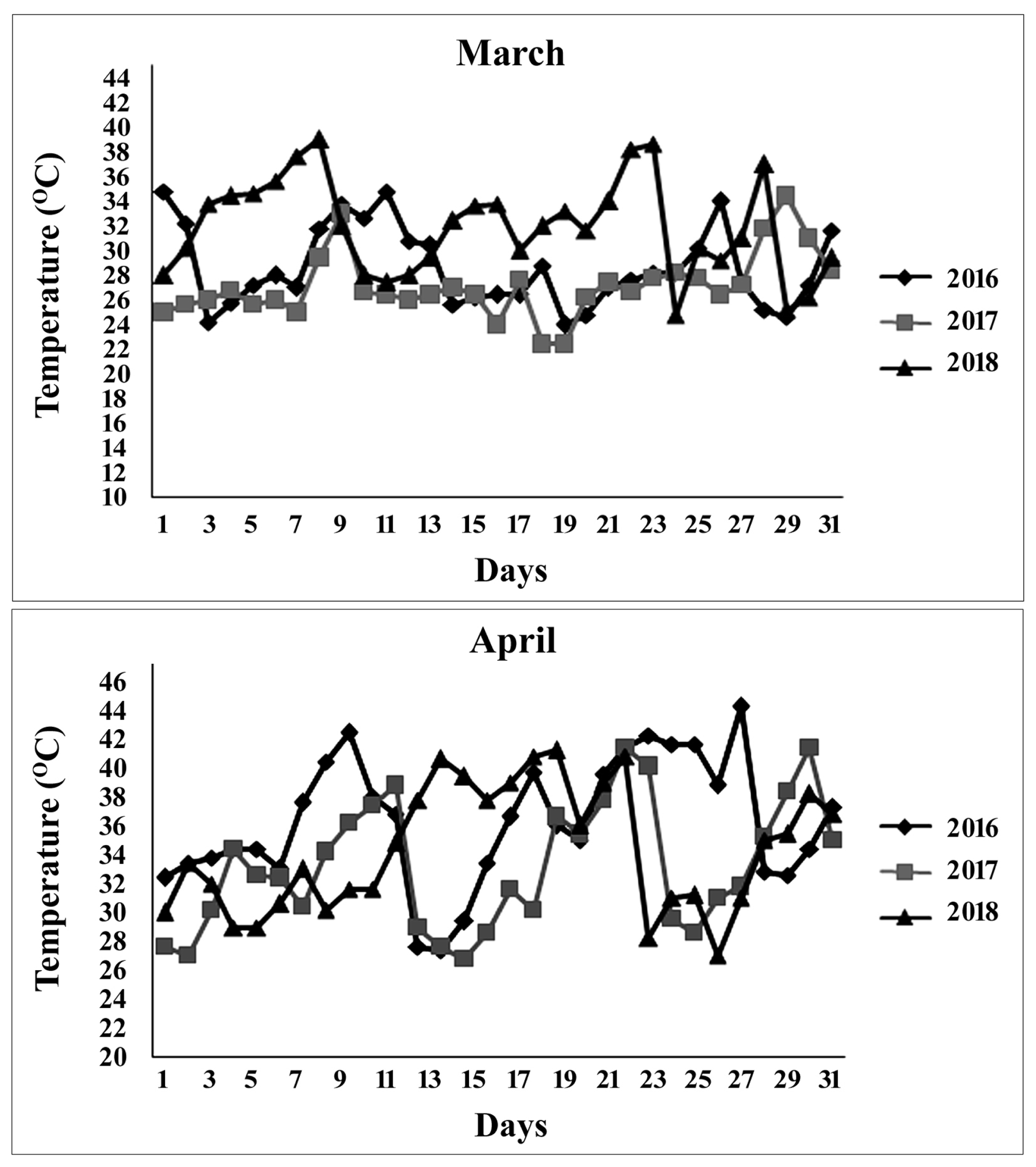
The recorded maximum air temperatures at the experimental site during March and April of the three consecutive seasons are illustrated graphically in
Fig. 1 (weather reports in Assiut,
https://www.wunderground.com). Several waves of heat (> 34°C) characterized the weather of March whereas stronger heat waves (> 38°C) prevailed during April especially in 2018 which coincided with the post-ear emergence stage.
RESULTS
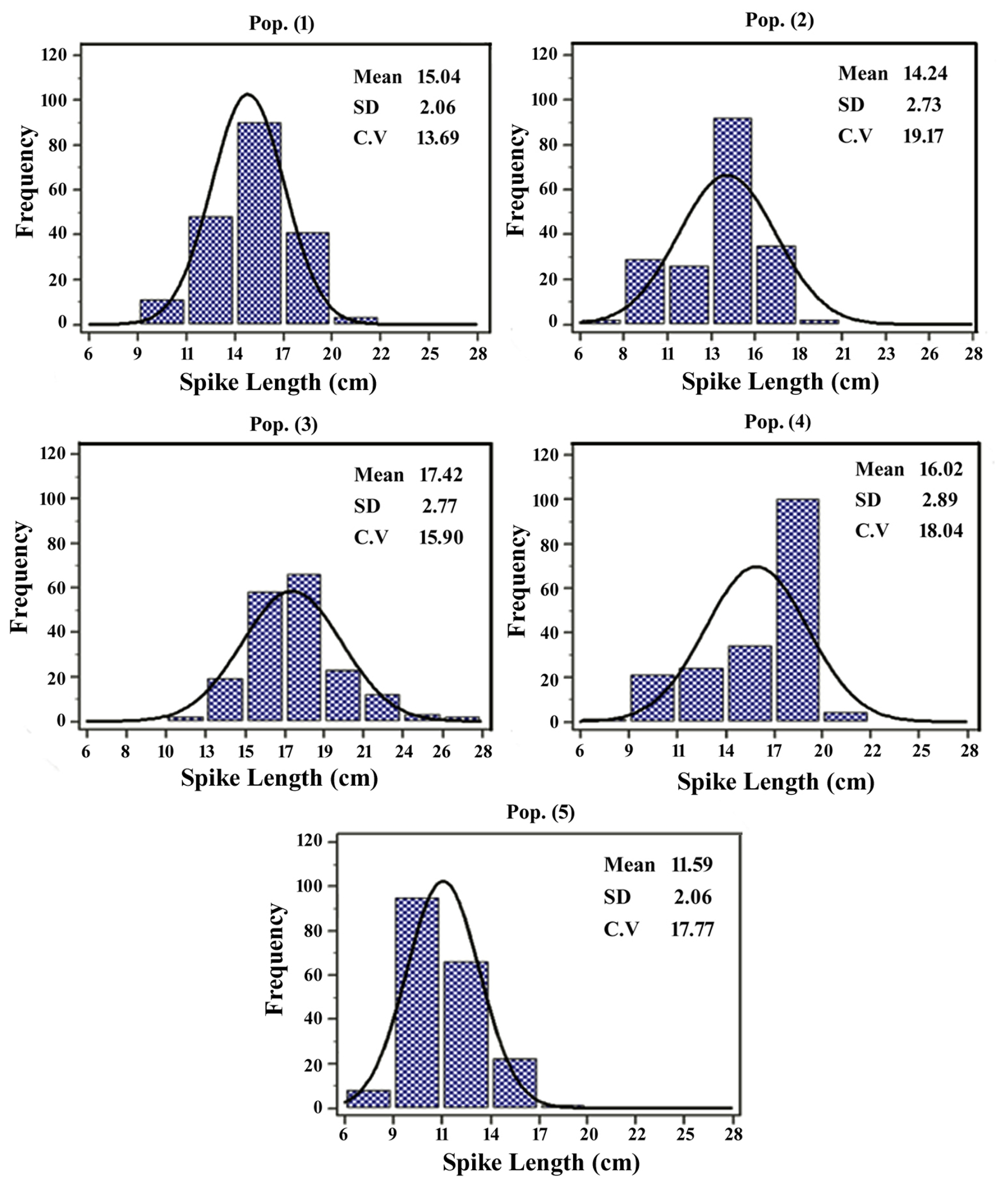
The distributions of the F
2 segregates of the five F
2 populations for spike length (cm) of the main Culm were continuous and approached normality expect population No. 5 which displayed clear skewness to the right (
Fig. 2).
The distributions of the F
2 segregates of the five F
2 populations were indicating dominance of longer spike alleles. Some segregates in certain populations (e.g. pop. No. 3) exhibited extreme spike length (> 28 cm) which exceeded the parental range (
Fig. 2), suggesting the occurrence of transgressive segregation.
The analyses of variance for spike length revealed significant differences between the high direction F3 selections and unselected bulks in the five populations in the two environments. The differences between the high and low direction selections were also significant. As to the low direction of selections, the analyses revealed significant differences with the bulks in only two populations under favorable conditions (pop. 4 and pop. 5) and three under heat stress (pop. 3, pop. 4 and pop. 5).
Means of spike length of the five F
2 base populations under the heat stress of the late sowing date ranged from 11.59 to 17.42 cm (
Table 2). The five F
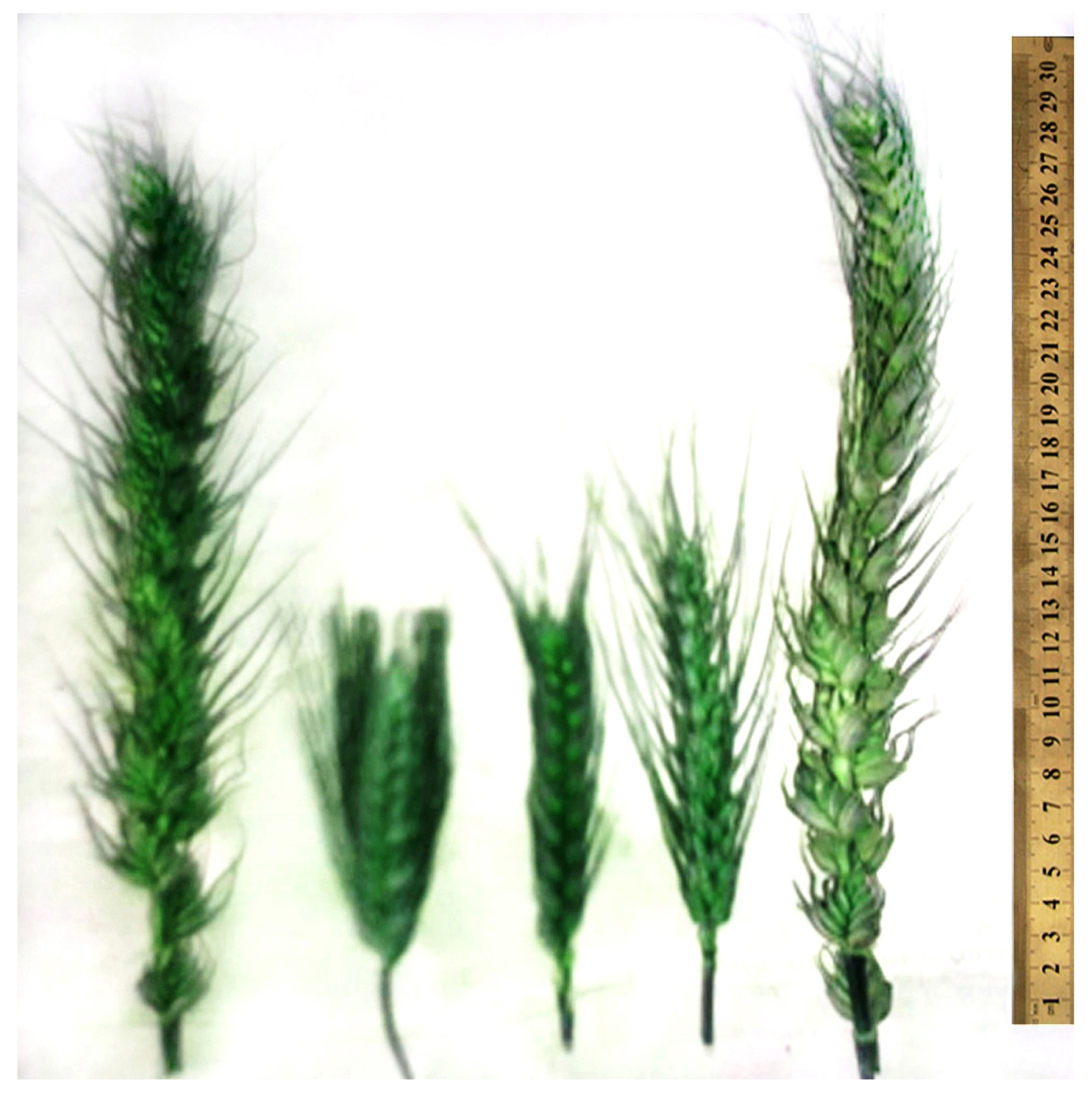
2 plants selected for longer spikes (high direction) averaged 15.40 to 24.20 cm with some segregates in population 3 displayed spike length as extreme as 30 cm (
Fig. 3).
Meanwhile narrower range was displayed for F
2 plants selected for shorter spikes being 7.40 to 12.50 cm. The selection differentials were almost comparable in the five populations in the two directions averaging 4.66 cm in the high and 5.36 cm in the low directions (
Table 2).
Highly significant positive responses to selection for longer spikes (high direction) were obtained in the F
3 families of the five populations in the two environments (
Table 3). Under favorable conditions, the % response ranged from 7.22 to 20.74% of the population means with an average of 13.43% indicating the occurrence of considerable genetic advance. Meanwhile, in the heat stress environment the % response for longer spikes was less than that ranging from 6.15 to 17.17% with an average of 8.66%. However, the response to selection for shorter spikes (low direction) was non-significant in three of the five populations under the favorable environment as well as in two populations in the heat stress environment. The % responses in the low direction averaged 2.24% in the favorable environment and 5.02% under heat stress. Evidently, the responses were asymmetrical in the high and low directions under the two environmental conditions (
Table 3).
The regression of % responses on the selection differentials revealed significant linear relationship in the high direction in both favorable (b = 3.35 ± 1.40, P < 0.05) and heat stress environment (b = 3.87 ± 0.34, P < 0.01). However, the regression was non-significant for the low direction of selection in the favorable (b = −1.20 ± 1.92) and the heat stress (b = −2.58 ± 1.73) environments.
The realized heritability estimates were greater in the favorable environment (ranging from 0.22–0.56) than under heat stress (0.18–0.41). Heat stress reduced spike length of the high F3 selections by 8.14%, on average, by 6.94 for the low selections and by 4.03% for the unselected bulks with an overall average reduction of 6.37%.
Correlated response in grain yield
Significantly positive concurrent responses to selection for longer spikes (high direction) were obtained in grain yield per spike in the five populations in the favorable environment which ranged from 12.87 to 49.53% of population mean with an average of 25.35% (
Table 4).
Under heat stress, the correlated responses were significantly positive in four of the five populations which ranged from 12.46 to 23.23% but negative in one (pop. 3 with −3.87%). The overall average response was 18.03%. The average grain yield per spike of the longer spikes selections (high direction) was greater in the favorable environment (4.52 g) than that of the unselected bulks (3.56 g) marking 27% increase in yielding ability. Similarly, under heat stress the grain yield per spike of the longer spikes selections was 4.08 g versus 3.58 g of the bulks indicating a 14% increase in tolerance to heat stress (
Table 4).
Selection for shorter spikes (low direction) resulted in significantly positive correlated reductions in only two of the five populations in grain yield per spike, namely pop. 4 (10.93%, 14.62) and pop. 5 (22.79%, 26.98) under favorable and heat stress conditions, respectively, while the correlated responses were non-significant in the other three populations (
Table 4). Evidently, the correlated responses were asymmetrical in the two directions under both environments being much greater in the high than in the low direction.
Averaged over the 15 families of the five populations, the grain yield per spike was reduced from 3.81 g under favorable conditions to 3.66 g under heat stress indicating a 3.94% average reduction due to high temperature. The F3 families selected for longer spikes displayed the highest average grain yield per spike (4.08 g) under heat stress as opposed to 3.58 g for the bulks and 3.33 g for the shorter spikes selections. Apparently, the longer spikes selections displayed 14% increase in grain yield under heat stress over the bulks indicating improved tolerance to elevated temperature. Meanwhile, the yielding ability of the longer spikes selections increased considerably to 4.30 g over the unselected bulks (3.58 g) indicating 20.11% improvement.
Grain yield per spike of the 15 families of the five populations were strongly correlated with spike length under the favorable conditions (r = 0.91, P < 0.01) while the association was rather weaker under heat stress (r = 0.65, P < 0.01).
The F
3 families selected for longer spikes (high direction) uniformly displayed greater sensitivity to heat stress relative to the unselected bulks. As to the low direction selections, F
3 families of only two populations (No. 1 and No. 4) were relatively insensitive to heat stress while the other three populations were rather sensitive (
Table 5).
Directional selection for number of grains per spike under heat stress
Abundant variability in number of grains per spike was displayed among the F
3 plants of the families selected for spike length under heat stress. The means of the F
3 plants selected for greater number of grains per spike were quite high ranging from 95.6 to 151.0 which were reflected on the almost comparably high selection differentials ranging from 34.69 to 53.67 grains per spike (
Table 6).
The analyses of variance revealed significant differences between the F
4 selections and the unselected F
4 bulks in the five populations. The positive responses ranged from 7.99 to 21.42% of population mean with an average of 14.65% indicating a substantial genetic advance. The realized heritability was low ranging from 0.10 to 0.28 in the five populations (
Table 7).
Correlated responses to selection for greater number of grains per spike were obtained in spike length which ranged from 3.80 to 13.97% of the population mean with an average of 9.20 % (
Table 7).
The F4/F3 regression of the means of spike length over selections and bulks under heat stress was high significantly (b = 0.85 ± 0.07, P < 0.01) indicating high narrow-sense heritability of this character.
Significant correlated responses to selection for greater number of grains per spike were also obtained in grain yield per spike which ranged from 10.05 to 24.23% with an average of 17.64% for the F
4 bulks and selections of the five populations (
Table 7).
Grain yield per spike was strongly correlated (r = 0.98, P < 0.01) with number of grains per spike under heat stress. However, the F4/F3 regression of grain yield per spike was low and non-significant (b = 0.14 ± 0.18) indicating the very low narrow-sense heritability of this character.
DISCUSSION
Direct selection based on grain yield is mainly practiced without considering adaptive traits that are crucial production regulators under variable environments. In addition, the presence of genotype-by-environment interactions, polygenic nature, low heritability, linkage, and nonadditive gene actions reduce the efficiency of using grain yield as a single selection criterion mainly in early segregating generations (
Fellahi et al. 2018). Unlike, indirect selection using yield components traits that are more stable and more heritable might be more effective than direct selection for grain yield. Therefore, the use of morphological and physiological traits was reported to improve wheat grain yield in diverse environmental conditions (
Balota et al. 2017;
Pooja and Munjal 2019).
In the present study, two consecutive cycles of selection were imposed on five F2 populations of bread wheat. The first cycle was a divergent selection for spike length conducted in favorable environment (optimal sowing date) and the response was measured under favorable and heat stress conditions of a late sowing date. The second cycle was a directional selection for greater number of grains per spike applied to the F3 plants selected for longer spikes.
The parentage of four of the five base F
2 populations used in this study involved Line-6 in common which is an elite-very long spike (> 22 cm) genotype so chosen as to enrich the gene pools with alleles for increasing spike length. The significant positive responses to selection for longer spikes obtained in the five populations were greater under favorable conditions (13.43%, on average) than under heat stress (8.66%) which is expected according to
Falconer (1990) who demonstrated that the response is maximum under the environment in which selection was conducted. Meanwhile, the lower % responses to selection for shorter spikes obtained in favorable (average 2.24%) and heat stress (5.02%) environments revealed clear asymmetrical responses. Evidently, the response to selection depends on the selection differential and the heritability. The regression of % responses obtained in the high direction on the selection differentials was significant in the two environments but rather non-significant in the low direction which might account for such asymmetry. Furthermore, the % responses to selection for longer spikes obtained in the favorable environment were strongly correlated (
r = 0.86,
P < 0.05) with those observed under heat stress, whereas no correlation was found for the shorter spikes selections (
r = 0.82,
P > 0.05) which is another factor explaining the asymmetrical responses.
The greater reduction of the longer spikes selections due to heat stress (8.14% on average) as compared with the shorter spikes selections (6.94%) and the unselected bulks (4.03%) indicated the sensitivity of spike length to heat stress. Similar reductions were reported by
Acevedo et al. (1991) and
Jaiswal et al. (2018) as due to heat stress of late sowing.
The greater sensitivity of the longer spikes selections to heat stress conforms well with the expectations of
Jinks and Connolly (1973) in that synergistic selection where selection and the environment act in the same direction, increases environmental sensitivity. Meanwhile, selection for shorter spikes in the favorable environment is a form of antagonistic selection which is expected to reduce environmental sensitivity. In the present study, this has occurred for two of the low direction selections of the five populations while the other three displayed increased sensitivity.
The positive concurrent responses to selection for longer spikes obtained in grain yield per spike were again greater under the favorable conditions (25.35% on average) than under heat stress (13.65%). This can be explained as due to the correlation between spike length and grain yield per spike being much stronger under favorable conditions (
r = 0.91,
P < 0.01) than under heat stress (
r = 0.65,
P < 0.01). Similarly, spike length was reported to be positively correlated with grain yield per spike by
Okuyama et al. (2005). Evidently, spike length has an indirect effect on grain yield through number of fertile spikelets and number of grains per spike (
Ijaz and Kashif 2013;
Ljubicic et al. 2014).
The enhanced grain yield per spike obtained under heat stress through selecting for longer spikes indicated the utility of increasing the length of the spike in promoting heat tolerance.
The remarkable positive responses to selection for greater number of grains per spike imposed on the F3 plants of the five populations under heat stress (averaged 14.65%) despite the very low heritability (ranged from 0.10 to 0.28) must be attributed to the very large selection differentials. Meanwhile, the concurrent responses obtained in grain yield per spike was greater (17.64% on average) than that produced by selection for spike length (13.65%). This is clearly attributable to the association between grains yield per spike being much stronger with grain number per spike (r = 0.98, P < 0.01) than with spike length (r = 0.65, P < 0.01) under heat stress.
Evidently, grains number per spike was reported to account for up to 78.1% of the variation in grain yield under high temperature (
He-Zhang and Rajaram 1994). Number of grains per spike was reported to be correlated with grain yield per plant under heat stress (
Kumar et al. 2016). The correlated response in the F
4 to selection for number of grains per spike in spike length under heat stress (9.20%) was almost equal to the direct response obtained in the F
3 (8.66%). Apparently, the selection advance effected in the F
3 was maintained in the F
4 medicating that spike length is a highly heritable trait. This was substantiated by the F
4/F
3 regression being significantly high (b = 0.85 ± 0.07,
P < 0.01).
In conclusion, tolerance to heat stress in wheat can be greatly enhanced by two successive cycles of selection, the first for increased spike length to be followed by a second cycle of selection for greater number of grains per spike.
Fig. 1The recorded maximum air temperature at the experimental site in March and April of the three seasons 2016 through 2018.
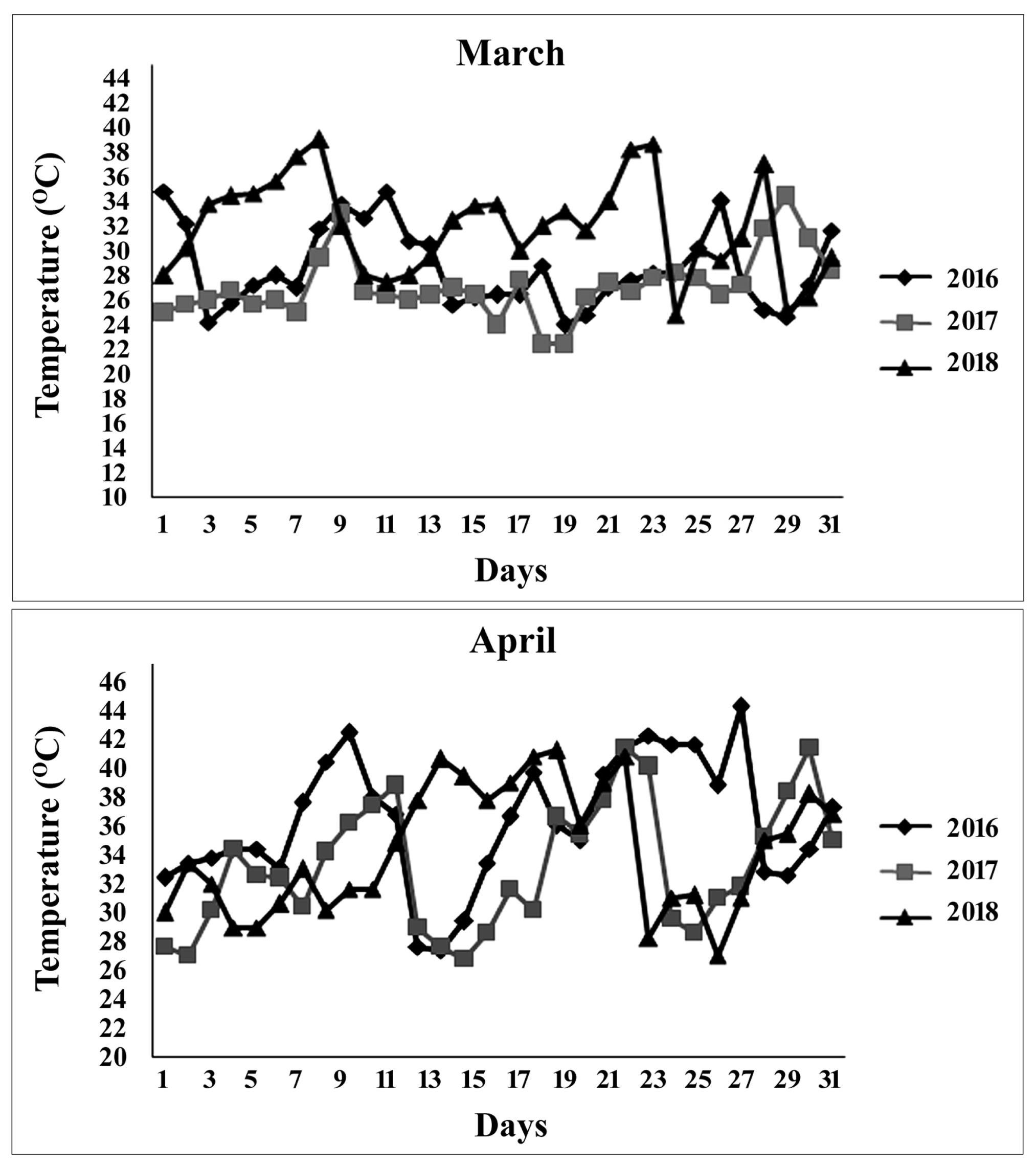
Fig. 2Distributions of the F2 segregates of the five populations for spike length (cm).
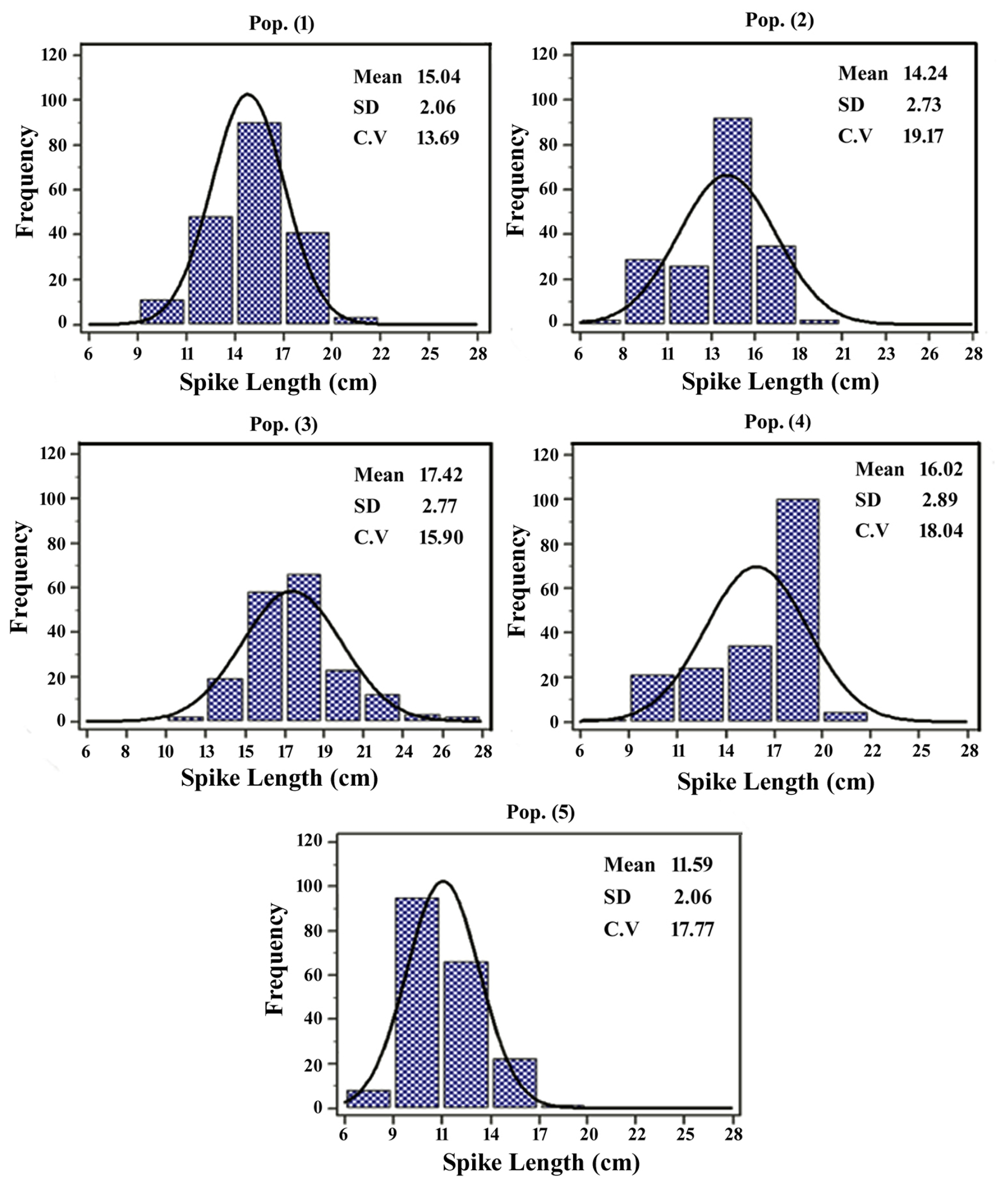
Fig. 3Differences between spike length (cm) of different genotypes.
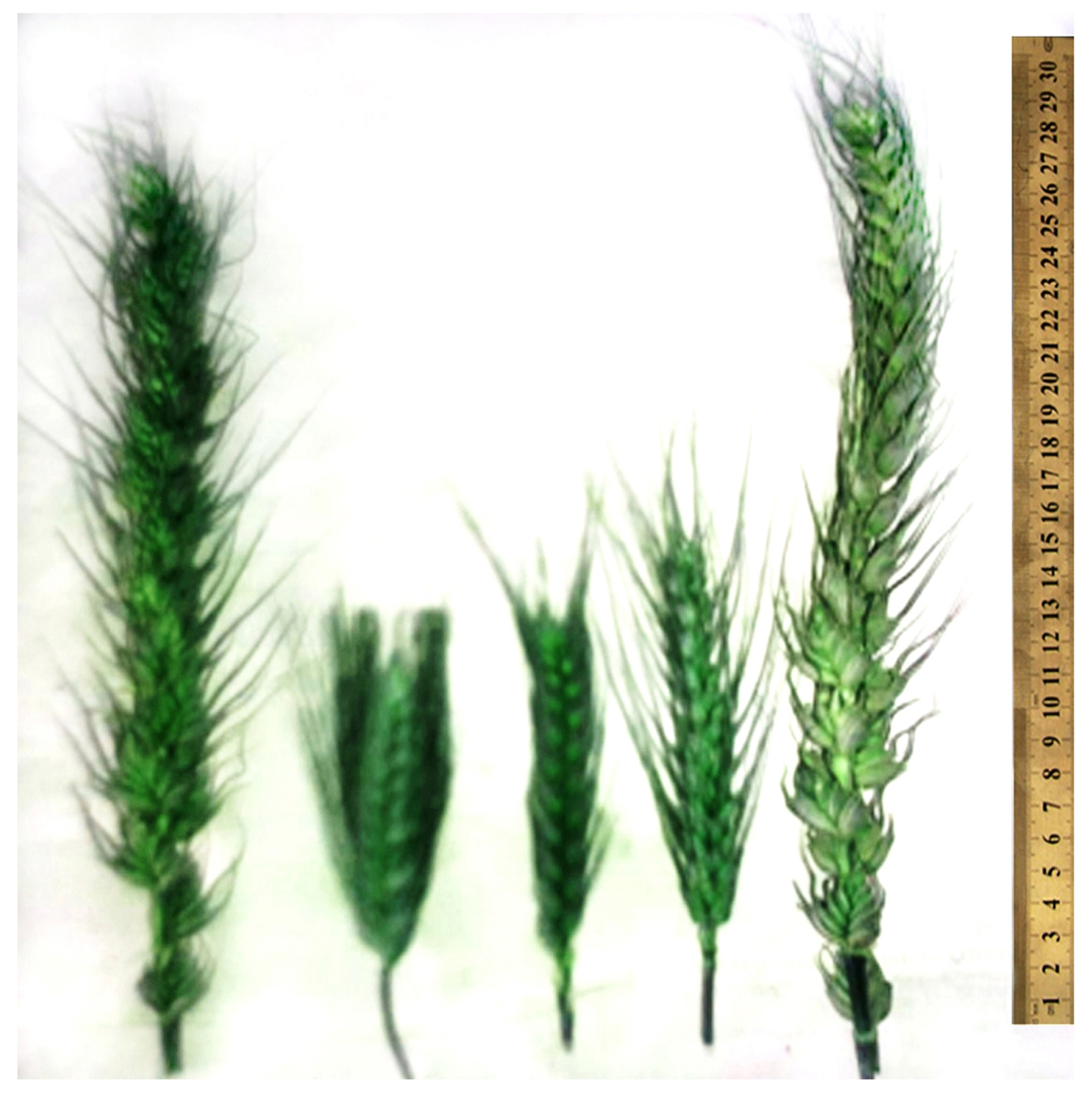
Table 1Parental genotypes and crosses used in the study.
Table 1
|
Population No. |
Cross |
Description |
|
1 |
Line-6 × Line-115 |
Long spike × short spike |
|
2 |
Line-6 × Lira-32 |
Long spike × medium spike |
|
3 |
Line-6 × Gemmeiza-7 |
Long spike × medium spike |
|
4 |
Line-6 × Giza-164 |
Long spike × short spike |
|
5 |
Lira-32 × Gemmeiza-7 |
Medium spike × medium spike |
Table 2Means of spike length (cm) of the five F2 populations and the selected plants in the high and low directions together with the selection differentials under heat stress conditions.
Table 2
|
Population No. |
Population Mean |
Mean of the selected F2 plants |
Selection differential |
|
|
|
High |
Low |
High |
Low |
|
1 |
15.04 |
19.00 |
9.80 |
3.96 |
5.24 |
|
2 |
14.24 |
18.80 |
8.60 |
4.56 |
5.64 |
|
3 |
17.42 |
24.20 |
12.50 |
6.78 |
4.92 |
|
4 |
16.02 |
20.20 |
9.20 |
4.18 |
6.82 |
|
5 |
11.59 |
15.40 |
7.40 |
3.81 |
4.19 |
Table 3Means of spike length (cm) of the unselected bulks (B), the high (H) and low (L) selections with % response (%R) together with the realized heritability values (h2) under favorable and heat stress conditions.
Table 3
|
Population |
Favorable |
Heat stress |
|
|
|
Mean |
%R |
h2
|
Mean |
%R |
h2
|
|
1 |
B |
14.47 |
|
|
13.77 |
|
|
|
H |
16.68 |
15.27**
|
0.56 |
14.62 |
6.17**
|
0.22 |
|
L |
14.39 |
0.55ns
|
|
13.36 |
2.98ns
|
|
|
2 |
B |
14.41 |
|
|
13.84 |
|
|
|
H |
15.98 |
10.90**
|
0.34 |
14.83 |
7.15**
|
0.22 |
|
L |
14.62 |
−1.46ns
|
|
13.59 |
1.81ns
|
|
|
3 |
B |
16.54 |
|
|
16.19 |
|
|
|
H |
19.97 |
20.74**
|
0.51 |
18.97 |
17.17**
|
0.41 |
|
L |
16.22 |
1.93ns
|
|
15.13 |
6.55**
|
|
|
4 |
B |
16.46 |
|
|
15.48 |
|
|
|
H |
18.60 |
13.00**
|
0.51 |
16.51 |
6.65**
|
0.25 |
|
L |
15.82 |
3.89*
|
|
14.78 |
4.52*
|
|
|
5 |
B |
11.76 |
|
|
11.39 |
|
|
|
H |
12.61 |
7.22**
|
0.22 |
12.09 |
6.15**
|
0.18 |
|
L |
10.87 |
7.57**
|
|
10.07 |
11.60**
|
|
Table 4Means of grain yield per spike (g) of the unselected bulks (B), the high selections (H) and the low selections (L) together with the % correlated responses to selections (%CR).
Table 4
|
Population |
Favorable |
Heat stress |
|
|
|
Mean |
%CR |
Mean |
%CR |
|
1 |
B |
3.14 |
|
3.29 |
|
|
H |
3.94 |
25.48**
|
3.70 |
12.46*
|
|
L |
3.22 |
−2.55ns
|
3.37 |
−2.43ns
|
|
2 |
B |
3.47 |
|
3.54 |
|
|
H |
4.09 |
17.87**
|
4.32 |
22.03**
|
|
L |
3.32 |
4.32ns
|
3.58 |
−1.13ns
|
|
3 |
B |
4.19 |
|
3.62 |
|
|
H |
5.07 |
21.00**
|
3.48 |
−3.87ns
|
|
L |
4.25 |
−1.43ns
|
3.72 |
−2.76ns
|
|
4 |
B |
4.30 |
|
4.65 |
|
|
H |
6.43 |
49.53**
|
5.73 |
23.23**
|
|
L |
3.83 |
10.93**
|
3.97 |
14.62**
|
|
5 |
B |
2.72 |
|
2.78 |
|
|
H |
3.07 |
12.87**
|
3.18 |
14.39**
|
|
L |
2.10 |
22.79**
|
2.03 |
26.98**
|
Table 5The environmental sensitivity of the high and low selections for spike length.
Table 5
|
Population No. |
High selections |
Low selections |
|
1 |
1.22 |
0.61 |
|
2 |
1.92 |
1.71 |
|
3 |
1.39 |
1.51 |
|
4 |
2.18 |
0.94 |
|
5 |
1.40 |
2.16 |
Table 6Means of number of grains per spike of the five F3 populations and the selected plants in the high directions together with the selection differentials under heat stress conditions.
Table 6
|
Population No. |
Population Mean |
Mean of the selected F3 plants in the high direction |
Selection differential |
|
1 |
68.21 |
108.40 |
40.19 |
|
2 |
75.53 |
129.20 |
53.67 |
|
3 |
80.67 |
117.00 |
36.33 |
|
4 |
97.75 |
151.00 |
53.25 |
|
5 |
60.91 |
95.60 |
34.69 |
Table 7Means of the F4 selections and unselected bulks of the five populations together with the % responses (%R), the % correlated responses to selections (%CR) and realized heritability (h2) under heat stress.
Table 7
|
Population |
Number of grains per spike |
Grain yield per spike |
Spike length |
|
1 |
Bulk |
51.97 |
2.27 |
12.38 |
|
Selected |
63.10 |
2.82 |
14.11 |
|
%R |
21.42**
|
- |
- |
|
%CR |
- |
24.23**
|
13.97**
|
|
h2
|
0.28 |
- |
- |
|
2 |
Bulk |
54.39 |
2.21 |
12.37 |
|
Selected |
60.01 |
2.52 |
13.34 |
|
%R |
10.33*
|
- |
- |
|
%CR |
- |
14.03**
|
7.84**
|
|
h2
|
0.11 |
- |
- |
|
3 |
Bulk |
45.71 |
1.89 |
14.55 |
|
Selected |
49.36 |
2.08 |
16.53 |
|
%R |
7.99*
|
- |
- |
|
%CR |
- |
10.05*
|
13.61**
|
|
h2
|
0.10 |
- |
- |
|
4 |
Bulk |
48.54 |
2.01 |
14.34 |
|
Selected |
58.54 |
2.48 |
15.31 |
|
%R |
20.60**
|
- |
- |
|
%CR |
- |
23.38**
|
6.76*
|
|
h2
|
0.19 |
- |
- |
|
5 |
Bulk |
41.05 |
1.74 |
10.80 |
|
Selected |
46.31 |
2.03 |
11.21 |
|
%R |
12.89**
|
- |
- |
|
%CR |
- |
16.67**
|
3.80*
|
|
h2
|
0.15 |
- |
- |
References
- Abdoli M, Saiedi M, Jalali-Honarmand S, Gavar H, Heidar A, Hashimzad H. 2013. The role of current photosynthesis on grain yield formation, some agronomic characteristics and germination traits in wheat cultivars under terminal drought stress condition. Intl J Agri Crop Sci. 5: 1585-1594.
- Acevedo E, Nachit M, Ferrera GO. 1991. Effects of heat stress on wheat and possible selection tools for use in breeding for tolerance. pp. 401-421. In : Saunders DA, editor. Wheat for the nontraditional warm areas. In: Proc. Int. Conf.; Mexico, D.F.. CIMMYT.
- Akter N, Islam RM. 2017. Heat stress effects and management in wheat: A review. Agron Sustain Dev. 37: 37
- Al-Khatib K, Paulsen GM. 1999. High temperature effects on photosynthetic processes in temperate and tropical cereals. Crop Sci. 39: 119-125.
- Araus JL, Brown HR, Febrero A, Bert J, Serret MD. 1993. Ear photosynthesis carbon isotope discrimination and the contribution of respiratory co2 to differences in grain mass in durum wheat. Plant Cell Environ. 16: 383-392.
- Asseng S, Ewert F, Martre E. 2015. Rising temperature reduce global wheat production. Nat Clim Chang. 5: 143-147.
- Balla K, Berez S, Janda T, Veisz O. 2009. Analysis of heat stress tolerance in winter wheat. Acta Agronomica Hung. 57: 417-444.
- Balota M, Green AJ, Griffey CA, Pitman R, Thomason W. 2017. Genetic gains for physiological traits associated with yield in soft red winter wheat in the Eastern United States from 1919 to 2009. Eur J Agron. 84: 76-83.
- Blum A. 1998. Improving wheat grain filling under stress by stem reserves mobilization. Euphytica. 100: 77-83.
- Ehdaie B, Alloush G, Waines JC. 2008. Genotypic variation in linear rate of grain growth and contribution of stem reserves to grain yield in wheat. Field Crops Res. 106: 34-43.
- Falconer DS. 1990. Selection in different environments: effects on environmental sensitivity (reaction norm) and mean performance. Genet Res (Camb). 56: 57-70.
- Fellahi Z, Hannachi A, Bouzerzour H. 2018. Analysis of direct and indirect selection and indices in bread wheat (Triticum aestivum L.) segregating progeny. International Journal of Agronomy. 2018. Article ID 8312857.
- Hasnain Z, Abbas G, Saeed A, Shakeel A, Muhammad A, Rahim M. 2006. Combining ability for plant height and yield related traits in wheat (Triticum aestivum L.). Journal of Agricultural Research (Pakistan). 44: 167-175.
- Hays D, Mason E, Do JH, Menz M, Reynolds M. 2007. Expression quantitative trait loci mapping heat tolerance during reproductive development in wheat (Triticum aestivum). pp. 373-382. Buck HT, Nisi JE, Salomón N, editors. Wheat production in stressed environments Developments in Plant Breeding 12. Springer. Dordrecht:
- He-Zhang , Rajaram S. 1994. Differential responses of bread wheat characters to high temperature. Euphytica. 72: 197-203.
- Ijaz US, Kashif M. 2013. Genetic study of quantitative traits in spring wheat through generation means analysis. American-Eurasian J Agric & Environ Sci. 13: 191-197.
- IPCC.2014. The fifth assessment report (ARS) of the United Nations Intergovernment Panel on climate change. Cambridge Univ. Press. Cambridge.
- Jaiswal B, Prassad S, Rani R, Kumar SA, Kumar A, Yadav RK. 2018. Evaluation of wheat (Triticum aestivum L.) lines at reproductive stage for heat stress tolerance. Int J Curr Microbiol App Sci. 7: 1350-1357.
- Jinks JL, Connolly V. 1973. Selection for specific and general response to environmental differences. Heredity. 30: 33-40.
- Joshi SK, Sharma SN, Singhania DL, Sain RS. 2004. Combining ability in F1 and F2 generations of diallel cross in hexaploid wheat. Hereditas. 141: 115-121.
- Keeling PL, Bacon PJ, Holt DC. 1993. Elevated temperature reduces starch deposition in wheat endosperm by reducing the activity of soluble starch synthase. Planta. 191: 342-348.
- Kuchel H, Williams K, Langridge P, Eagle HA, Jefferies SP. 2007. Genetic dissection of grain yield in bread wheat. II. QTL by environment interaction. Theor Appl Genet. 115: 1015-1021.
- Kumar N, Kulwal PL, Balyan HS, Gupta OK. 2007. QTL mapping for yield and yield contributing traits in two mapping populations of bread wheat. Mol Breed. 19: 163-177.
- Kumar N, Prasad S, Singh MP, Kumar D, Yadav SS. 2016. Impact of heat stress on yield and yield attributing traits in wheat (Triticum aestivum L.) lines during grain growth development. Int J Pure App Biosci. 4: 179-184.
- Ljubicic N, Petrovic S, Dimitrijevic M, Hristov N, Vukosavljev M, Srećkov Z. 2014. Diallel analysis for spike length in winter wheat. Turkish Journal of Agricultural and Natural Sciences. 2: 1455-1459.
- Maydup ML, Guiamet AJ, Granciano C, Lopez JR, Tambussi EA. 2010. The contribution of ear photosynthesis to grain filling in bread wheat (Triticum aestivum L.). Field Crops Res. 119: 48-58.
- Mohammadi M, Karimizadeh B, Shefazadeh MK, Sadeghzadeh B. 2011. Statistical analysis of durum wheat yield under semi-warm dry land conditions. Aust J Crop Sci. 5: 1292-1297.
- Okuyama LA, Federizzi LC, Fernandez J. 2005. Plant traits to complement selection based on yield components in wheat. Ciênc Rural. 35: 1010-1018.
- Pooja , Munjal R. 2019. Heat tolerant wheat genotypes for late sown conditions identified on the basis of physiological traits. J Agrometeorol. 21: 97-100.
- Sharma SN, Sain RS, Sharma RK. 2003. Genetics of spike length in durum wheat. Euphytica. 130: 155-161.
- Slafer GA, Miralles DJ. 1992. Green area duration during the grain filling period of an Argentine wheat cultivar as influenced by sowing date, temperature and sink strength. J Agron Crop Sci. 168: 191-200.
- Tambussi E, Abort J, Guamet JJ, Nogue S, Araus JL. 2007. The photosynthetic role of ear in C3 cereals, metabolism, water use efficiency and contribution to grain yield. Crit Rev Plant Sci. 26: 1-16.
- Wang Y, Xi W, Wang Z, Wang B, Xu X, Han M, et al. 2016. Contribution of ear photosynthesis to grain yield under rainfed and irrigation conditions for winter wheat cultivars released in the past 30 years in North China Plain. J Intergr Agric. 15: 2247-2256.
- Wu X, Chang X, Jing R. 2012. Genetic insight into yield associated traits of wheat grown in multiple rainfed environments. PLoS One. 7: e31249