Abstract
Rice blast, caused by the pathogenic fungus Magnaporthe oryzae, is a highly destructive disease of rice that leads to significant reductions in crop yield each year and poses a serious threat to rice production worldwide. Utilizing R genes to develop resistant varieties continues to be the most cost-effective and efficient approach for managing rice blast. Molecular screening of important blast resistance genes of rice and their allelic diversity were assessed in forty eight wild and local rice genotypes of Bangladesh using ten previously synthesized gene-based SSR markers. A varying range between 18.7% to 87.5% was seen in the genetic frequencies of ten key blast resistance genes. Fourteen genotypes possessed maximum eight blast resistance genes while, nine of the genotypes had seven blast resistance genes. Nine genotypes contained six blast resistance genes and five genotypes had a minimum of two blast resistance genes. At least five positive pieces of the predicted product size were occupied by thirty-five genotypes, among total forty eight genotypes. These findings are important for identifying and incorporating functional resistance genes from Bangladeshi local germplasms into the elite cultivars by using marker-assisted selection and providing better resistance to blast. Marker analysis of resistant and susceptible genotypes using ten RAPD showed that, markers OPA 5, OPF 9 and OPH 18 clearly differentiate resistant genotypes BAU dhan-3 from susceptible genotypes BRRI dhan 28 and BRRI dhan 29 indicating the potentiality of these markers to identify blast resistant rice genotypes and use in marker assisted breeding (MAB) to develop blast resistant high yielding rice varieties in Bangladesh.
-
Key words: Rice, Blast, Resistance genes, Molecular markers, Marker assisted breeding
Introduction
Half of the world's population depends mostly on rice (
Oryza sativa L.) as their food source (
Pennisi 2010). It is a key food crop that provides a staple meal for people all over the world, accounting for over 20% of the of the total caloric intake by the global community (
Fukagawa et al. 2019). However, some biotic stressors have a significant impact on rice yield. Rice blast, which is induced by the fungal pathogen
Magnaporthe oryzae, is one of the biggest contributors to the yield gap in rice among various biotic stressors. The quantity of rice that was ruined by blasts each year is enough to feed sixty (60) million individuals throughout the world (
Parker et al. 2008). It is the most damaging disease of rice despite nearly a century of focused research into its genetics (
Sharma et al. 2012) and considered as one of the deadliest rice infections due to the complicated pathogenicity of the pathogen, host, and microclimate (
Kwon et al. 2002;
Lee 1994;
Li et al. 2007;
Ou 1985). One of the most cost-effective and eco-friendly ways to fight the disease is by taking use of host plant resistance (
Khush et al. 2009). Resistance to blast (
M. oryzae) is controlled by a standard gene-for-gene system. In this system, a specific resistance gene called the
R gene inhibits infection by a certain race of
M. oryzae that possesses a corresponding avirulence (Avr) gene (
Flor 1971). In order to, further comprehend the molecular activities underlying the host-pathogen interaction, it is imminent that more pathogen avirulence genes and host blast resistance (
R) genes be identified and isolated (
Valent 1990). Usually, different physiological races of
Magnaporthe oryzae helps the
R genes to be found in wild rice collections, land races and cultivars (
Tanksley et al. 1996). Through the process of precise mapping and cloning, numerous genes that provide protection against blast disease have been detected and a variety of markers based on PCR was discovered to efficiently detect and screen these diverse blast resistance genes (
Singh et al. 2015). For marker-assisted selection (MAS), which is much more accelerated than standard pathogenicity experiments, DNA markers closely associated with a blast
R gene that provides protection against pathogen race can be used. The precision of
R gene utilization in marker-assisted selection (MAS) for rice breeding and improvement programs depends upon the precise identification of
R genes in heterogeneous elite germplasm through the use of differential blast races and DNA markers. (
RoyChowdhury et al. 2012).
To date, investigations from both the indica and japonica subspecies of rice has revealed nearly 118
R genes. Out of these, 25 genes have been characterized and cloned (
Kalia et al. 2019;
Meng et al. 2021) namely
Pi1,
pi21,
Pik-e,
Pi-sh,
Pi63,
Pi-2,
Pit,
Pitr,
Pigm,
Pi-b,
Pi25,
Pik-m,
Pita,
Pi36,
Pi5,
Pi37,
Pid3,
Pi-54,
Pi64,
Pi-k,
Piz-t,
Pi-a,
Pid2,
Pik-p and
Pi9 (
Ashikawa et al. 2008;
Bryan et al. 2000;
Chen et al. 2006;
Chen et al. 2011;
Chen et al. 2015;
Fukuoka et al. 2009;
Hayashi et al. 2009;
Hua et al. 2012;
Lee et al. 2009;
Lin et al. 2007;
Liu et al. 2007;
Ma et al. 2015;
Okuyama et al. 2011;
Qu et al. 2006;
Shang et al. 2009;
Sharma et al. 2005;
Takahashi et al. 2010;
Wang et al. 1999;
Wang et al. 2009;
Xu et al. 2014;
Yuan et al. 2011;
Zhai et al. 2011;
Zhao et al. 2018;
Zhou et al. 2006). However, the majority of resistance genes exhibit race-specificity (
Deng et al. 2006;
Mackill et al. 1992) and also the presence of highly adaptable and aggressive strains sometimes undermines the effectiveness of deployed
R genes (
Wang et al. 2010). Some rice cultivars have been created to be entirely resistant to
M. grisea but this resistance is often lost in the first few years of cultivation when more dangerous strains of rice blast pathogen emerge (
Han et al. 2001). All of this emphasizes the essentiality of discovering novel
R genes/alleles for the development of long-term resistant varieties via various techniques, including the pyramiding of resistance genes (
Miah et al. 2013). Molecular genetic markers are currently extensively employed to analyze the collection of gene banks that possess unexplored reserves of unique alleles, which will stay unreported unless measures are taken to examine them about their prospective utility and role (
Imam et al. 2013;
Singh et al. 2015;
Yan et al. 2017). In this study, molecular screening of 48 collected rice germplasm by SSR markers were carried out to acquire information on 10 functional blast
R genes and an attempt was also made to use RAPD markers for identifying potential blast resistant rice varieties. These endeavors can be utilized to develop blast-resistant and high-yielding rice cultivars through marker-assisted selection.
Materials and Methods
Plant materials
List of selected forty-eight rice genotypes for screening by SSR markers are given in
Table 1. And the three (3) genotypes used for RAPD marker analysis were BAU dhan-3, BRRI dhan 28 and BRRI dhan 29.
Modified CTAB (Cetyl Trimethyl Ammonium Bromide) method had been used for genomic DNA extraction from plant samples (
Warude et al. 2003). About 0.1 g of collected leaf samples was taken in the mortar and grinded properly. Then, 400 μL of CTAB extraction buffer was added and heated in a heat-block machine for 10 minutes at 65℃. After that, 400 μl of chloroform was added, vortexed and centrifuged. All the supernatant was discarded very carefully, except the white pellet. About 500 μL of 70% ethanol was added and centrifuged to remove all the impurities. Then, all the supernatant was discarded and the pellet was dried, dissolved in double distilled water and stored at -20℃. The quantification of the samples were done spectrophotometrically by measuring A260/A280.
In present study, for the analysis of the blast resistance genes, we utilized ten previously reported SSR markers (
Singh et al. 2015) that were previously synthesized by Eurofins Genomics in Bangalore, India (
Table 2). Also, ten reported RAPD markers namely, OPA 5, OPF 6, OPF 9, OPF 17, OPG 17, OPH 18, OPG 18, OPF 19, OPK 12, and OPG 19 were used to analyze their linkage to blast resistance (
Kumar et al. 2010). For every genotype and marker, a different reaction mixture or PCR cocktail was made. A volume of roughly 10 μl of the reaction mixture was created in each PCR tube, which held 50ng of genomic DNA, 1 μl of each primer (forward and reverse), 5 μl of PCR master mix, and double-distilled water. For the PCR cocktail, Addbio® Taq Master Mix was utilized. The ideal amounts of DNA polymerase, dNTPs, MgCl
2, and reaction buffers are present in this master mix to facilitate the effective application of a variety of DNA template PCRs. Additionally, two dyes (yellow and blue) in the master mix allowed for progress tracking during the electrophoresis, eliminating the need for an extra dye for sample loading.
The PCR reaction was initiated right away after the PCR tubes with the PCR reaction mixture were sealed and put in a thermocycler for amplification. A thermal cycling program included 4 minutes of initial denaturation at 94℃, thirty seconds of denaturation at 94℃ for 35 cycles, 30 seconds of annealing at a temperature 2℃ below the Tm of the corresponding primers, 30 seconds of primer extension at 72℃, and 8 minutes of final extension at 72℃ (
Warude et al. 2003). Using a 2.5% agarose gel prepared in TAE buffer, the amplified PCR products were separated, and ethidium bromide was used to visualize them in a gel documentation system. The rice blast resistance genes were scored as the presence (1) and absence (0) of amplicon linked to the markers.
Results
Amplicon-differentiation from Agarose gel electrophoresis
Ten SSR markers were employed to amplify forty-eight rice genotypes.
Table 3 presents the results of the molecular screening for the absence or presence of 10 major rice blast resistance genes in these genotypes using the SSR markers.
Supplementary Fig. 1 displays the electrophoresis pattern of each SSR marker associated with the blast resistant gene in relation to the genotypes.
With the genotypes that were chosen,
Supplementary Fig. 1 shows the electrophoresis pattern of each SSR marker that is associated with the blast resistant gene. The PCR results for ten blast resistance genes, namely
Pi-ta,
Pi-kh,
Piz-5,
Pi-33,
Pi-9,
Pitp(t),
Pi-5(t),
Pi27(t),
Pi-b, and
Pi-1, were determined by visually observing the amplicons. The sizes of the positive fragments were approximately 131 bp, 147 bp, 233 bp, 166 bp, 158 bp, 116 bp, 157 bp, 162 bp, 173 bp, and 157 bp, respectively. The PCR data were used to evaluate the genetic frequencies of 10 blast resistance genes. The range of calculated genetic frequencies of the genotypes varied between 18.7% to 87.5%. There were forty-eight genotypes tested, thirty-five of which showed evidence of having minimum five positive bands across the ten markers. The blast resistance gene
Pi-ta was broadly distributed in 87.5% of the genotypes, subsequently followed by
Pi-kh present in 79.1%,
Pi-b in 75%,
Pi33 in 70.8%
Pi-9 in 68.7%,
Pi27(t) in 64.5%,
Piz5 in 56.2%,
pi-1 in 35.4%,
Pitp(t) in 31.2%, and
Pi-5(t) in only 18.7% genotypes. Fourteen genotypes: Ace 441, Jabed shail, Jessore sarna, Lalmatha, Indrashail, BRRI dhan44, Jirashail, BAU- 125-4-69-28, Ace 98, Tinga shail, BINA dhan-14, BAU-263-113, Bishmuri, BRRI dhan39 possessed a total of eight blast resistance genes which is the highest number, while nine genotypes: Peta, BRRI dhan37, BRRI dhan33, BR-12, BRRI dhan47, Long, BINA dhan-7, BRRI dhan56, BRRI dhan52 had seven blast resistance genes, nine genotypes: BRRI dhan72, Lehail, Sakkar kanai, Pakkhiraj, Sonabiruin, BAU-288-113-23-72, Dulaaman, Nandi Dhan, BRRI dhan68 had six genes and five genotype: Naliuri, Kalizira, BR-26, Minikat, BR-10 had two blast resistant genes which is the lowest number.
Pi-9 and Pi-1 gene
According to the PCR results, total thirty-three genotype out of forty-eight genotypes was estimated to have blast resistant Pi-9 gene with positive bands near 158 bp by using the SSR marker RM 541 on their chromosome locus 6. The Pi-9 gene fragment has a prevalence of 68.7%, making it the fifth (5th) most common among the genotypes examined. On the other hand, only seventeen genotypes found to have Pi-1 blast resistant gene on chromosome locus 11 with the presence of near 157 bp positive fragment using the SSR marker RM 224. Thirteen genotypes exhibited amplification of both the SSR markers, whereas eleven genotypes showed no amplification of either of the two markers, indicating a negative outcome for these two genes.
Piz-5 and Pi-5(t) gene
A total of twenty-seven genotype out of forty-eight genotypes was estimated to have blast resistant Piz-5 gene with positive bands near 233 bp by using the SSR marker RM 527 on their chromosome locus 6. On the other hand, only nine genotypes found to have Pi-5(t) blast resistant gene on chromosome locus 11 with the presence of near 157 bp positive fragment using the SSR marker RM 21. Three genotypes exhibited amplification of both the SSR markers, whereas fourteen genotypes showed no amplification of either of the two markers, indicating a negative outcome for these two genes.
Pi-ta and Pi-b gene
From the PCR results, forty-two genotypes out of forty-eight genotypes was estimated to have blast resistant Pi-ta gene with positive bands near 131 bp by using the SSR marker RM 247 on their chromosome locus 12. The Pi-9 gene fragment has a prevalence of 87.5%, making it the first most common among the genotypes examined. While, thirty-six genotypes found to have Pi-b blast resistant gene on chromosome locus 2 with the presence of near 173 bp positive fragment using the SSR marker RM 208; making it the third most common among the genotypes with a prevalence of 75%. Thirty-two genotypes exhibited amplification of both the SSR markers, while only two genotypes showed no amplification of either of the two markers, indicating a negative outcome for these two genes.
Pi33 and Pi27(t) gene
Total thirty-four out of forty-eight genotypes was estimated to have blast resistant Pi33 gene with positive bands near 166 bp by using the SSR marker RM 72 on their chromosome locus 8. The Pi33 gene fragment has a prevalence of 70.8%, making it the fourth most common among the genotypes examined. While, thirty-one genotypes found to have Pi27(t) blast resistant gene on chromosome locus 1 with the presence of near 162 bp positive fragment using the SSR marker RM 259. Twenty-one genotypes exhibited amplification of both the SSR markers, whereas only four genotypes showed no amplification of either of the two markers, indicating a negative outcome for these two genes.
Pi-kh and Pitp(t) gene
The PCR result shows that, thirty-eight genotypes in total out of forty-eight genotypes was estimated to have blast resistant Pi-kh gene with positive bands near 147 bp by using the SSR marker RM 206 on their chromosome locus 11. The Pi-kh gene fragment has a prevalence of 79.1%, making it the second most common among the genotypes examined. On the other hand, only fifteen genotypes found to have Pitp(t) blast resistant gene on chromosome locus 1 with the presence of near 116 bp positive fragment using the SSR marker RM 246. Fourteen genotypes exhibited amplification of both the SSR markers, whereas nine genotypes showed no amplification of either of the two markers, indicating a negative outcome for these two genes.
Marker analysis using RAPD in resistant (BAU dhan-3) and susceptible genotypes (BRRI dhan 28 and BRRI dhan 29)
Ten RAPD markers were employed to amplify three rice genotypes: BAU dhan-3, BRRI dhan 28, and BRRI dhan 29.
Fig. 1 provides the results of the molecular screening of these genotypes for the absence or presence of 10 major rice blast resistance genes using the RAPD markers.
Frequencies of RAPD markers linked to rice blast resistant genes
Determination of PCR results for 10 RAPD markers, OPA 5, OPF 6, OPF 9, OPF 17, OPG 17, OPH 18, OPG 18, OPF 19, OPK 12, and OPG 19 linked to blast resistance were determined by visually observing the amplicons on near 1000 bp and 1200 bp, 4000 bp, 600 bp, 700 bp, 900 bp, 500 bp, 100 bp, 550 bp and 500 bp of positive fragments, respectively. Among ten RAPD primer, BAU dhan-3 contains three positive bands. BRRI dhan 28 contains three positive bands and BRRI dhan 29 contains two positive bands. BAU dhan-3 containing blast resistance genes linked to OPA 5, OPG 17 and OPG 18 (
Table 4). On the other hand, BRRI dhan 28 containing blast resistance genes linked to OPF 19, OPH 18 and OPG 18. BRRI dhan 29 containing blast resistance gene linked to OPH 18 and OPG 18. OPG19 was unidentified in all the cases.
Discussion
The identification of significant blast resistance genes from various sources was aided by genotyping the accessions with allele related markers. Markers will be utilized to select rice blast resistance genes, facilitating the creation of rice varieties that are resistant to multi-disease. Through molecular screening or genotyping of chosen rice genotypes, this study used allelic related markers (SSR markers) to assist in the identification of ten key rice blast resistance genes:
Pi-ta,
Pi-kh,
Piz-5,
Pi-33,
Pi-9,
Pitp(t),
Pi-5(t),
Pi27(t),
Pi-b, and
Pi-1, with genetic frequencies varying between 18.7% to 87.5%. In a study conducted by
Singh et al. (2015), it was found that 73 rice germplasm accessions exhibited a minimum of five positive bands for ten rice blast resistance markers. The researchers also documented that the genetic frequencies of the ten (10) key rice blast resistance genes, namely
Pi-1,
Pi-kh,
Piz-5,
Pitp(t),
Pi-9,
Pi-5(t),
Pi-ta,
Pi27(t),
Pi-33, and
Pi-b, ranged from 19.79% to 54.69%. The genetic frequencies of nine (9) blast resistant genes:
Piz,
Piz-t,
Pik,
Pik-p,
Pi-kh,
Pita/Pita-2,
Pita,
Pi9, and
Pi-b ranged from 6 to 97% in 32 accessions of rice germplasm, according to
Imam et al. (2014) found that, in 32 different rice germplasm accessions, the frequencies of nine blast resistant genes namely,
Pi-b,
Pita/Pita-2,
Pik,
Pi9,
Piz,
Pi-kh,
Pita,
Pik-p, and
Piz-t varied between 6% and 97%.
Kim et al. (2010) discovered that, eighty-six (86) aromatic rice germplasm accessions had genetic frequencies ranging from 30 to 99% for six major blast resistance genes:
Pik,
Pita,
Piz,
Pik-p,
Piz-t,
Pik-m and each of these accessions had minimum three positive bands. The frequency of eleven key blast resistant genes, including
Pik-p,
Pi-37,
Pi-ta2,
Piz-t,
Pi-36,
Pik-h,
Pi5,
Pi-z,
Pi-b,
Pi-d2, and
Pi-9, varied between 9.4 and 100% in thirty-two different rice germplasms, as reported by
Yan et al. (2017). According to
Sagor et al. (2021), forty-eight rice germplasm accessions showed genetic frequencies varying between 2% to 93% for the ten major blast resistance genes:
Pi-ta,
Pi-kh,
Piz-5,
Pi-33,
Pi-9,
Pitp(t),
Pi-5(t),
Pi27(t),
Pi-b, and
Pi-1. These results suggest that the several blast resistance genes that these germplasms carried were the primary cause of their high and wide range of blast resistance. So, they have the utility as potential source for blast resistance and aid in marker assisted breeding (MAB), gene pyramiding or other advanced techniques for developing resistant varieties in the near future.
Finding allelic variety among blast resistance genes is another important finding of this study. It indicates that genetic variation in ancient landrace rice populations can aid in the management and breeding of blast resistance. Several varieties of rice have been developed that possess complete resistance against strains of
M. oryzae. However, the introduction of more virulent isolates of the rice blast fungus led to the collapse of the rice blast resistance genes (
Mackill et al. 1992). The molecular screening of the selected genotypes with allele-specific SSR markers resulted in the identification of 10 key blast resistance genes. In this study, several genes, including
Pi-ta,
Pi-kh,
Pi-9, and
Pi-b, exhibited greater diversity compared to other genes [
pi-1, pi33, pi-5(t)]. These genes were detected in 33, 36, 38, and 42 accessions on chromosome 6, 2, 11, and 12, respectively.
Singh et al. (2015) found similar outcomes, with particular genes [
Pi-1, Piz5, Pitp (t), and Pi9] showing greater diversity compared to others. These genes were detected in 85, 105, 92, and 101 accessions on chromosomes 11, 6, 1, and 6, respectively. According to
Imam et al. (2014), in terms of preventing infection, the genes (
Pita2,
Piz-t, and
Pi-9) outperformed the others. During the ongoing investigation, it was found that the genes
Pi-ta,
Pi-kh, and
Pi-b were widely distributed. However, previous analyses revealed that none of the germplasm or the isogenic lines carrying these genes exhibited any resistance (
Variar et al. 2009).
In addition, from the marker analysis of RAPD using BAU dhan-3, BRRI dhan 28, BRRI dhan 29 we foundamong ten RAPD primers, BAU dhan-3 containing three positive bands. BRRI dhan 28 containing three positive bands and BRRI dhan 29 containing two positive bands.
Kumar et al. (2010) found that ten RAPD markers, namely OPG-19, OPF-19, OPG-18, OPH-18, OPG-17, OPF-17, OPK-12, OPF-09, OPF-06, and OPA-05 found linked to blast resistance gene and they also found that, all rice resistant genotypes had band sizes of 1200 bp and 1000 bp in the case of OPA-05, while similar bands were completely absent in all susceptible rice genotypes. Presence of common marker bands in most of the resistant genotypes was an indication that at least one or two common resistance genes are present in all the resistant genotypes. The presence of identical marker bands in the majority of the resistant genotypes implied that all the resistant genotypes possess at least one or two common resistance genes. In our study, in case of OPA-05 band sizing 1200 and 1000 bp were present in BAU dhan-3 and altogether absent in BRRI dhan 28 and BRRI dhan 29. This finding suggests a novel approach to utilize RAPD markers for identification of rice varieties likely with previously undiscovered resistance for blast.
Acknowledgments
Ministry of Science and Technology, Govt. of the Peoples Republic of Bangladesh for providing research grant. Bangladesh Agricultural University Research System (BAURES) for funding and financial management of the project.
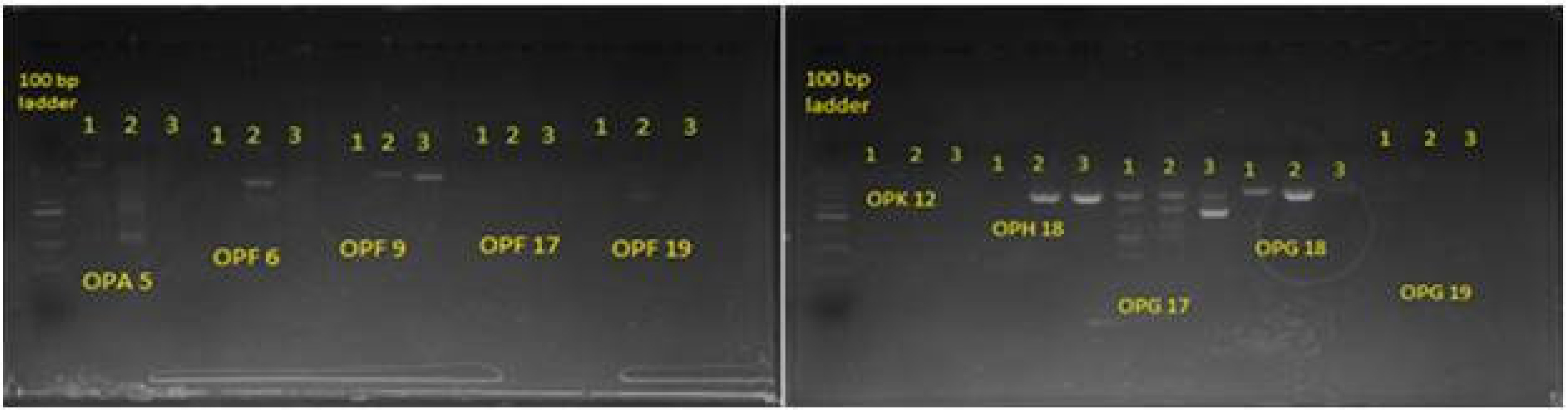
Fig. 1Agarose gel electrophoretic pattern of some selected rice genotypes generated by using 10 RAPD markers OPA 5, OPF 6, OPF 9, OPF 17, OPF 19,OPK 12, OPH 18, OPG 17, OPG 18 and OPG 19 with 100 bp DNA ladder and numbers 1-3 represent rice genotypes BAU dhan-3, BRRI dhan 28, BRRI dhan 29.
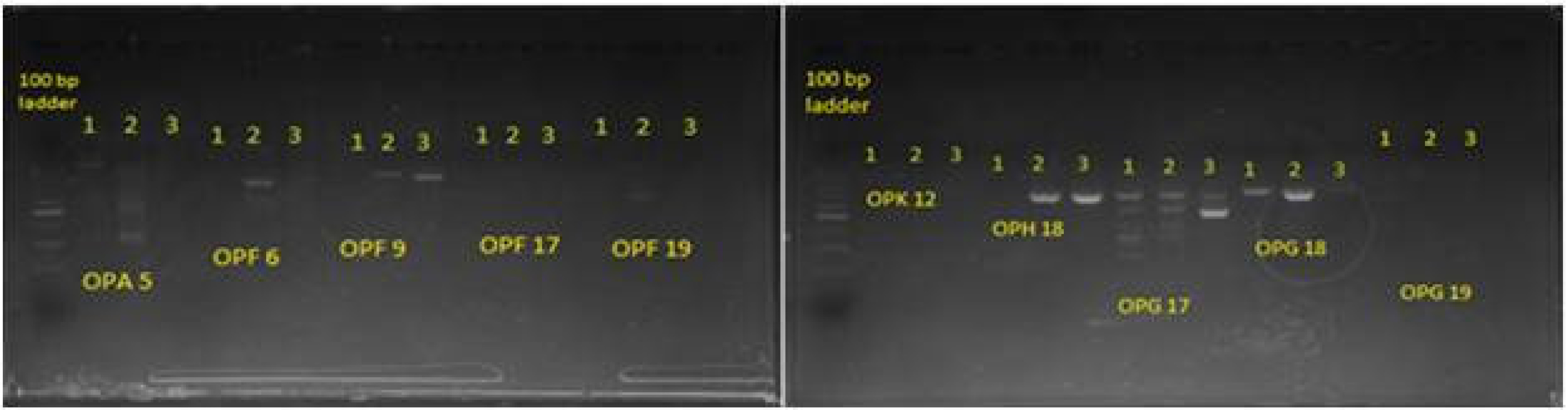
Table 1List of 48 rice genotypes used for molecular screening
Table 1
|
Sl no. |
Name of the Genotype |
Sl no. |
Name of the Genotype |
Sl no. |
Name of the Genotype |
Sl no. |
Name of the Genotype |
|
01 |
BRRI dhan72 |
13 |
BRRI dhan47 |
25 |
Jirashail |
37 |
Nepalisarna |
|
02 |
Binni |
14 |
Long |
26 |
Sonabiruin |
38 |
BINA dhan-14 |
|
03 |
Peta |
15 |
Jabed shail |
27 |
BINA dhan-7 |
39 |
Dulaaman |
|
04 |
BRRI dhan37 |
16 |
BR-26 |
28 |
Minikat |
40 |
BAU-263-113 |
|
05 |
Ace 441 |
17 |
Jessore saran |
29 |
Biharijulon |
41 |
BRRI dhan56 |
|
06 |
Kataribhog |
18 |
Sakkar kanai |
30 |
BR-10 |
42 |
BRRI dhan52 |
|
07 |
BRRI dhan33 |
19 |
Lalmatha |
31 |
BAU-125-4-69-28 |
43 |
Ace 4496 |
|
08 |
Naliuri |
20 |
BINA dhan-3 |
32 |
Malaibhog |
44 |
BR-11 |
|
09 |
Kalizira |
21 |
Indrashail |
33 |
Ace 98 |
45 |
Nandi Dhan |
|
10 |
BR-12 |
22 |
Ace 4126 |
34 |
Tinga shail |
46 |
BRRI dhan68 |
|
11 |
Tulaki |
23 |
BRRI dhan44 |
35 |
Chahiam |
47 |
Bishmuri |
|
12 |
Lehail |
24 |
Pakkhiraj |
36 |
BAU-288-113-23-72 |
48 |
BRRI dhan39 |
Table 2List of SSR markers, resistance genes and their details
Table 2
|
Gene Name |
Chrom.Locus |
Marker |
Product Size (bp) |
Primer sequence (5'- 3') |
Ref. |
|
Pi-9
|
6 |
RM 541 |
158 |
F: TATAACCGACCTCAGTGCCC
R: CCTTACTCCCATGCCATGAG |
, Cho et al. (2008)
|
|
Pi-1
|
11 |
RM 224 |
157 |
F: ATCGATCGATCTTCACGAGG
R: TGCTATAAAAGGCATTCGGG |
, Fuentes et al. (2008)
|
|
Pi-5(t)
|
11 |
RM 21 |
157 |
F: ACAGTATTCCGTAGGCACGG
R: GCTCCATGAGGGTGGTAGAG |
, Cuong et al. (2006)
|
|
Piz-5
|
6 |
RM 527 |
233 |
F: GGCTCGATCTAGAAAATCCG
R: TTGCACAGGTTGCGATAGAG |
, Fjellstrom et al. (2006)
|
|
Pi-b
|
2 |
RM 208 |
173 |
F: TCTGCAAGCCTTGTCTGATG
R: TAAGTCGATCATTGTGTGGACC |
, Hayashi et al. (2009)
|
|
Pi-ta
|
12 |
RM 247 |
131 |
F: TAGTGCCGATCGATGTAACG
R: CATATGGTTTTGACAAAGCG |
, Eizenga et al. (2006)
|
|
Pi33
|
8 |
RM 72 |
166 |
F: CCGGCGATAAAACAATGAG
R: GCATCGGTCCTAACTAAGGG |
, Berruyer et al. (2003)
|
|
Pi27(t)
|
1 |
RM 259 |
162 |
F: TGGAGTTTGAGAGGAGGG
R: CTTGTTGCATGGTGCCATGT |
, Zhu et al. (2004)
|
|
Pitp(t)
|
1 |
RM 246 |
116 |
F: GAGCTCCATCAGCCATTCAG
R: CTGAGTGCTGCTGCGACT |
, Barman et al. (2004)
|
|
Pi-kh
|
11 |
RM 206 |
147 |
F: ATCGATCCGTATGGGTTCTAGC
R: GTCCATGTAGCCAATCTTATGTGG |
, Sharma et al. (2005)
|
Table 3List of rice germplasm and screening for blast resistance genes with SSR markers
Table 3
|
SI No |
Variety or
Accessions |
Blast Resistance Genes (R) |
|
|
|
|
Pi-9
(RM 541) |
Pi-1
(RM 224) |
Pi-5(t)
(RM 21) |
Piz-5
(RM 527) |
Pi-b
(RM 208) |
Pi-ta
(RM 47) |
Pi33
(RM 72) |
Pi27(t)
(RM 259) |
Pitp(t)
(RM 246) |
Pi-kh
(RM 206) |
Total |
|
01 |
BRRI dhan72 |
0 |
0 |
0 |
0 |
1 |
1 |
1 |
1 |
1 |
1 |
6 |
|
02 |
Binni |
1 |
0 |
1 |
0 |
1 |
0 |
0 |
0 |
0 |
1 |
4 |
|
03 |
Peta |
1 |
1 |
1 |
0 |
1 |
1 |
0 |
1 |
0 |
1 |
7 |
|
04 |
BRRI dhan37 |
1 |
0 |
0 |
0 |
1 |
1 |
1 |
1 |
1 |
1 |
7 |
|
05 |
Ace 441 |
1 |
1 |
0 |
1 |
1 |
1 |
1 |
0 |
1 |
1 |
8 |
|
06 |
Kataribhog |
0 |
0 |
0 |
0 |
0 |
1 |
1 |
0 |
1 |
0 |
3 |
|
07 |
BRRI dhan33 |
1 |
0 |
0 |
1 |
1 |
1 |
1 |
0 |
1 |
1 |
7 |
|
08 |
Naliuri |
0 |
0 |
0 |
0 |
0 |
1 |
1 |
0 |
0 |
0 |
2 |
|
09 |
Kalizira |
0 |
0 |
0 |
0 |
1 |
0 |
0 |
0 |
0 |
1 |
2 |
|
10 |
BR-12 |
1 |
0 |
0 |
1 |
1 |
1 |
1 |
1 |
0 |
1 |
7 |
|
11 |
Tulaki |
0 |
0 |
0 |
0 |
1 |
1 |
1 |
1 |
0 |
0 |
4 |
|
12 |
Lehail |
0 |
0 |
1 |
1 |
1 |
1 |
0 |
1 |
0 |
1 |
6 |
|
13 |
BRRI dhan47 |
1 |
1 |
0 |
1 |
1 |
1 |
0 |
1 |
0 |
1 |
7 |
|
14 |
Long |
1 |
0 |
0 |
1 |
1 |
1 |
0 |
1 |
1 |
1 |
7 |
|
15 |
Jabed shail |
1 |
1 |
0 |
1 |
1 |
1 |
1 |
1 |
0 |
1 |
8 |
|
16 |
BR-26 |
0 |
0 |
0 |
0 |
0 |
1 |
1 |
0 |
0 |
0 |
2 |
|
17 |
Jessore saran |
1 |
1 |
1 |
1 |
0 |
1 |
1 |
1 |
0 |
1 |
8 |
|
18 |
Sakkar kanai |
0 |
1 |
0 |
1 |
1 |
1 |
0 |
1 |
0 |
1 |
6 |
|
19 |
Lalmatha |
1 |
0 |
1 |
0 |
1 |
1 |
1 |
1 |
1 |
1 |
8 |
|
20 |
BINA dhan-3 |
0 |
0 |
0 |
1 |
0 |
1 |
1 |
0 |
0 |
0 |
3 |
|
21 |
Indrashail |
1 |
1 |
0 |
1 |
1 |
1 |
1 |
1 |
0 |
1 |
8 |
|
22 |
Ace 4126 |
1 |
0 |
0 |
0 |
0 |
1 |
1 |
0 |
0 |
1 |
4 |
|
23 |
BRRI dhan44 |
1 |
1 |
0 |
1 |
1 |
1 |
1 |
1 |
0 |
1 |
8 |
|
24 |
Pakkhiraj |
0 |
1 |
0 |
1 |
1 |
1 |
1 |
0 |
0 |
1 |
6 |
|
25 |
Jirashail |
1 |
1 |
0 |
1 |
1 |
1 |
1 |
1 |
0 |
1 |
8 |
|
26 |
Sonabiruin |
0 |
1 |
0 |
1 |
1 |
1 |
1 |
0 |
0 |
1 |
6 |
|
27 |
BINA dhan-7 |
1 |
0 |
0 |
0 |
1 |
1 |
1 |
1 |
1 |
1 |
7 |
|
28 |
Minikat |
0 |
0 |
0 |
0 |
0 |
1 |
1 |
0 |
0 |
0 |
2 |
|
29 |
Biharijulon |
1 |
0 |
1 |
0 |
1 |
0 |
0 |
0 |
0 |
1 |
4 |
|
30 |
BR-10 |
0 |
0 |
0 |
0 |
0 |
1 |
1 |
0 |
0 |
0 |
2 |
|
31 |
BAU-125-4-69-28 |
1 |
0 |
0 |
1 |
1 |
1 |
1 |
1 |
1 |
1 |
8 |
|
32 |
Malaibhog |
0 |
1 |
1 |
0 |
0 |
0 |
1 |
0 |
0 |
0 |
3 |
|
33 |
Ace 98 |
1 |
0 |
0 |
1 |
1 |
1 |
1 |
1 |
1 |
1 |
8 |
|
34 |
Tinga shail |
1 |
0 |
0 |
1 |
1 |
1 |
1 |
1 |
1 |
1 |
8 |
|
35 |
Chahiam |
1 |
0 |
0 |
1 |
1 |
1 |
0 |
1 |
0 |
0 |
5 |
|
36 |
BAU-288-113-23-72 |
1 |
0 |
0 |
1 |
1 |
1 |
0 |
1 |
0 |
1 |
6 |
|
37 |
Nepalisarna |
1 |
0 |
0 |
1 |
0 |
1 |
0 |
1 |
0 |
1 |
5 |
|
38 |
BINA dhan-14 |
1 |
1 |
0 |
1 |
1 |
1 |
1 |
1 |
0 |
1 |
8 |
|
39 |
Dulaaman |
1 |
1 |
0 |
1 |
1 |
0 |
1 |
0 |
0 |
1 |
6 |
|
40 |
BAU-263-113 |
1 |
0 |
0 |
1 |
1 |
1 |
1 |
1 |
1 |
1 |
8 |
|
41 |
BRRI dhan56 |
1 |
0 |
1 |
1 |
1 |
1 |
0 |
0 |
1 |
1 |
7 |
|
42 |
BRRI dhan52 |
1 |
0 |
0 |
1 |
1 |
1 |
1 |
1 |
0 |
1 |
7 |
|
43 |
Ace 4496 |
1 |
0 |
0 |
0 |
0 |
0 |
1 |
1 |
0 |
0 |
3 |
|
44 |
BR-11 |
1 |
1 |
0 |
0 |
0 |
1 |
0 |
1 |
0 |
1 |
5 |
|
45 |
Nandi Dhan |
0 |
0 |
0 |
0 |
1 |
1 |
1 |
1 |
1 |
1 |
6 |
|
46 |
BRRI dhan68 |
1 |
0 |
1 |
0 |
1 |
1 |
0 |
1 |
0 |
1 |
6 |
|
47 |
Bishmuri |
1 |
1 |
0 |
0 |
1 |
1 |
1 |
1 |
1 |
1 |
8 |
|
48 |
BRRI dhan39 |
1 |
1 |
0 |
1 |
1 |
1 |
1 |
1 |
0 |
1 |
8 |
|
|
Frequency (%) |
68.7 |
35.4 |
18.7 |
56.2 |
75 |
87.5 |
70.8 |
64.5 |
31.25 |
79.1 |
|
Table 4List of rice germplasm and screening for blast resistance genes with RAPD markers
Table 4
|
Sl no. |
Variety or Accessions |
Blast Resistance Genes (R) |
|
|
OPK 12 |
|
OPH 18 |
|
OPG 17 |
|
OPG 18 |
|
OPG 19 |
|
|
|
|
|
|
1000 bp |
500 bp |
100 bp |
1000 bp |
500 bp |
100 bp |
1000 bp |
500 bp |
100 bp |
1000 bp |
500 bp |
100 bp |
1000 bp |
500 bp |
100 bp |
|
1 |
BAU dhan-3 |
0 |
0 |
0 |
|
0 |
0 |
0 |
|
1 |
0 |
0 |
|
1 |
0 |
0 |
|
0 |
0 |
0 |
|
2 |
BRRI dhan 28 |
0 |
0 |
0 |
|
1 |
0 |
0 |
|
0 |
0 |
0 |
|
1 |
0 |
0 |
|
0 |
0 |
0 |
|
3 |
BRRI dhan 29 |
0 |
0 |
0 |
|
1 |
0 |
0 |
|
0 |
0 |
0 |
|
1 |
0 |
0 |
|
0 |
0 |
0 |
References
- Ashikawa I, Hayashi N, Yamane H, Kanamori H, Wu J, Matsumoto T, et al. 2008. Two adjacent nucleotide-binding site-leucine-rich repeat class genes are required to confer Pikm-specific rice blast resistance. Genetics. 180: 2267-2276.
- Barman S, Gowda M, Venu R, Chattoo B. 2004. Identification of a major blast resistance gene in the rice cultivar 'Tetep'. Plant Breed. 123: 300-302.
- Berruyer R, Adreit H, Milazzo J, Gaillard S, Berger A, Dioh W, et al. 2003. Identification and fine mapping of Pi33, the rice resistance gene corresponding to the Magnaporthe grisea avirulence gene ACE1. Theor Appl Genet. 107: 1139-1147.
- Bryan GT, Wu KS, Farrall L, Jia Y, Hershey HP, McAdams SA, et al. 2000. A single amino acid difference distinguishes resistant and susceptible alleles of the rice blast resistance gene Pi-ta. Plant Cell. 12: 2033-2045.
- Chen J, Peng P, Tian J, He Y, Zhang L, Liu Z, et al. 2015. Pike, a rice blast resistance allele consisting of two adjacent NBS-LRR genes, was identified as a novel allele at the Pik locus. Mol. Breed. 35: 1-15.
- Chen J, Shi Y, Liu W, Chai R, Fu Y, Zhuang J, et al. 2011. A Pid3 allele from rice cultivar Gumei2 confers resistance to Magnaporthe oryzae. J Genet Genomics. 38: 209-216.
- Chen X, Shang J, Chen D, Lei C, Zou Y, Zhai W, et al. 2006. AB-lectin receptor kinase gene conferring rice blast resistance. Plant J. 46: 794-804.
- Cho YC, Jeung JU, Park HJ, Yang CI, Choi YH, Choi IB, et al. 2008. Haplotype diversity and durability of resistance genes to blast in Korean Japonica rice varieties. J Crop Sci Biotech. 11: 205-214.
- Cuong NM, Lang NT, Buu BC. 2006. Applications of microsatellite and sequence tagged site marker to detect blast resistance in local rice (Oryza sativa L). Nong Nghiep. Hanoi: pp. 52-68.
- Deng Y, Zhu X, Shen Y, He Z. 2006. Genetic characterization and fine mapping of the blast resistance locus Pigm (t) tightly linked to Pi2 and Pi9 in a broad-spectrum resistant Chinese variety. Theor Appl Genet. 113: 705-713.
- Eizenga G, Agrama H, Lee F, Yan W, Jia Y. 2006. Identifying novel resistance genes in newly introduced blast resistant rice germplasm. Crop Sci. 46: 1870-1878.
- Fjellstrom R, McClung AM, Shank AR. 2006. SSR markers closely linked to the Pi-z locus are useful for selection of blast resistance in a broad array of rice germplasm. Mol. Breed. 17: 149-157.
- Flor H. 1971. Current status of the genefor-gene concept. Annu Rev Phytopathol. 9: 275-296.
- Fuentes JL, Correa-Victoria FJ, Escobar F, Prado G, Aricapa G, Duque MC, et al. 2008. Identification of microsatellite markers linked to the blast resistance gene Pi-1 (t) in rice. Euphytica. 160: 295-304.
- Fukagawa NK. 2019. Rice: Importance for global nutrition. J Nutr Sci Vitaminol. 65(Supplement): S2-S3.
- Fukuoka S, Saka N, Koga H, Ono K, Shimizu T, Ebana K, et al. 2009. Loss of function of a proline-containing protein confers durable disease resistance in rice. Science. 325: 998-1001.
- Han S, Ryu J, Shim H, Lee S, Hong Y, Cha K. 2001. Breakdown of resistant cultivars by new race KI-1117a and race distribution of rice blast fungus during 1999-2000 in Korea. Res Plant Dis. 7: 86-92.
- Hayashi K, Yoshida H. 2009. Refunctionalization of the ancient rice blast disease resistance gene Pit by the recruitment of a retrotransposon as a promoter. Plant J. 57: 413-425.
- Hua L, Wu J, Chen C, Wu W, He X, Lin F, et al. 2012. The isolation of Pi1, an allele at the Pik locus which confers broad spectrum resistance to rice blast. Theor Appl Genet. 125: 1047-1055.
- Imam J, Alam S, Mandal NP, Variar M, Shukla P. 2014. Molecular screening for identification of blast resistance genes in North East and Eastern Indian rice germplasm (Oryza sativa L.) with PCR based makers. Euphytica. 196: 199-211.
- Imam J, Alam S, Variar M, Shukla P. 2013. Identification of rice blast resistance gene Pi9 from Indian rice land races with STS marker and its verification by virulence analysis. Proc Natl Acad Sci India Sect B Biol Sci. 83: 499-504.
- Kalia S, Rathour R. 2019. Current status on mapping of genes for resistance to leaf-and neck-blast disease in rice. 3 Biotech. 9: 1-14.
- Khush GS, Jena K. 2009. Current status and future prospects for research on blast resistance in rice (Oryza sativa L. ). Advances in genetics. genomics and control of rice blast disease. Springer. pp. 1-10.:
- Kim JS, Ahn SN, Kim CK, Shim C-K. 2010. Screening of rice blast resistance genes from aromatic rice germplasms with SNP markers. PPJ. 26: 70-79.
- Kumar A, Kumar S, Kumar R, Kumar V, Prasad L, Kumar N, et al. 2010. Identification of blast resistance expression in rice genotypes using molecular markers (RAPD & SCAR). Afr J Biotechnol. 9: 3501-3509.
- Kwon JO, Lee SG. 2002. Real-time micro-weather factors of growing field to the epidemics of rice blast. Res. Plant Dis. 8: 199-206.
- Lee F. 1994. Rice breeding programs, blast epidemics and blast management in the United States. In: Rice blast disease, ed. Ziegler, R. S. pp. 489-500. C.A.B. International Wallingford, U. K.
- Lee SK, Song MY, Seo YS, Kim HK, Ko S, Cao PJ, et al. 2009. Rice Pi5-mediated resistance to Magnaporthe oryzae requires the presence of two coiled-coil-nucleotide-binding-leucine-rich repeat genes. Genetics. 181: 1627-1638.
- Li Y, Wu C, Jiang G, Wang L, He Y. 2007. Dynamic analyses of rice blast resistance for the assessment of genetic and environmental effects. Plant Breed. 126: 541-547.
- Lin F, Chen S, Que Z, Wang L, Liu X, Pan Q. 2007. The blast resistance gene Pi37 encodes a nucleotide binding site-leucine-rich repeat protein and is a member of a resistance gene cluster on rice chromosome 1. Genetics. 177: 1871-1880.
- Liu X, Lin F, Wang L, Pan Q. 2007. The in silico map-based cloning of Pi36, a rice coiled-coil-nucleotide-binding site-leucine-rich repeat gene that confers race-specific resistance to the blast fungus. Genetics. 176: 2541-2549.
- Ma J, Lei C, Xu X, Hao K, Wang J, Cheng Z, et al. 2015. Pi64, encoding a novel CC-NBS-LRR protein, confers resistance to leaf and neck blast in rice. Mol Plant Microbe Interact. 28: 558-568.
- Mackill D, Bonman J. 1992. Inheritance of blast resistance in near-isogenic lines of rice. Phytopathology. 82: 746-749.
- Meng F, He Y, Chen J, Long X, Wang H, Zhu M, et al. 2021. Analysis of natural variation of the rice blast resistance gene Pike and identification of a novel allele Pikg. Mol Plant Microbe Interact. 296: 939-952.
- Miah G, Rafii MY, Ismail MR, Puteh AB, Rahim HA, Islam KN, et al. 2013. A review of microsatellite markers and their applications in rice breeding programs to improve blast disease resistance. Int J Mol Sci. 14: 22499-22528.
- Okuyama Y, Kanzaki H, Abe A, Yoshida K, Tamiru M, Saitoh H, et al. 2011. A multifaceted genomics approach allows the isolation of the rice Pia-blast resistance gene consisting of two adjacent NBS-LRR protein genes. Plant J. 66: 467-479.
- Ou S. 1985. Blast in rice disease. Wallingford. Common wealth agricultural Bureax..
- Parker D, Beckmann M, Enot DP, Overy DP, Rios ZC, Gilbert M, et al. 2008. Rice blast infection of Brachypodium distachyon as a model system to study dynamic host/pathogen interactions. Nat Protoc. 3: 435-445.
- Pennisi E. 2010. Armed and dangerous. Science (New York, NY). 327: 804-805.
- Qu S, Liu G, Zhou B, Bellizzi M, Zeng L, Dai L, et al. 2006. The broad-spectrum blast resistance gene Pi9 encodes a nucleotide-binding site-leucine-rich repeat protein and is a member of a multigene family in rice. Genetics. 172: 1901-1914.
- RoyChowdhury M, Jia Y, Jackson A, Jia MH, Fjellstrom R, Cartwright RD. 2012. Analysis of rice blast resistance gene Pi-z in rice germplasm using pathogenicity assays and DNA markers. Euphytica. 184: 35-46.
- Sagor G, Adhikary S, Yasmin I. 2021. SSR marker-based molecular screening of blast resistant genes in selected rice genotypes. J Bangladesh Agril Univ. 19: 206-214.
- Shang J, Tao Y, Chen X, Zou Y, Lei C, Wang J, et al. 2009. Identification of a new rice blast resistance gene, Pid3, by genomewide comparison of paired nucleotide-binding site-leucine-rich repeat genes and their pseudogene alleles between the two sequenced rice genomes. Genetics. 182: 1303-1311.
- Sharma T, Madhav M, Singh B, Shanker P, Jana T, Dalal V, et al. 2005. High-resolution mapping, cloning and molecular characterization of the Pi-k h gene of rice, which confers resistance to Magnaporthe grisea. Mol Genet Genomics. 274: 569-578.
- Sharma T, Rai A, Gupta S, Vijayan J, Devanna B, Ray S. 2012. Rice blast management through host-plant resistance: retrospect and prospects. Agric. Res. 1: 37-52.
- Singh AK, Singh P, Arya M, Singh N, Singh U. 2015. Molecular screening of blast resistance genes in rice using SSR markers. Plant Pathol J. 31: 12
- Takahashi A, Hayashi N, Miyao A, Hirochika H. 2010. Unique features of the rice blast resistance Pish locus revealed by large scale retrotransposon-tagging. BMC Plant Biol. 10: 1-14.
- Tanksley S, Nelson J. 1996. Advanced backcross QTL analysis: a method for the simultaneous discovery and transfer of valuable QTLs from unadapted germplasm into elite breeding lines. Theor Appl Genet. 92: 191-203.
- Valent B. 1990. Rice blast as a model system for plant pathology. Phytopathology..
- Variar M, Cruz CV, Carrillo M, Bhatt J, Sangar R. 2009. "Rice blast in India and strategies to develop durably resistant cultivars. " Presented at Advances in genetics. genomics and control of rice blast disease..
- Wang X, Fjellstrom R, Jia Y, Yan W, Jia M, Scheffler B, et al. 2010. Characterization of Pi-ta blast resistance gene in an international rice core collection. Plant Breed. 129: 491-501.
- Wang X, Valent B. 2009. Advances in genetics, genomics and control of rice blast disease. Springer Science & Business Media..
- Wang ZX, Yano M, Yamanouchi U, Iwamoto M, Monna L, Hayasaka H, et al. 1999. The Pib gene for rice blast resistance belongs to the nucleotide binding and leucine-rich repeat class of plant disease resistance genes. Plant J. 19: 55-64.
- Warude D, Chavan P, Joshi K, Patwardhan B. 2003. DNA isolation from fresh, dry plant samples with highly acidic tissue extracts. Plant Mol. Biol. Rep. 21: 467-467.
- Xu X, Hayashi N, Wang CT, Fukuoka S, Kawasaki S, Takatsuji H, et al. 2014. Rice blast resistance gene Pikahei-1 (t), a member of a resistance gene cluster on chromosome 4, encodes a nucleotide-binding site and leucine-rich repeat protein. Mol. Breed. 34: 691-700.
- Yan L, Bai-Yuan Y, Yun-Liang P, Zhi-Juan J, Yu-Xiang Z, Han-Lin W, et al. 2017. Molecular scree ning of blast resistance genes in rice germplasms resistant to Magnaporthe oryzae. Rice Sci. 24: 41-47.
- Yuan B, Zhai C, Wang W, Zeng X, Xu X, Hu H, et al. 2011. The Pik-p resistance to Magnaporthe oryzae in rice is mediated by a pair of closely linked CC-NBS-LRR genes. Theor Appl Genet. 122: 1017-1028.
- Zhai C, Lin F, Dong Z, He X, Yuan B, Zeng X, et al. 2011. The isolation and characterization of Pik, a rice blast resistance gene which emerged after rice domestication. New Phytol. 189: 321-334.
- Zhao H, Wang X, Jia Y, Minkenberg B, Wheatley M, Fan J, et al. 2018. The rice blast resistance gene Ptr encodes an atypical protein required for broad-spectrum disease resistance. Nat Commun. 9: 2039
- Zhou B, Qu S, Liu G, Dolan M, Sakai H, Lu G, et al. 2006. The eight amino-acid differences within three leucine-rich repeats between Pi2 and Piz-t resistance proteins determine the resistance specificity to Magnaporthe grisea. Mol Plant Microbe Interact. 19: 1216-1228.
- Zhu M, Wang L, Pan Q. 2004. Identification and characterization of a new blast resistance gene located on rice chromosome 1 through linkage and differential analyses. Phytopathology. 94: 515-519.